Kembali Bermimpi: Strengthening Riverside Resilience in Solo
Kembali Bermimpi is a creative initiative developed in Kampung Sewu, Surakarta (Solo), Central Java, in 2025, through a collaboration between the GENERATE Project and Universitas Sebelas Maret, Indonesia. The project responds to the increasing vulnerability of riverside communities along the Bengawan Solo River to flooding and climate-related hazards, as well as the gradual weakening of cultural, social, and intergenerational relationships with the river. For generations, Bengawan Solo has shaped livelihoods, cultural practices, and collective identities. Yet contemporary urban development and state-centred disaster management approaches have increasingly framed the river primarily as a source of risk, creating a growing distance between residents and the river that once sustained their lives.
Kembali Bermimpi seeks to reconnect communities with the river by reactivating cultural memory, creativity, and citizen-led knowledge. Through a participatory design and transdisciplinary research approach, the project brings together community members, students, and researchers as collaborators who collectively explore new ways of imagining the river as a shared ecological and cultural space.
The initiative includes a range of creative and community-based activities, such as the revival of the Apem Sewu ritual, the revitalisation of the Empu mud ball game, and storytelling processes that reconstruct memories of the river’s historic shipyards. Co-design workshops invited residents to reimagine the Bengawan Solo greenbelt as an inclusive public space, while a community-led river festival became a central moment for collective celebration and reflection. Throughout the project, creative methods, including ritual practice, play, illustration, comics, visual storytelling, and public exhibitions, were used to open dialogue, support intergenerational learning, and encourage broad participation.
Kembali Bermimpi has helped renew community awareness of the river’s ecological and cultural significance, strengthen collective identity, and foster a stronger sense of ownership over both the river and the knowledge produced through the project. The initiative demonstrates how creative, participatory, and culturally grounded approaches can complement formal disaster risk reduction efforts while supporting more inclusive and locally rooted pathways for riverside resilience.
Reviving the Apem-Serving Tradition (Apem Sewu Ritual)
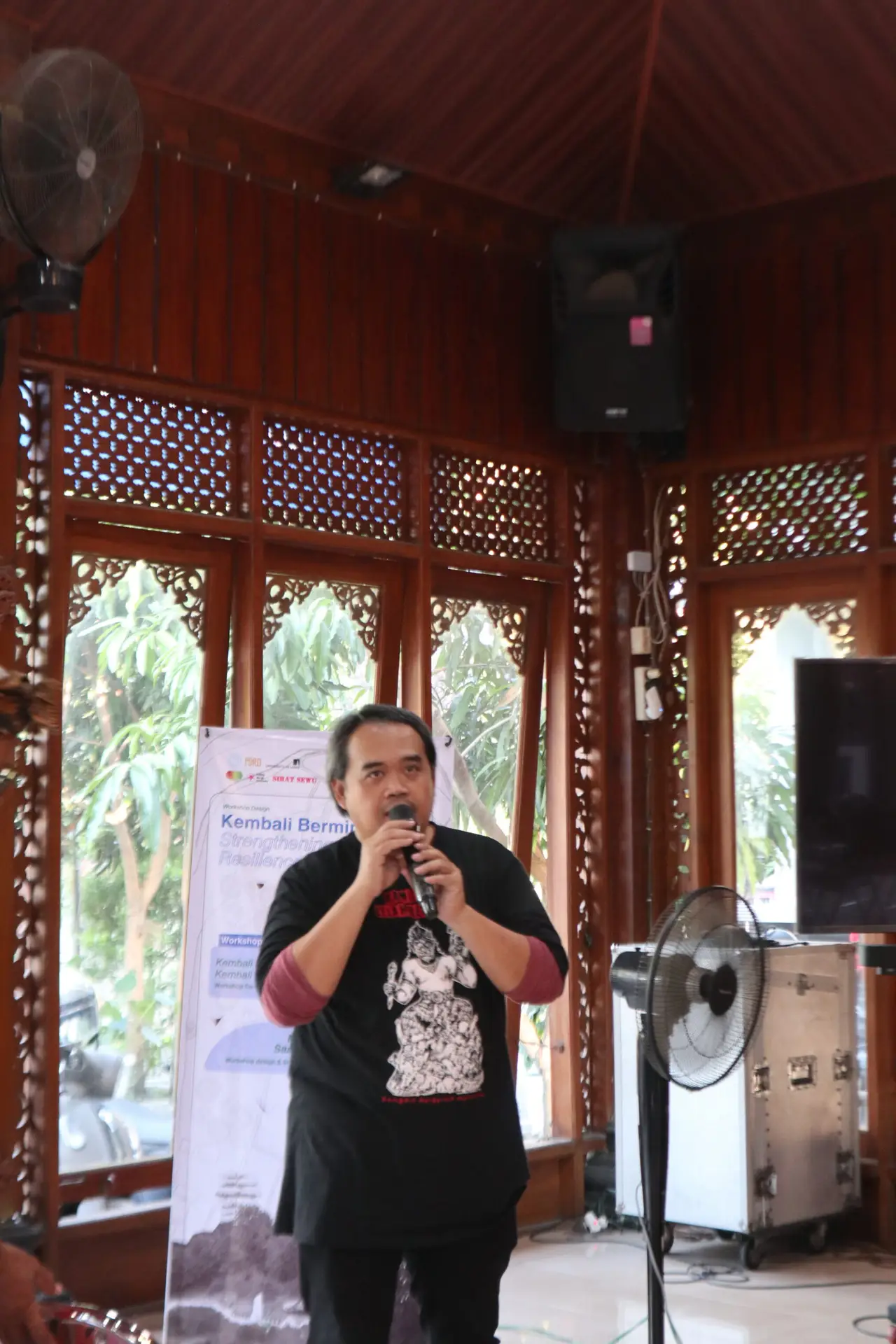
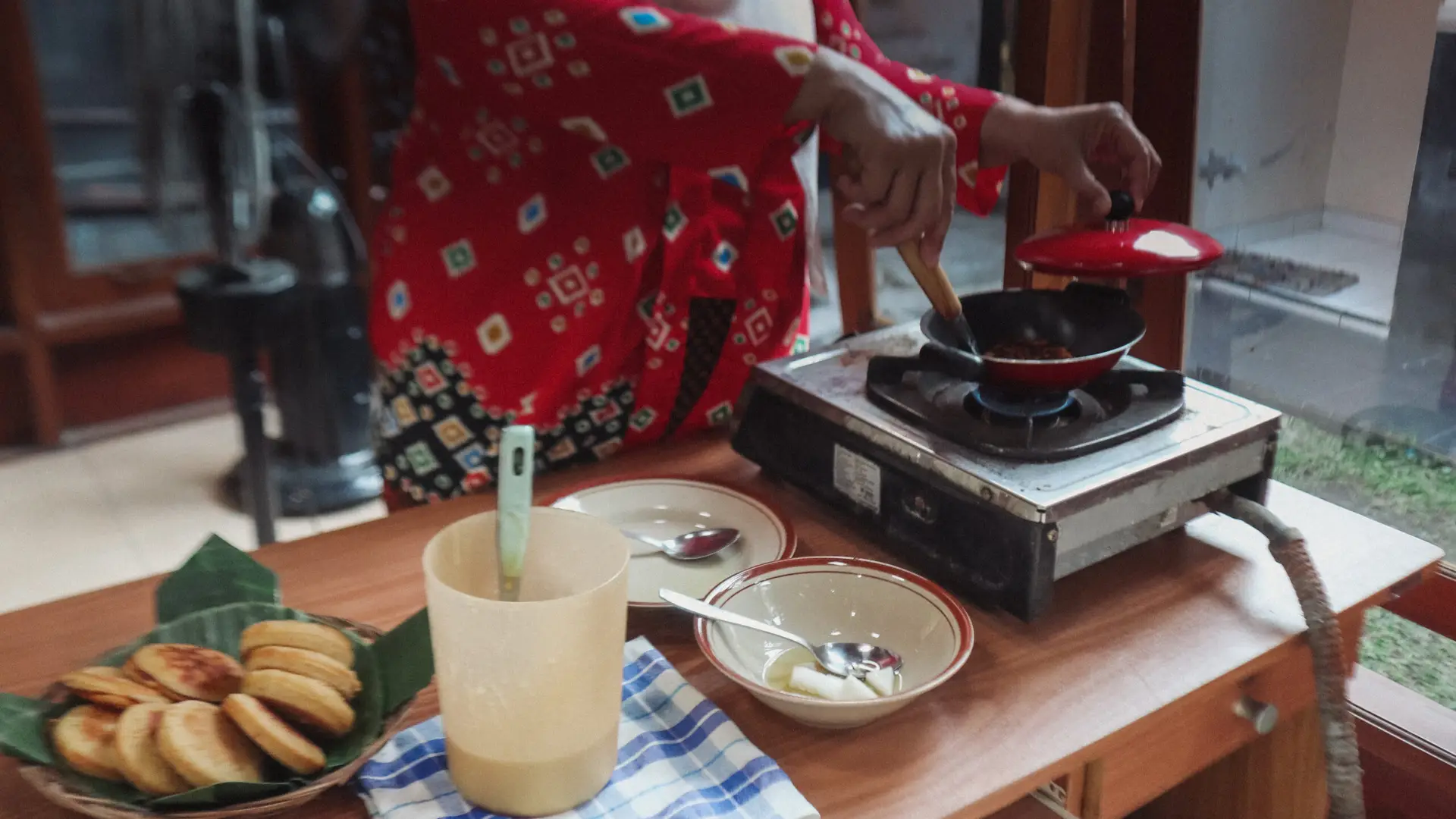
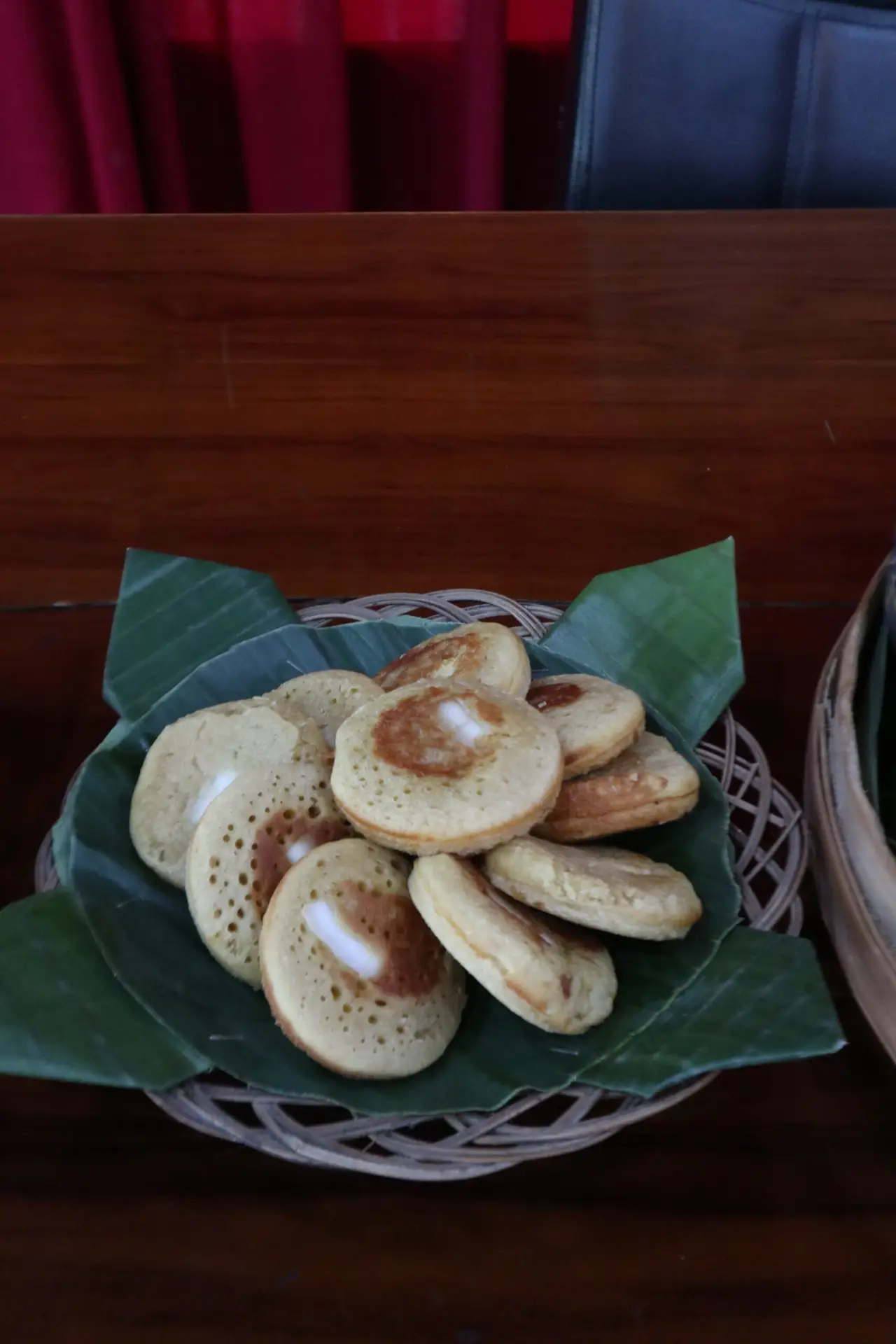
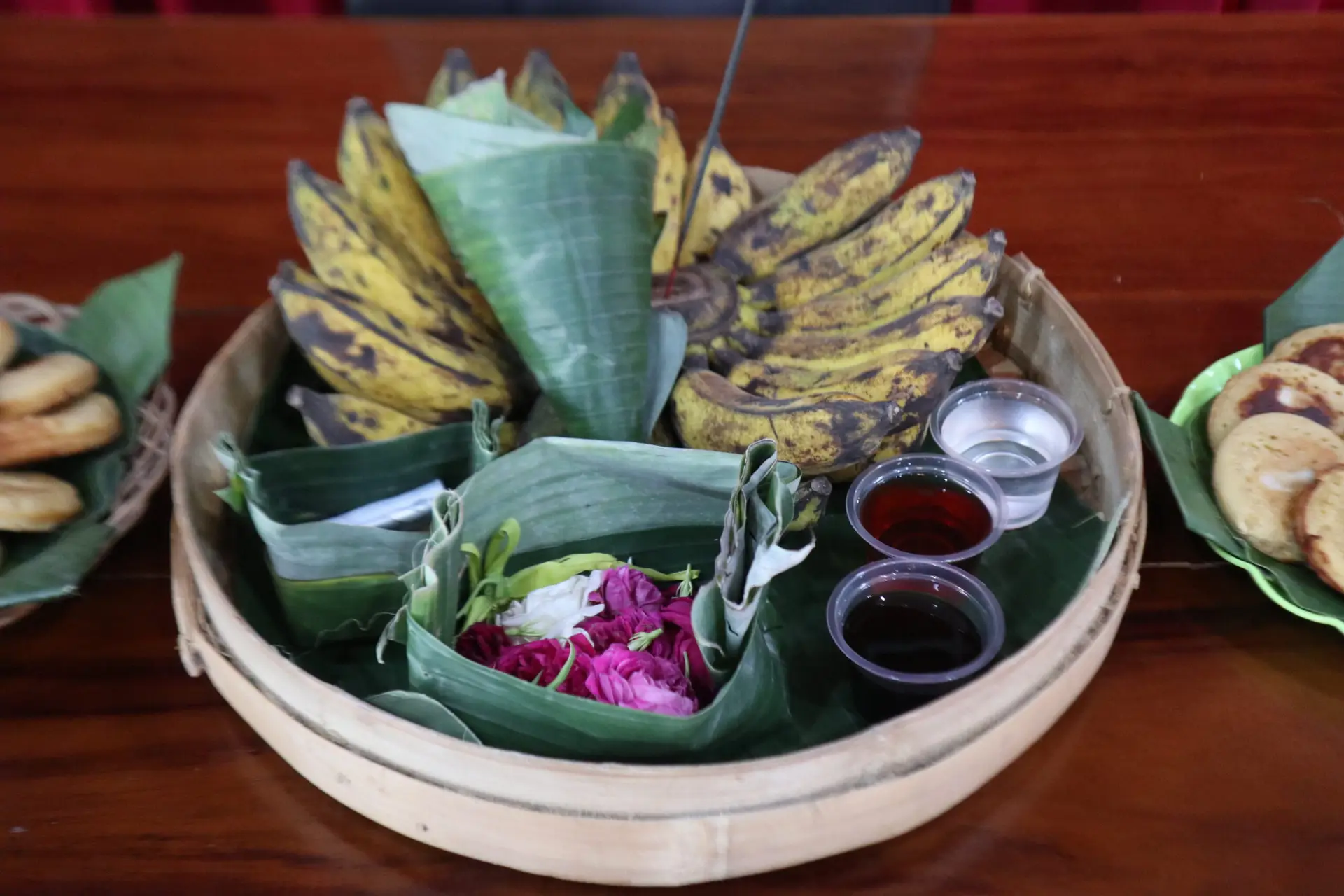
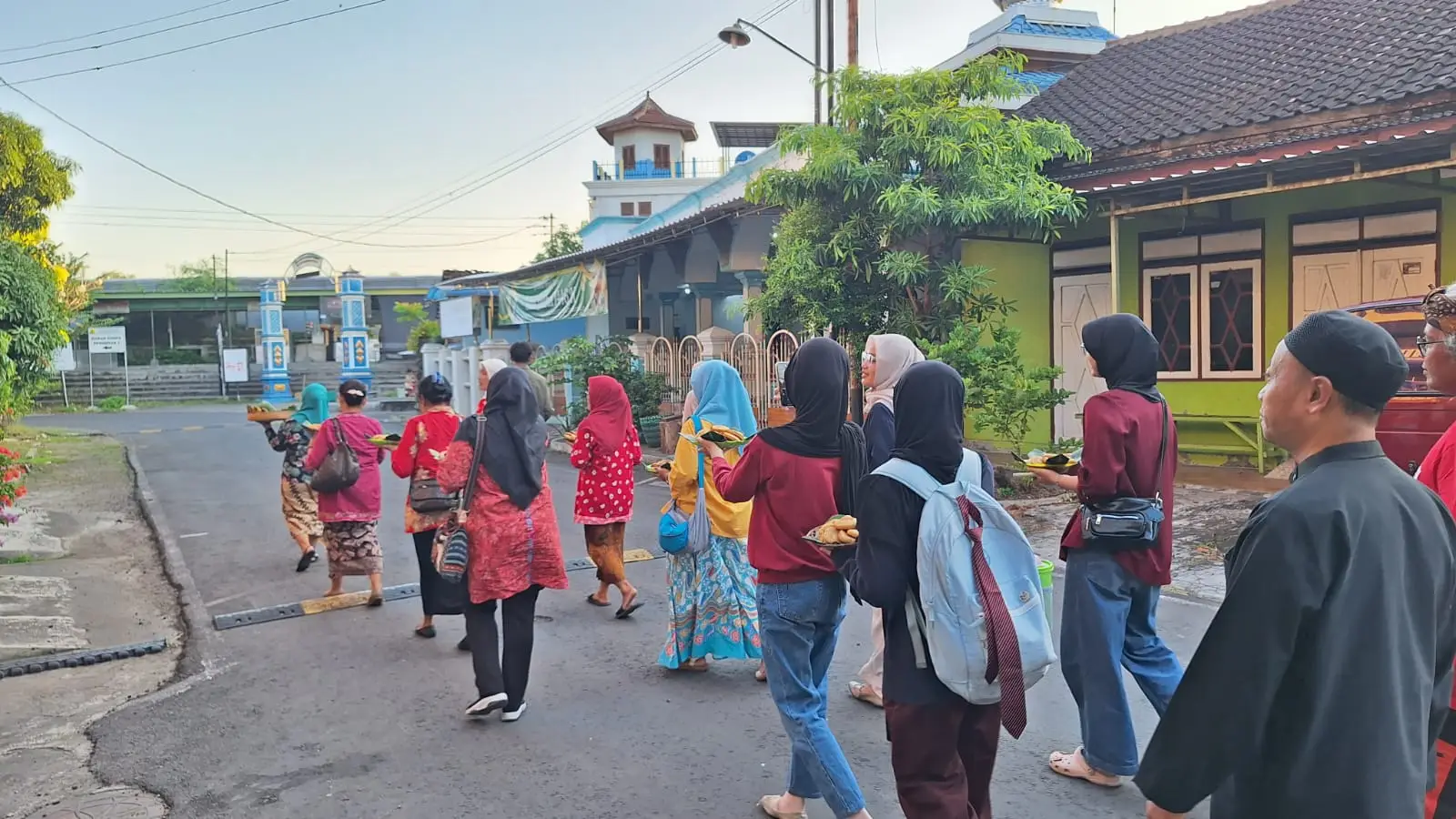
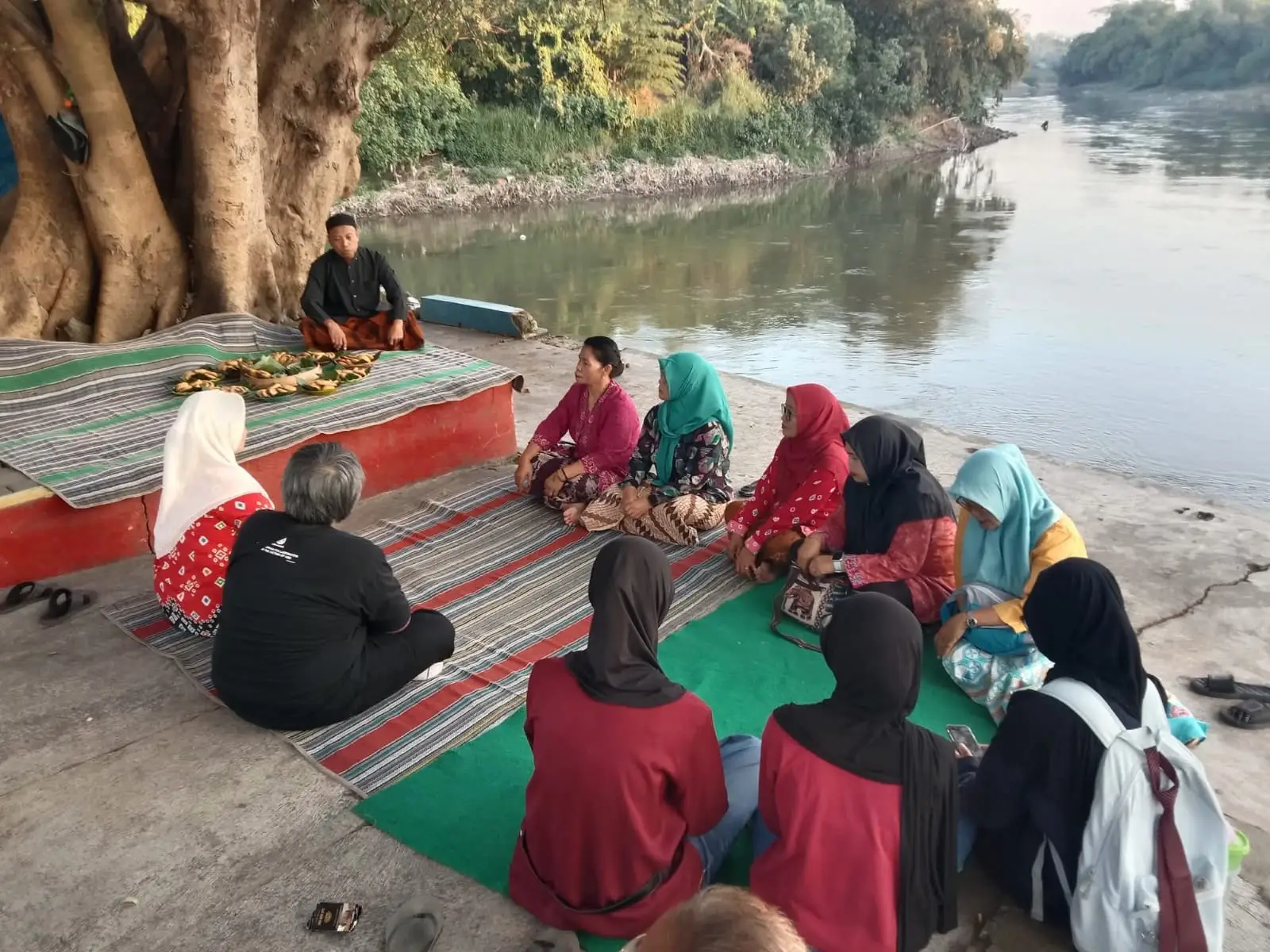
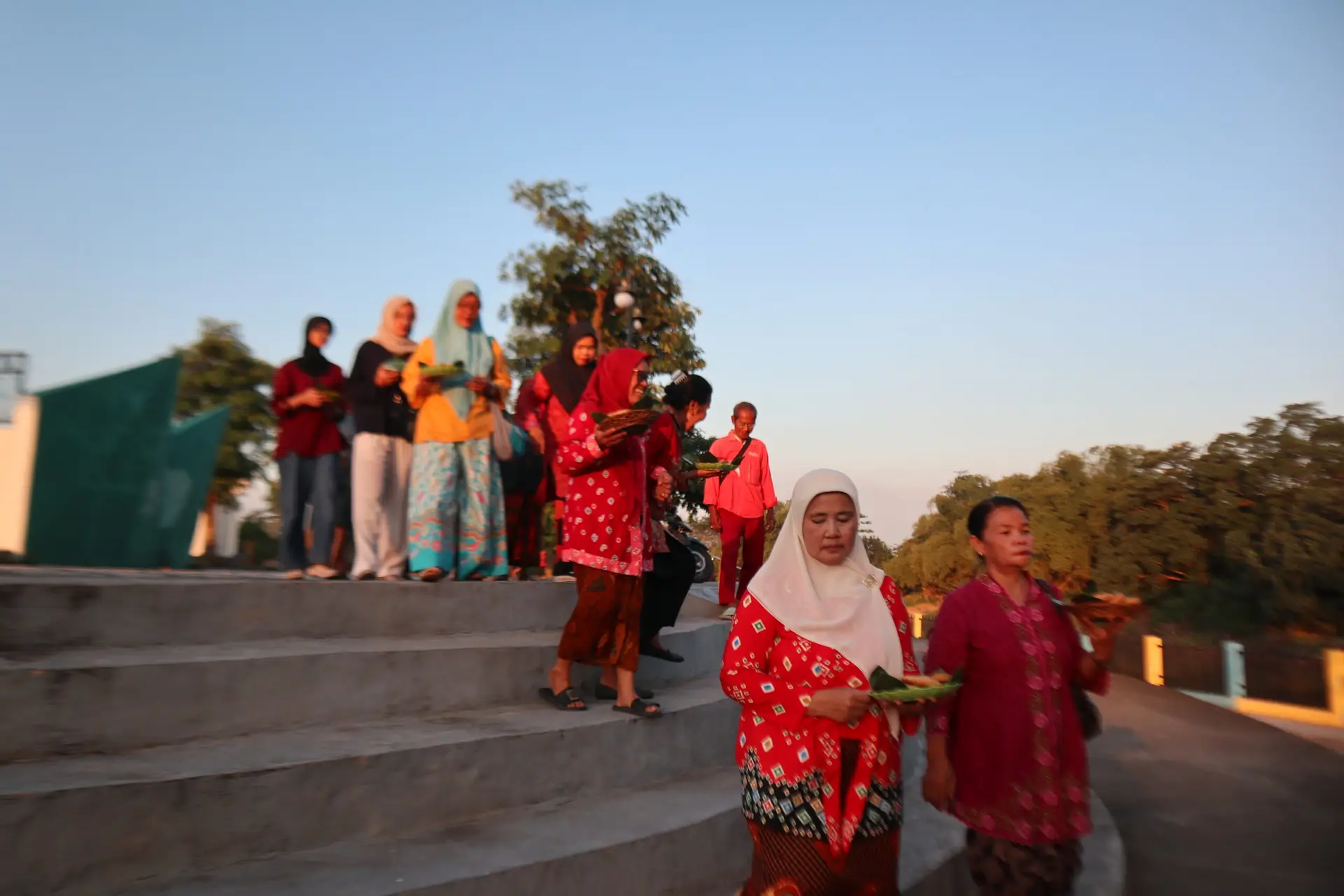
The Apem Sewu ritual was revived in Kampung Sewu as a collective expression of gratitude to the Bengawan Solo River and a prayer for protection from disasters and community well-being. Held on 10 July 2025, the activity involved the collective preparation of apem (traditional rice cakes), kirap apem (procession), a communal prayer at the riverbank, the sharing and consumption of the apem among residents, and the symbolic release of floral offerings (sesajen) into the Bengawan Solo River. The ritual brought together women, men, elders, and young people, creating a moment of intergenerational learning and cultural reconnection. The activity highlighted how cultural traditions carry environmental knowledge and strengthen collective responsibility toward the river.
Revitalising the Empu Mud Ball Game
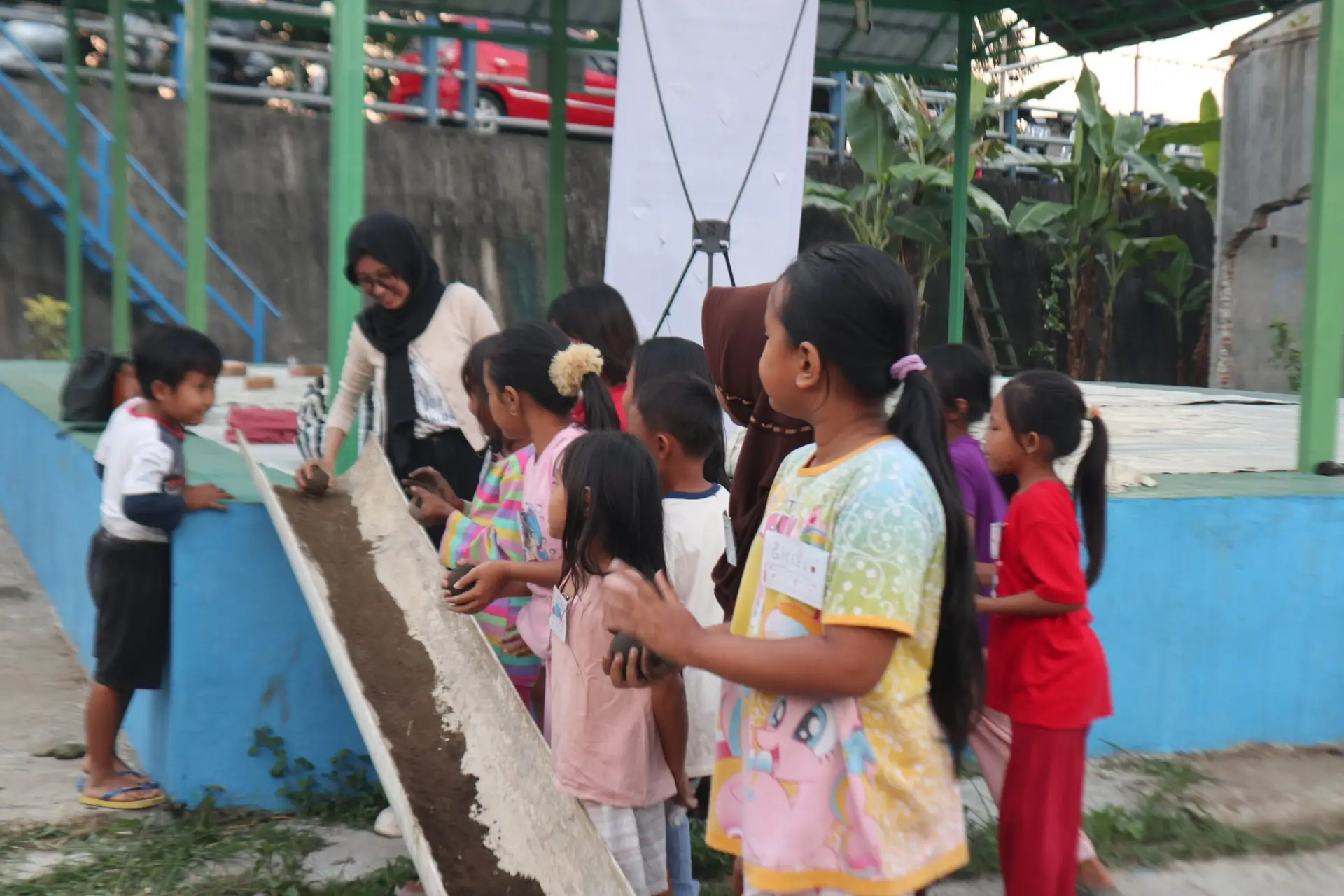
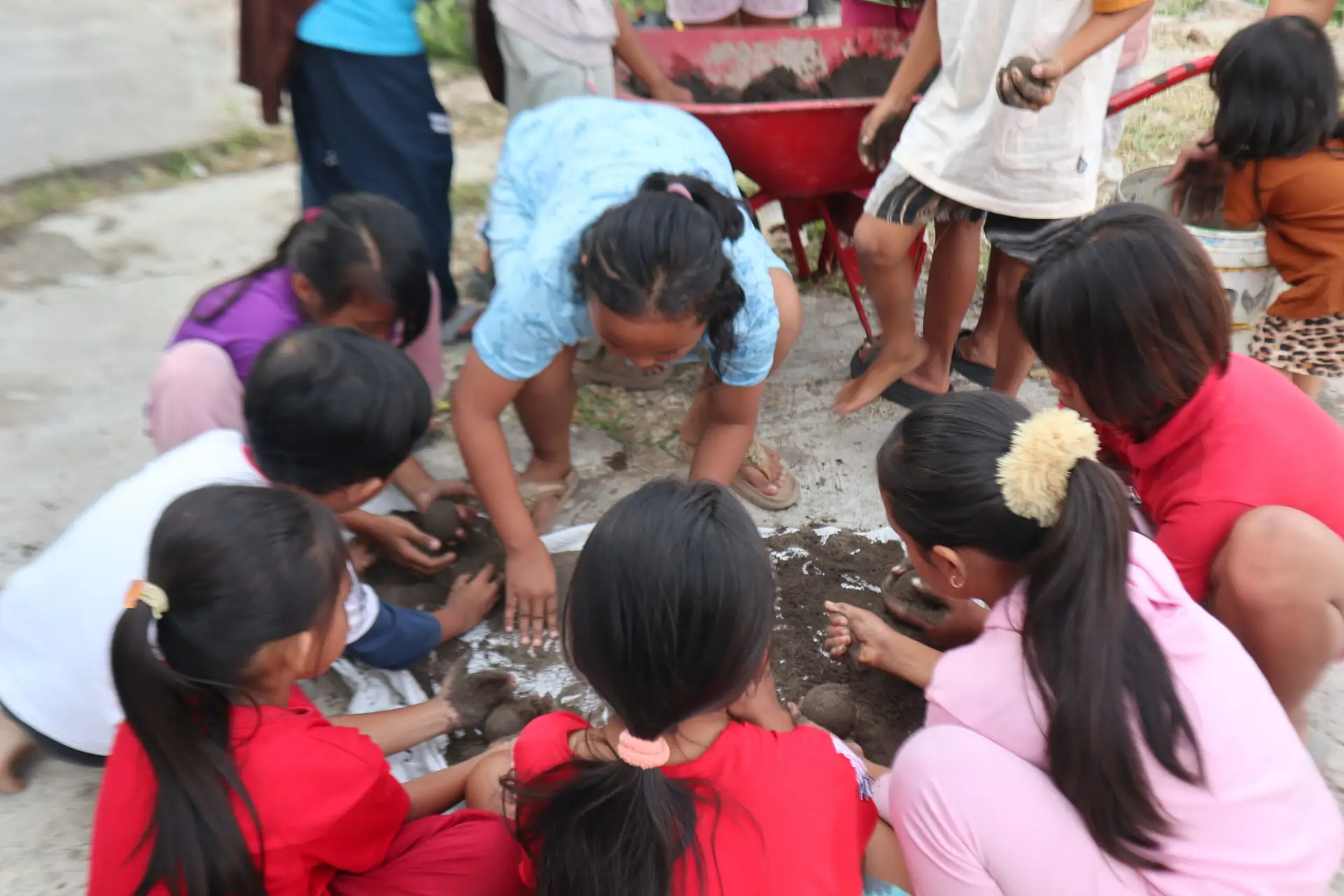
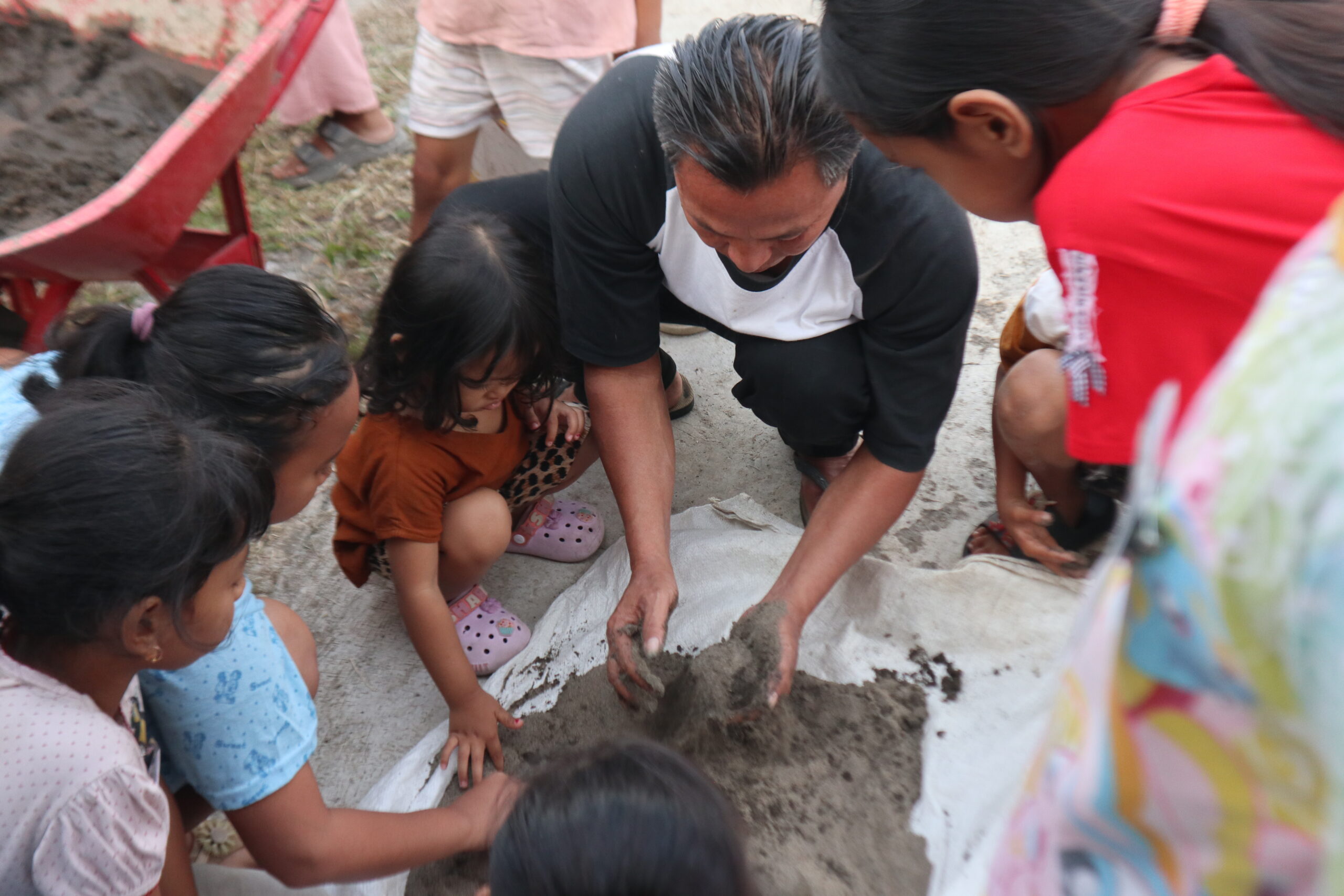
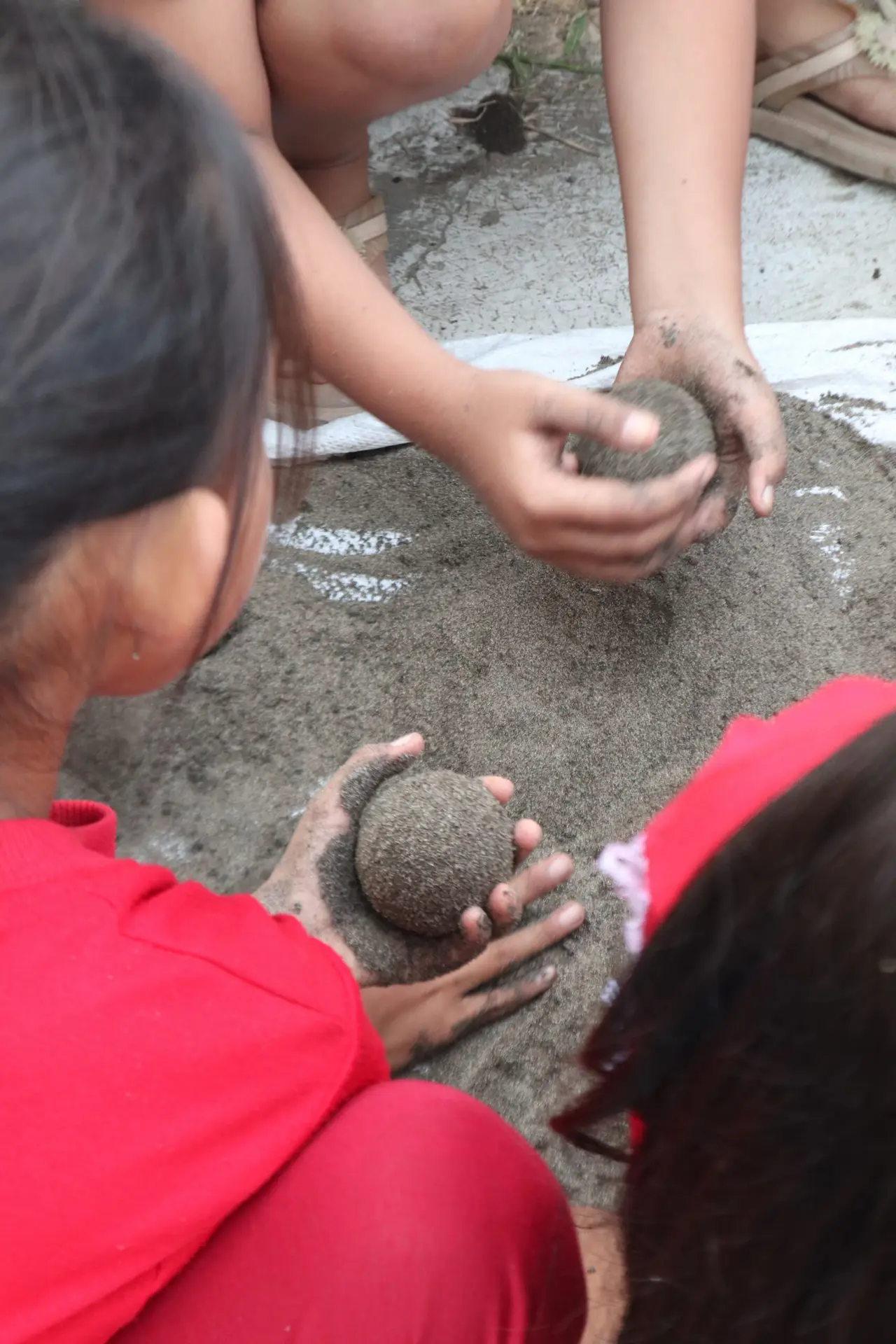
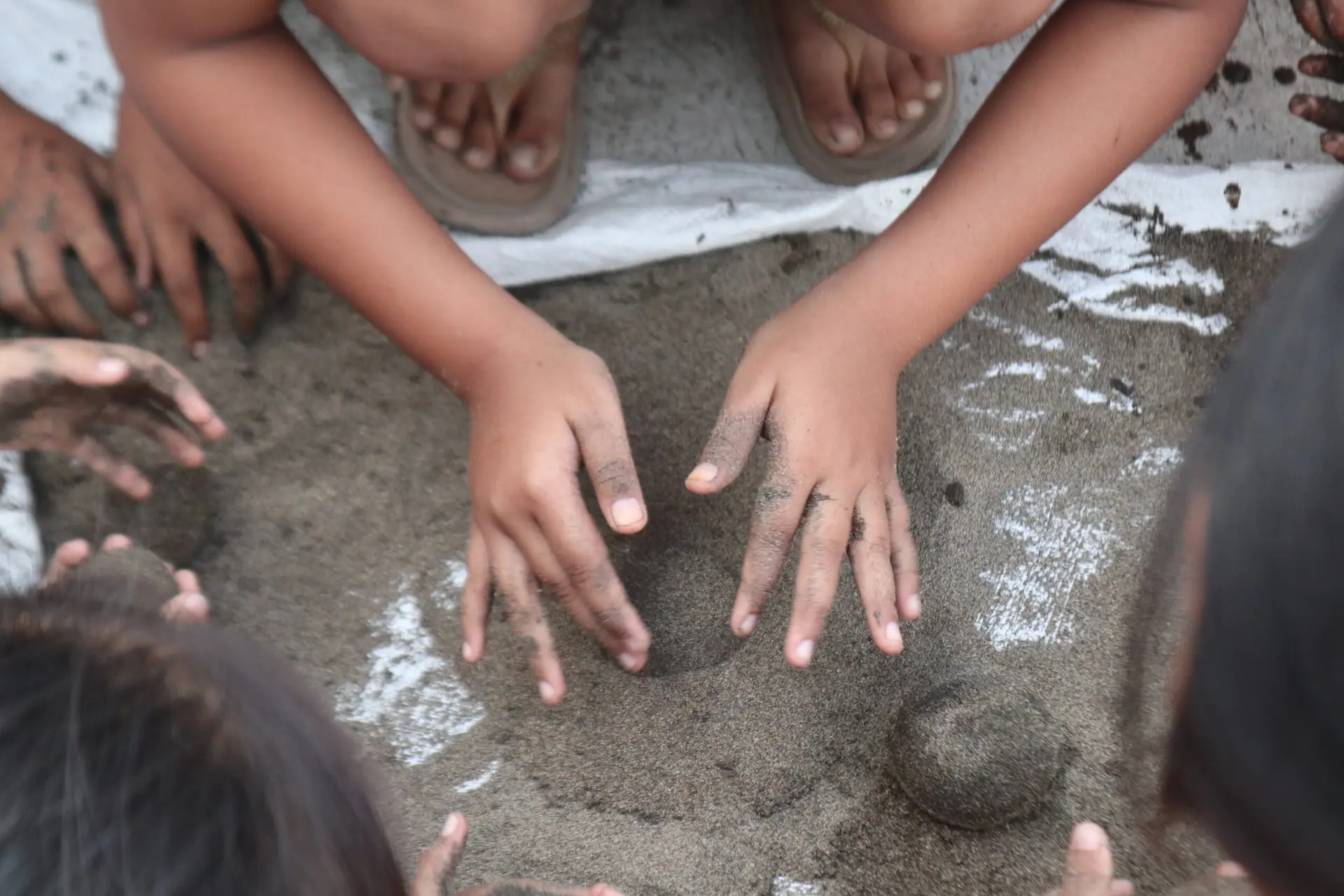
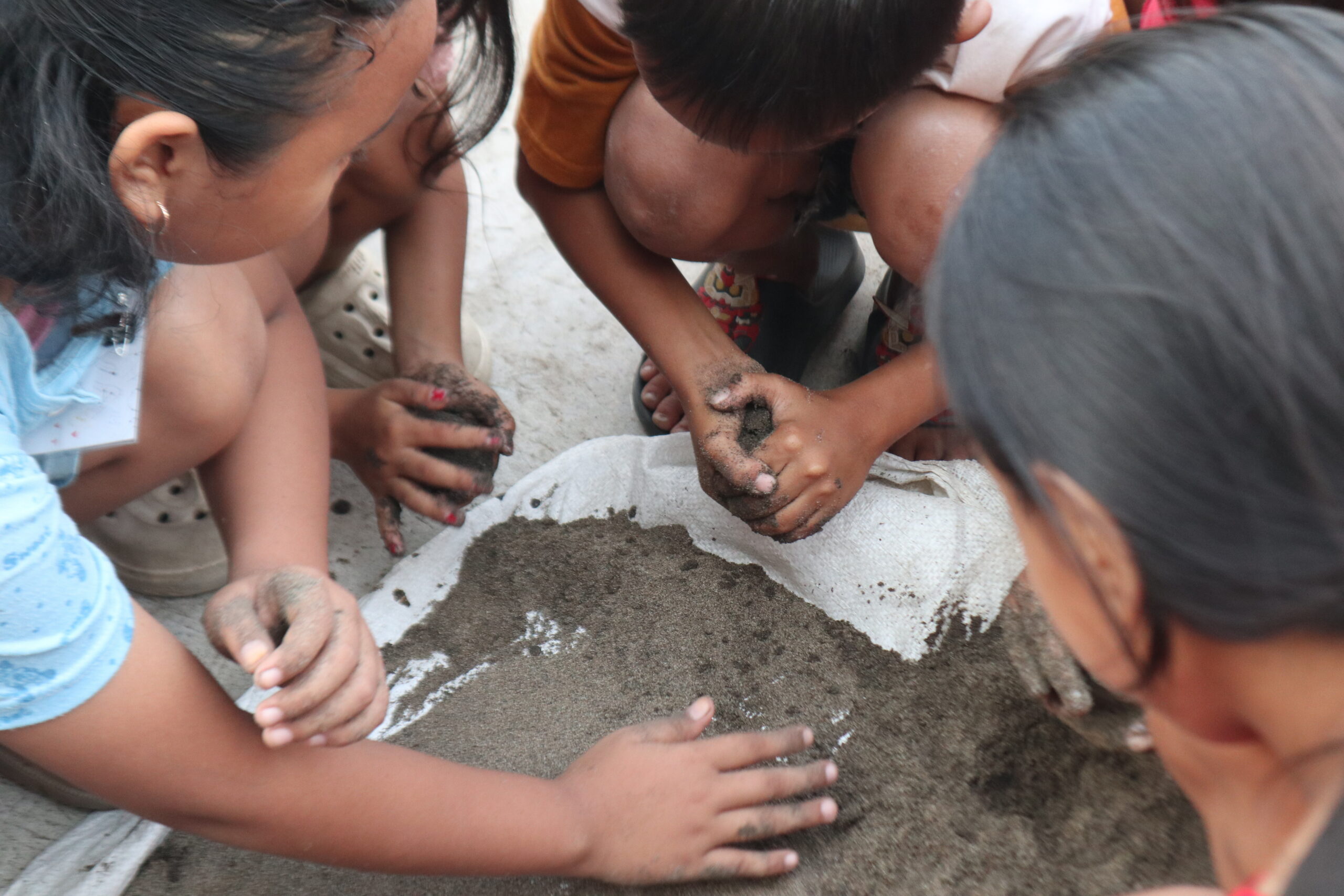
The traditional Empu mud ball game was revitalised as an intergenerational activity to reconnect children with the Bengawan Solo River through playful learning. Once commonly played along the riverbanks of Kampung Sewu, the game involves crafting balls from river mud, racing them down a slope, and testing their strength by striking them against one another. Held on 11 July 2025, the workshop brought together around 20 children and several community elders who still remembered the game’s techniques. Through hands-on participation, children learned how to shape the mud balls and play the game while listening to stories about how it was traditionally played. The activity created a lively space for intergenerational knowledge sharing while highlighting how traditional play can foster environmental awareness and reconnect younger generations with the river.
Reconstructing a Shipyard Memory Site
To reconstruct the memory of Kampung Sewu’s former shipyard—once an important site of traditional boat production along the Bengawan Solo River—a storytelling session was organised with several elderly residents who had direct experience with, or close connections to, the boat-building tradition. Historically, Kampung Sewu functioned as a river port supporting inland trade networks, where boat production played an important role in the local economy until it declined in the 1990s. Through shared stories, participants described how boats were designed and constructed, how production sites were organised along the river, and how the entire community often participated in the ceremonial launching of boats into the river, accompanied by rituals intended to ensure safety and success.
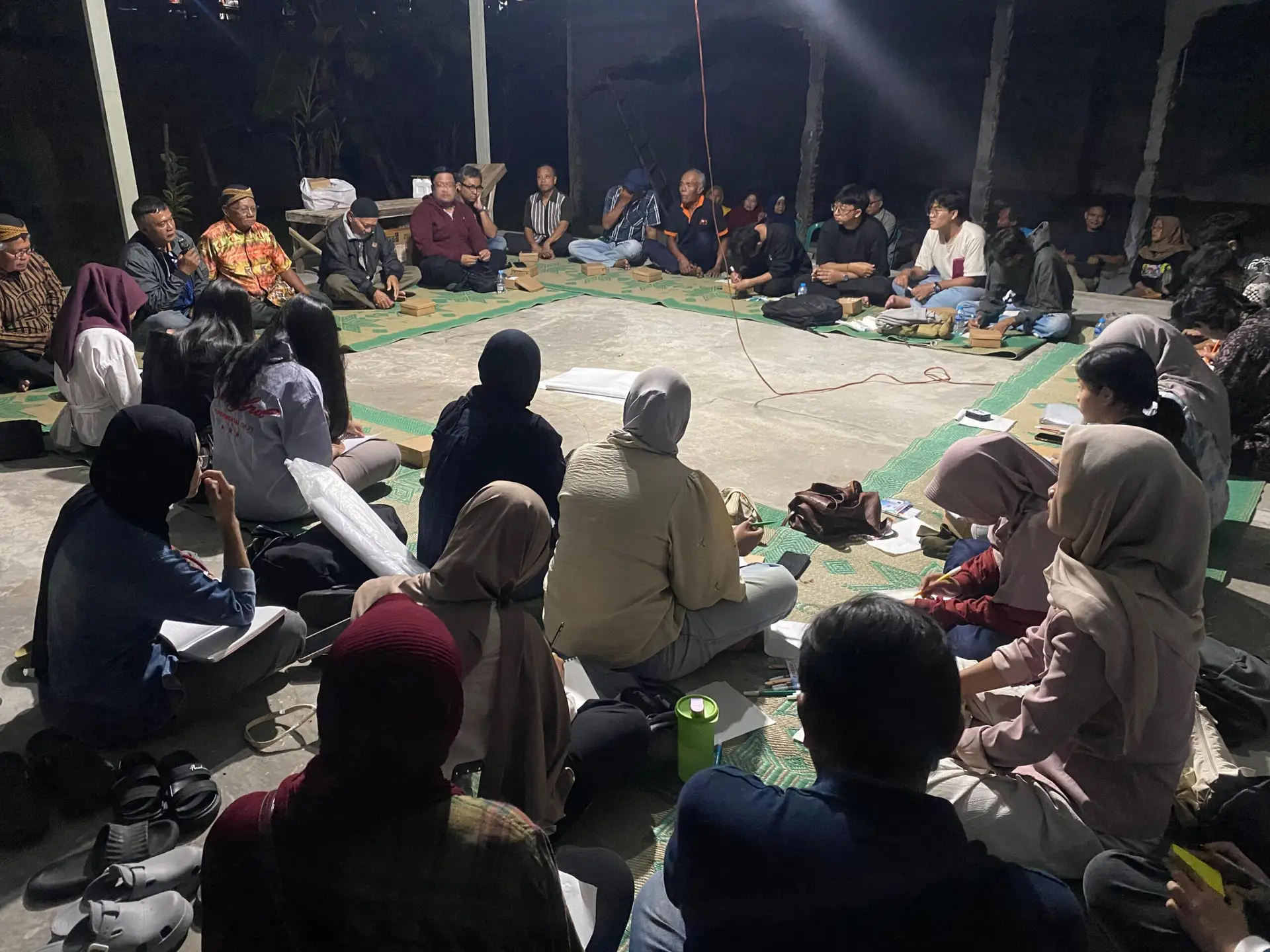
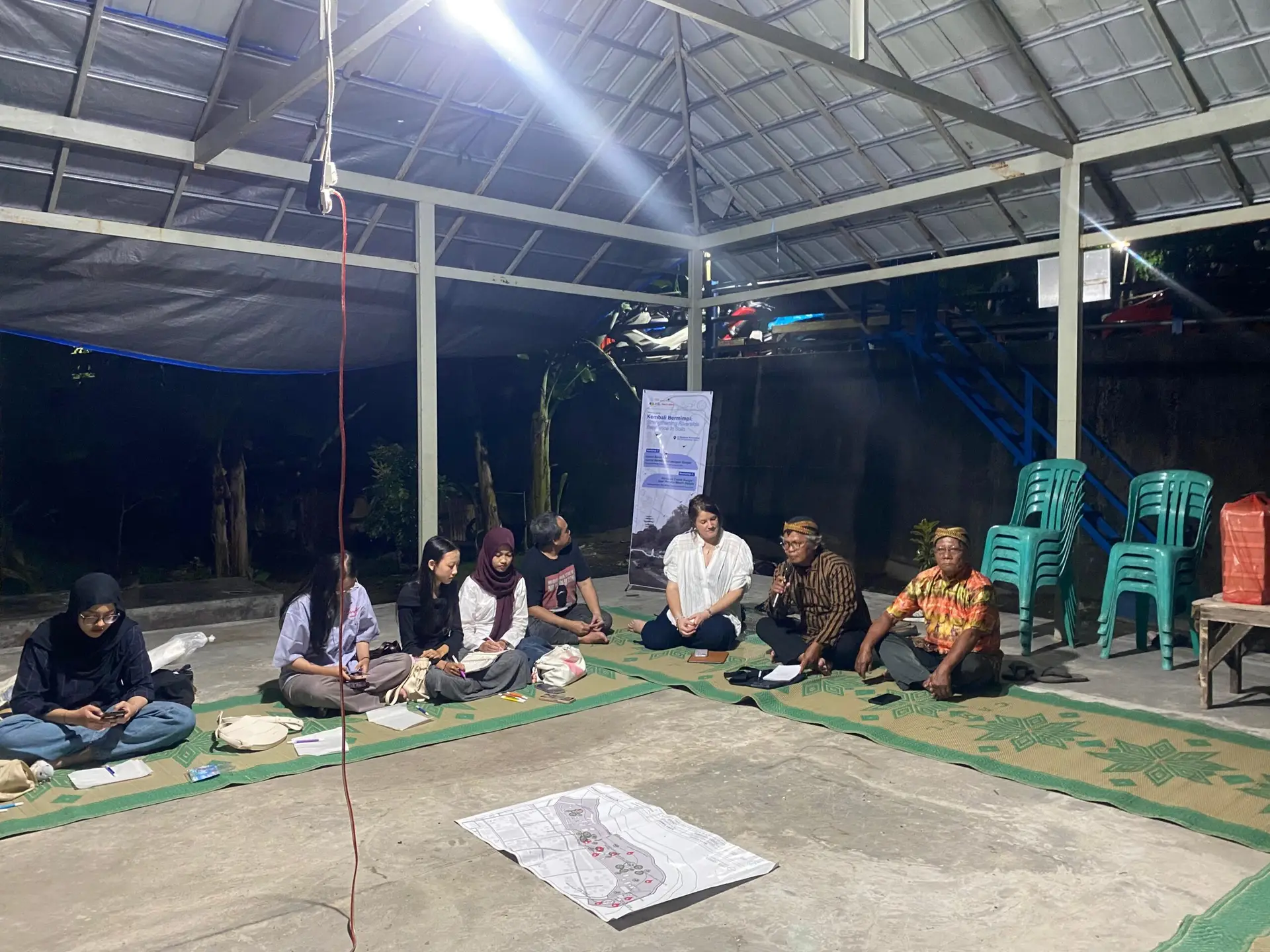
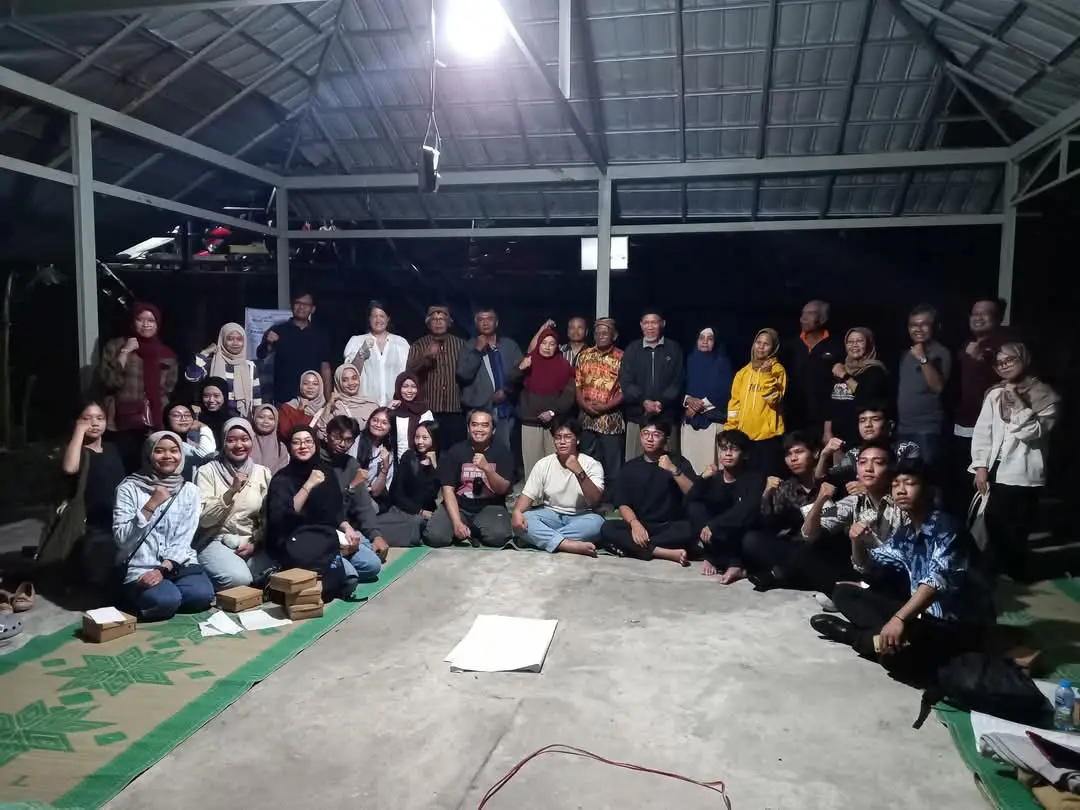
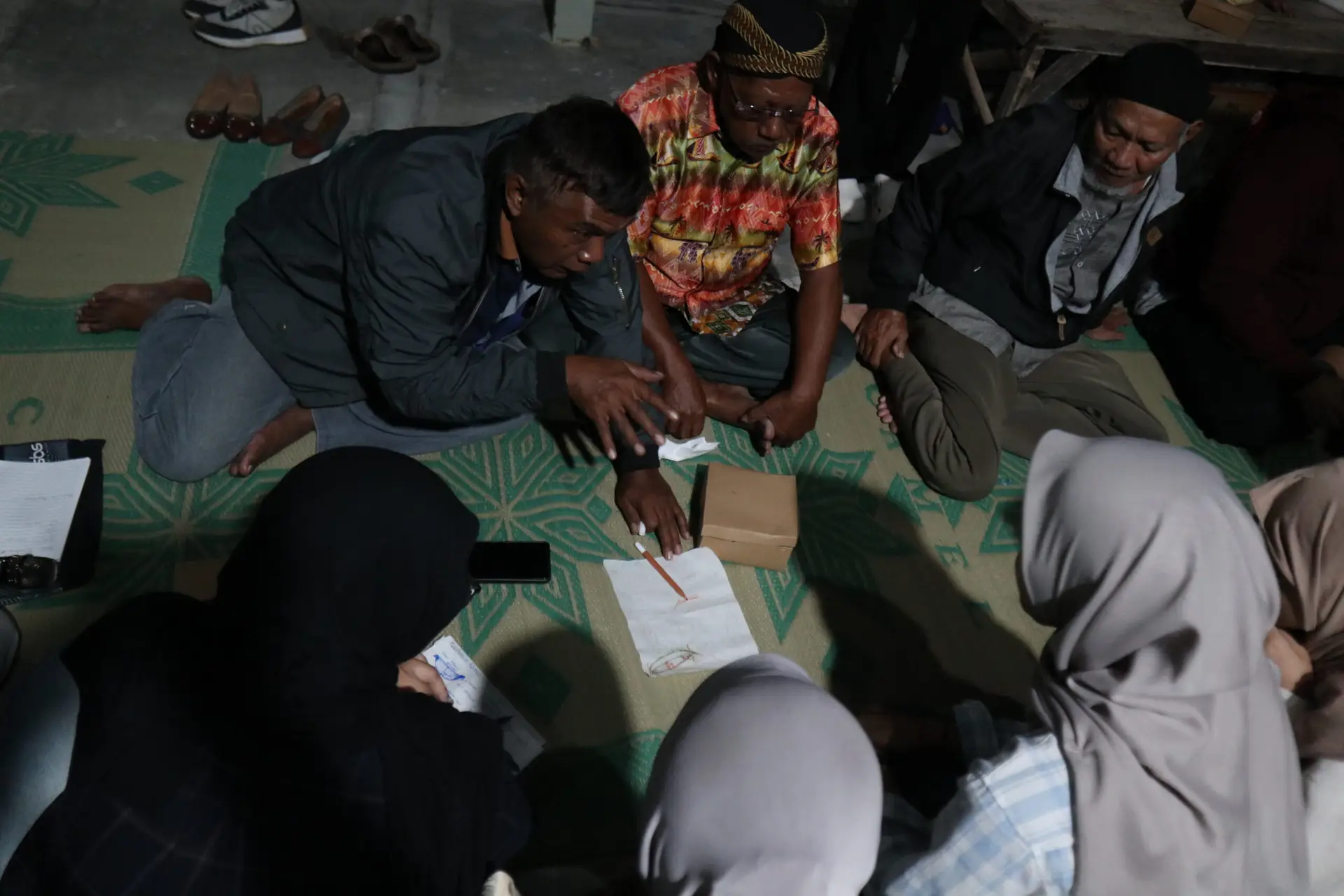
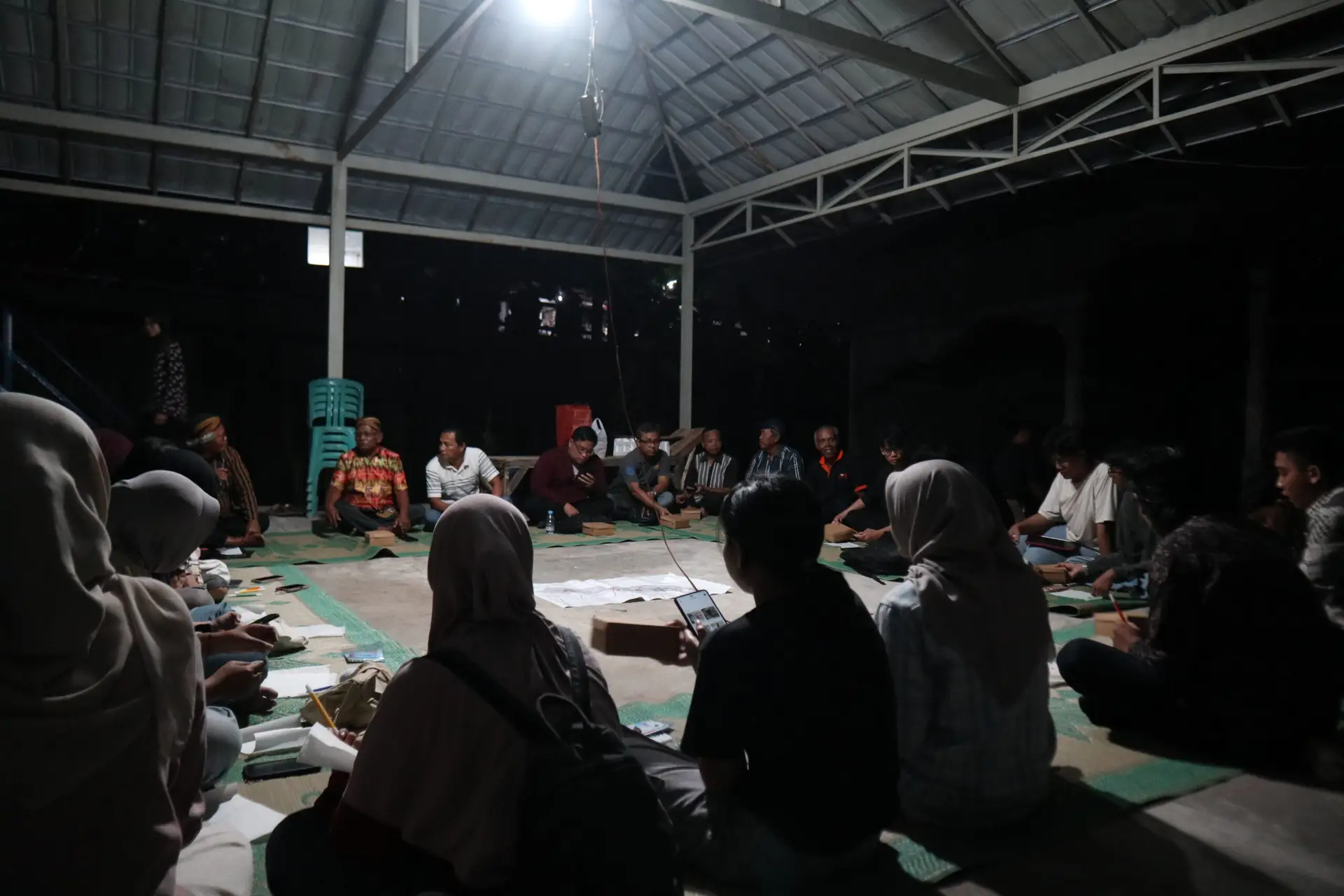

Students and researchers documented the sessions through written notes and visual sketches, which later informed the creation of a comic about Kampung Sewu’s shipyard history. Developed collaboratively with feedback from the original narrators and other community members, the comic serves as an accessible medium to share this river-based heritage with younger generations while strengthening community pride in their collective past.
Co-Designing the Bengawan Solo River Greenbelt
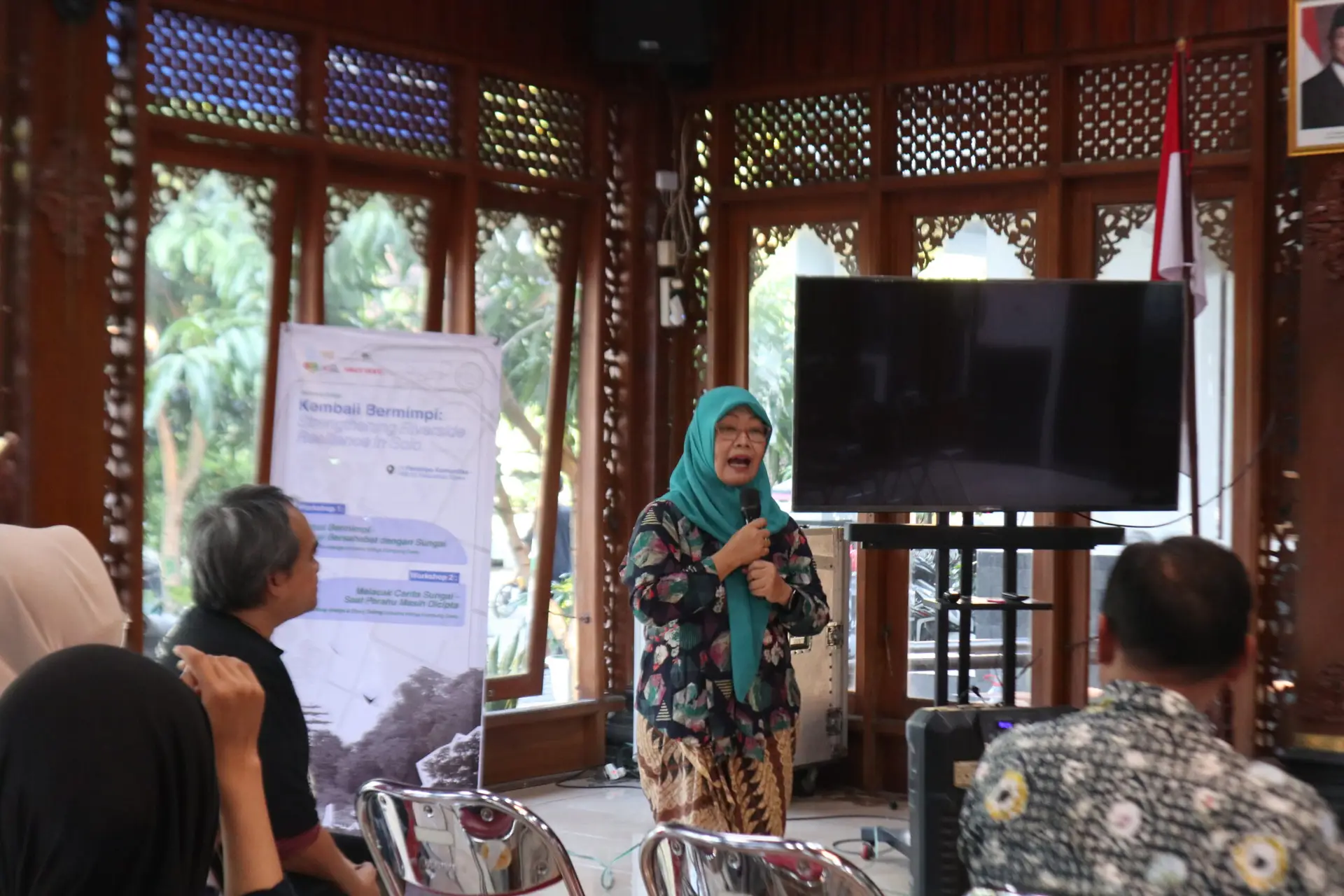
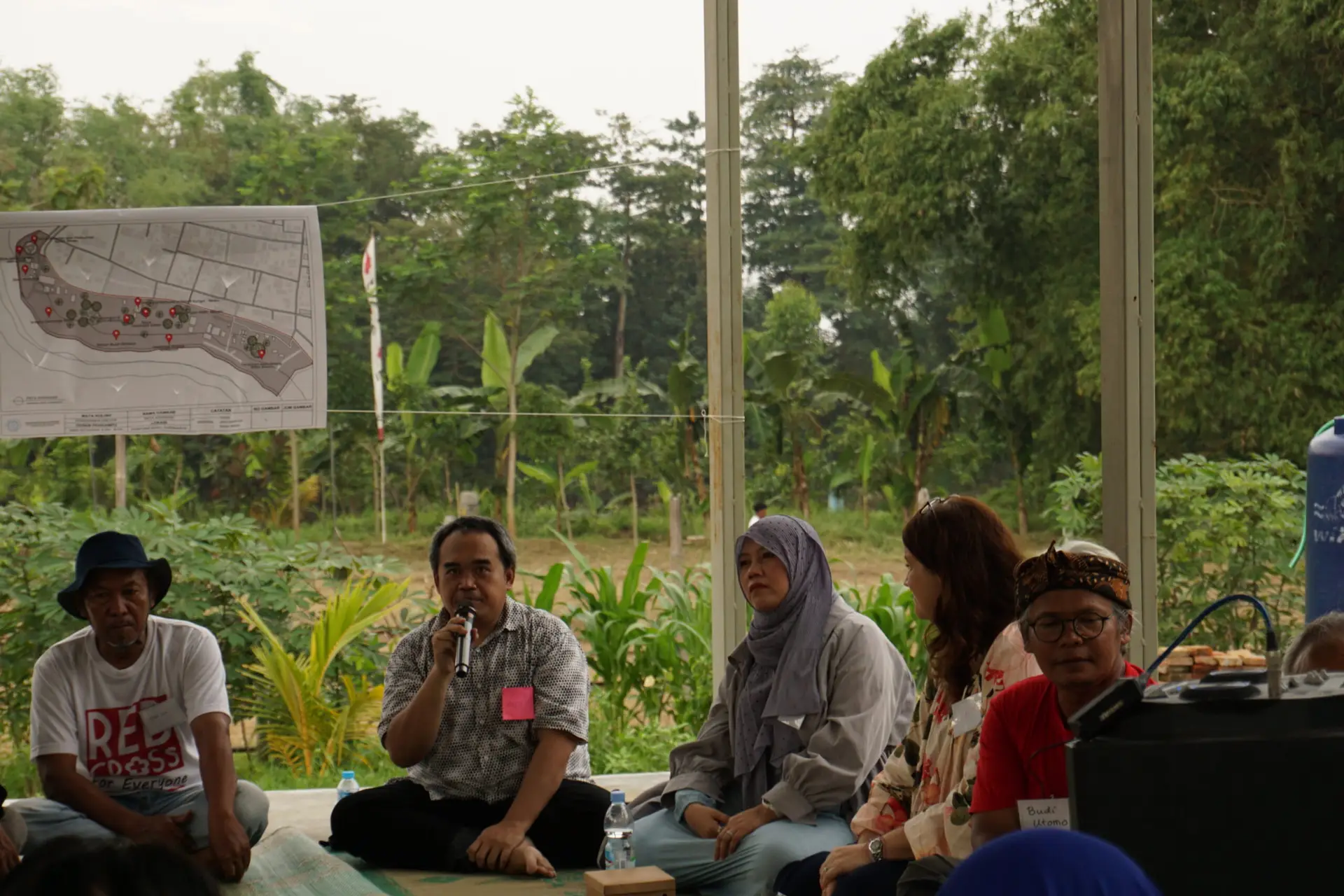
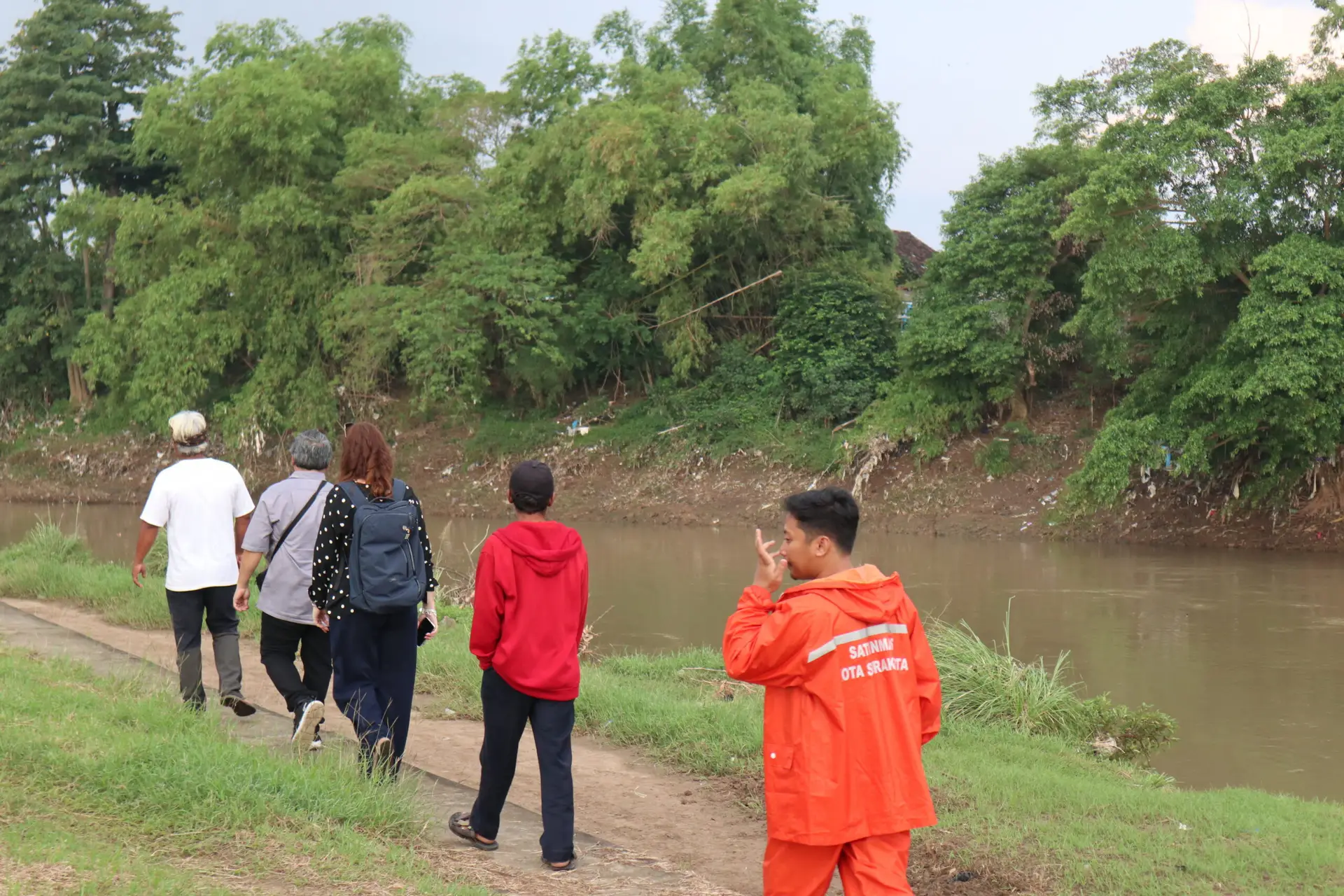
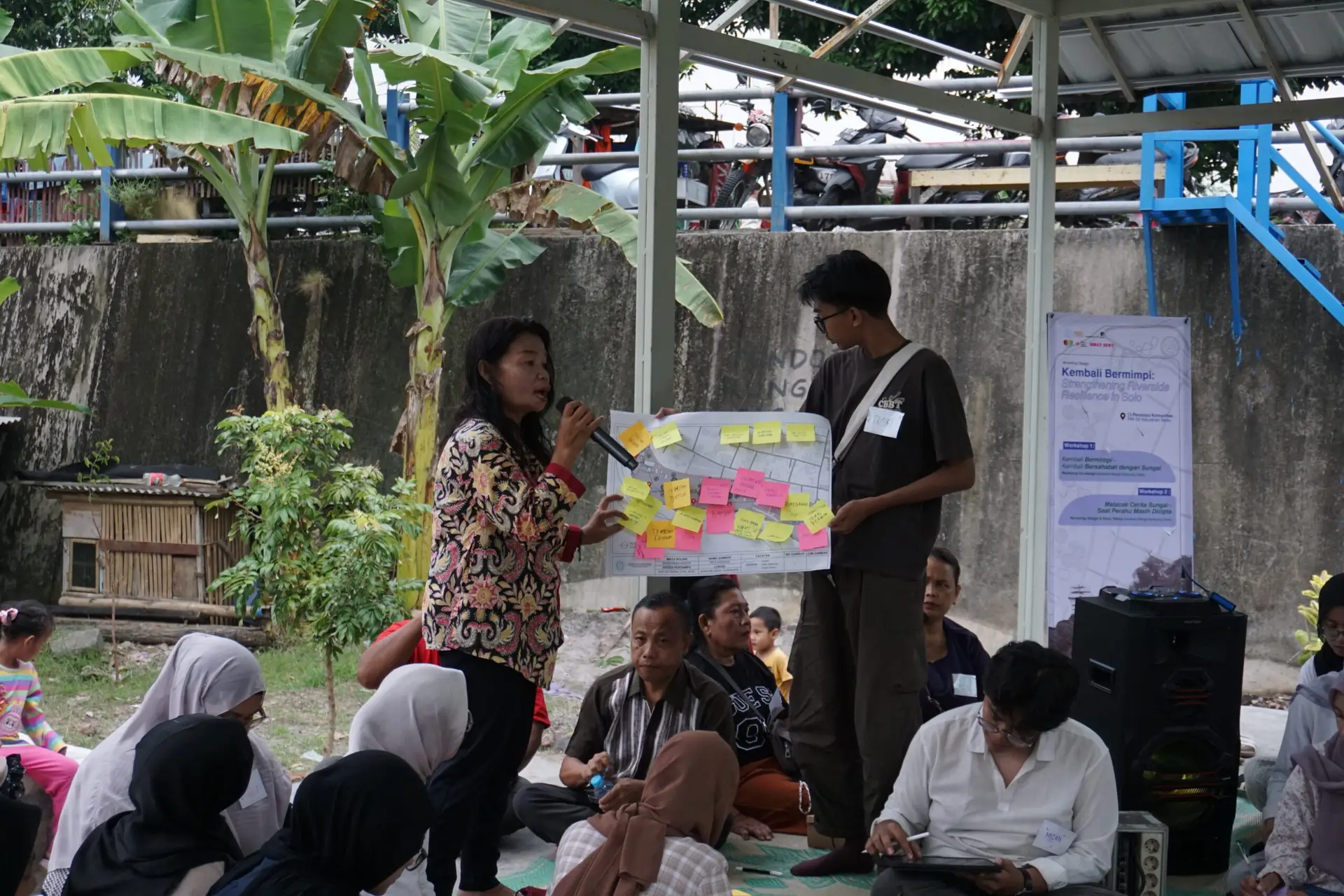
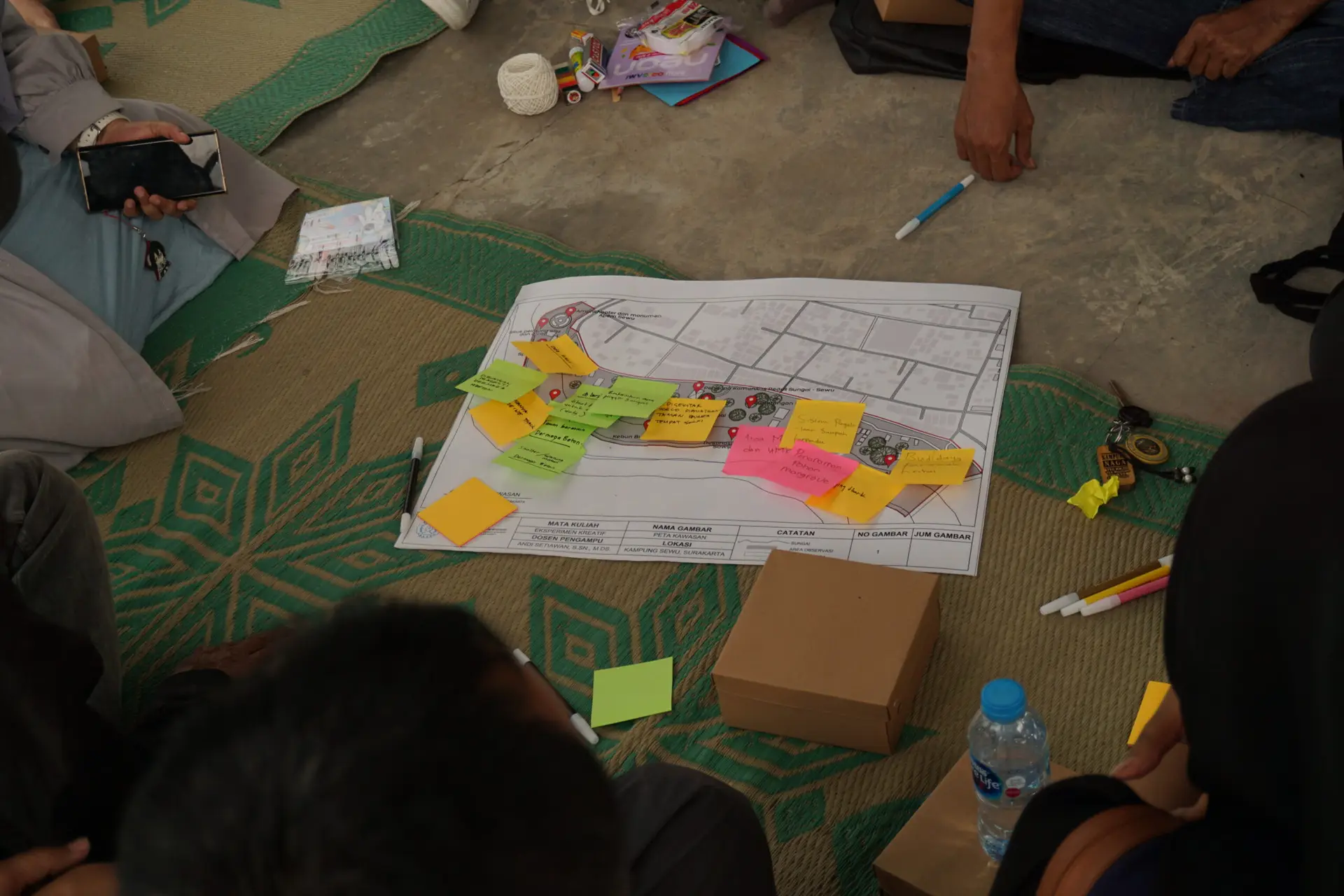
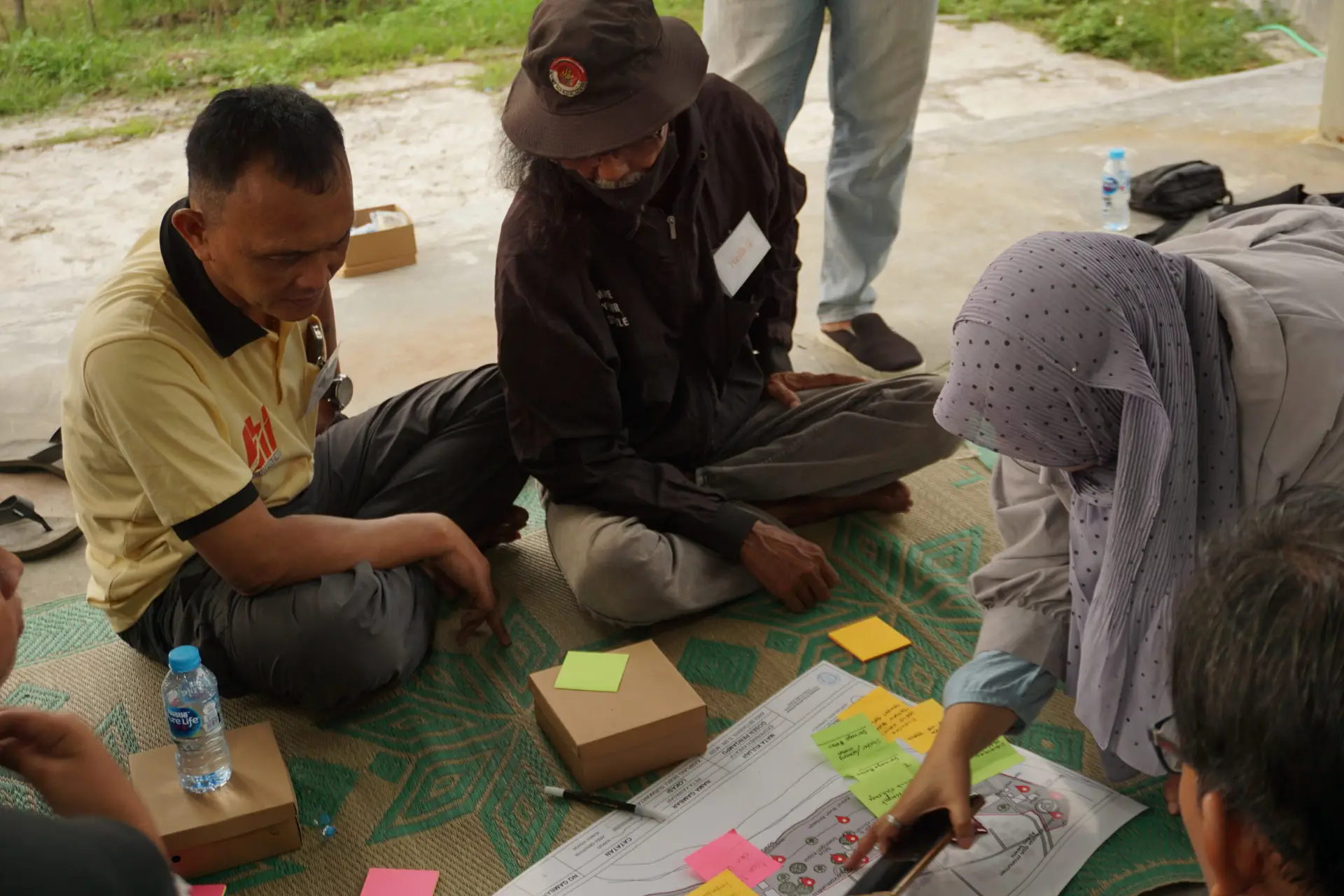
A co-design workshop brought together residents of Kampung Sewu, students, and researchers to reimagine the Bengawan Solo riverbank greenbelt as a space that supports both flood management and community life. Held on 22 May 2025 at the community pendapa, around 40 residents participated in discussions and group design activities facilitated through live sketches and visual tools. Participants proposed several ideas for the area, including a goat shelter for small-scale livelihoods, a monument marking the village’s historical river crossing, and a playground with a volleyball court for social interaction. These proposals were later translated into visual designs by students, demonstrating how community-led planning can transform underused riverbank spaces while respecting their ecological function.
Festival Lepen Kampung Sewu 2025
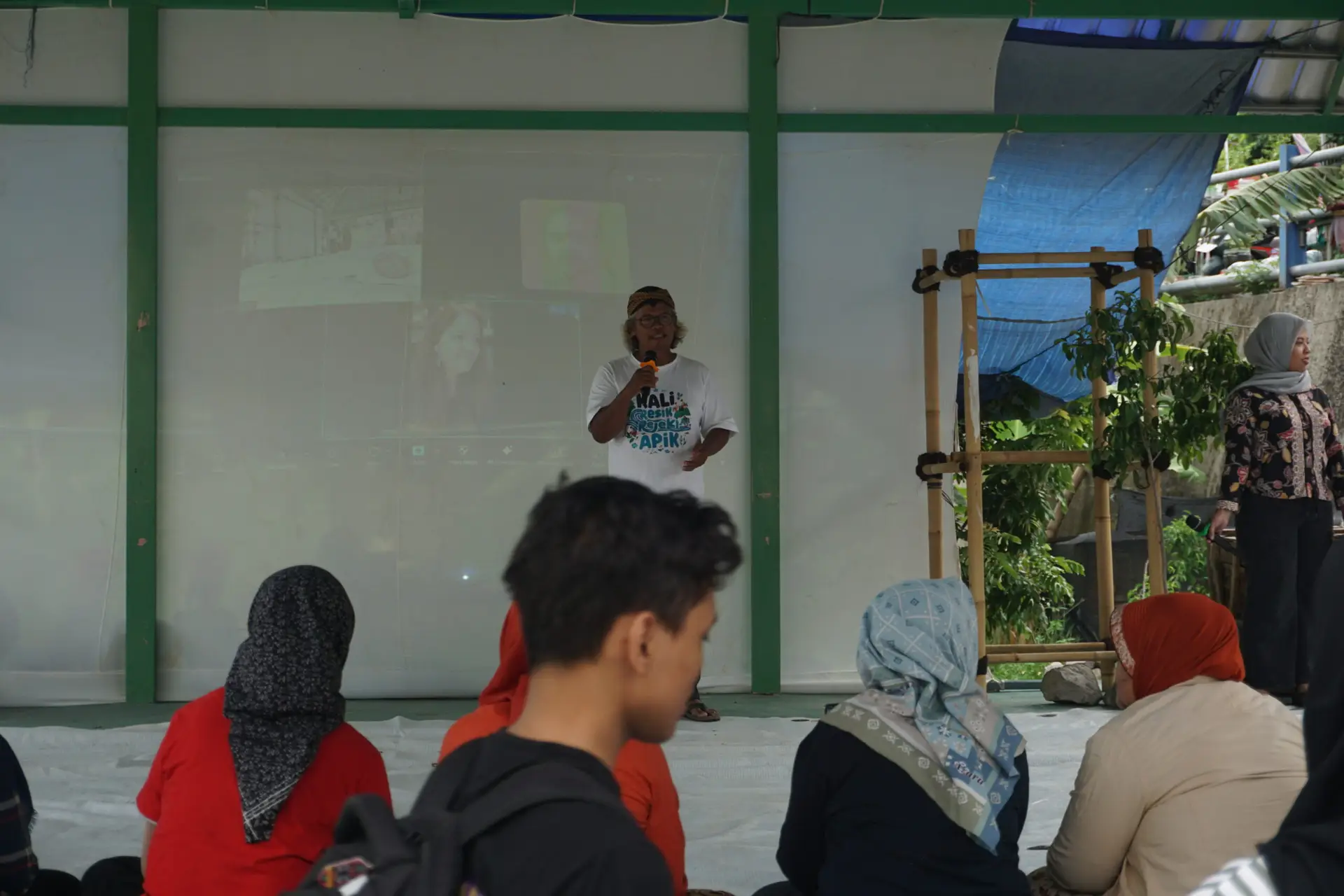
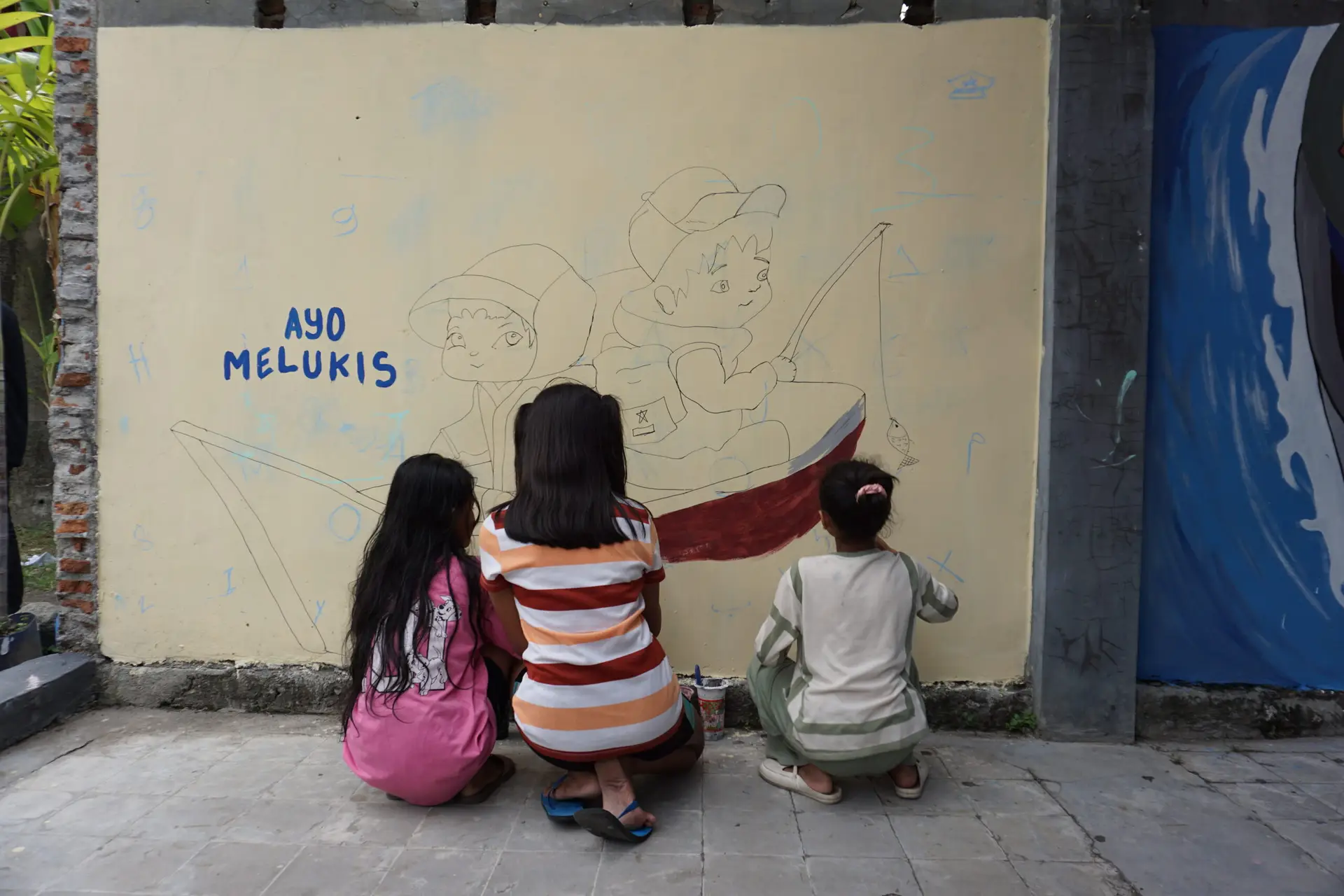
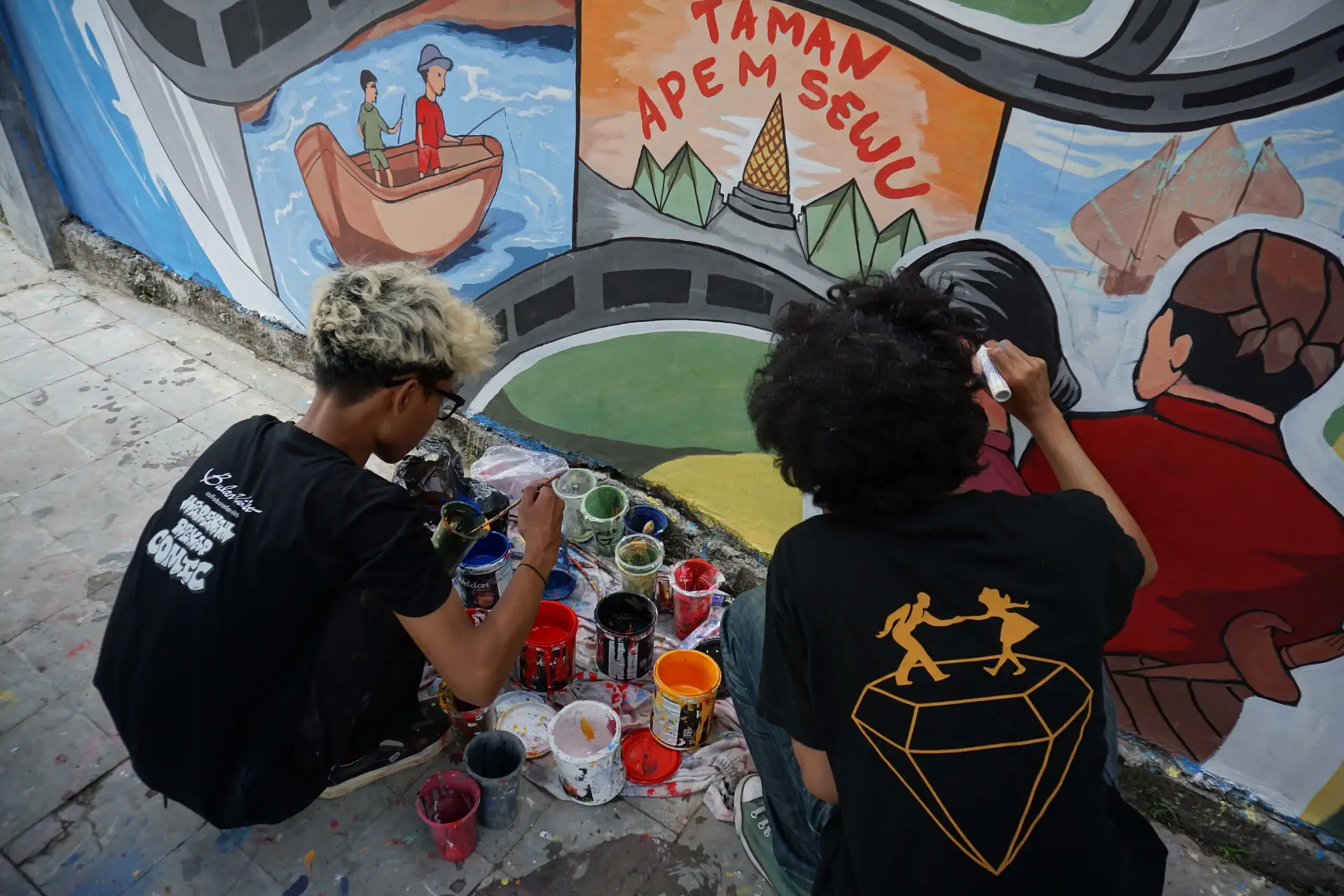
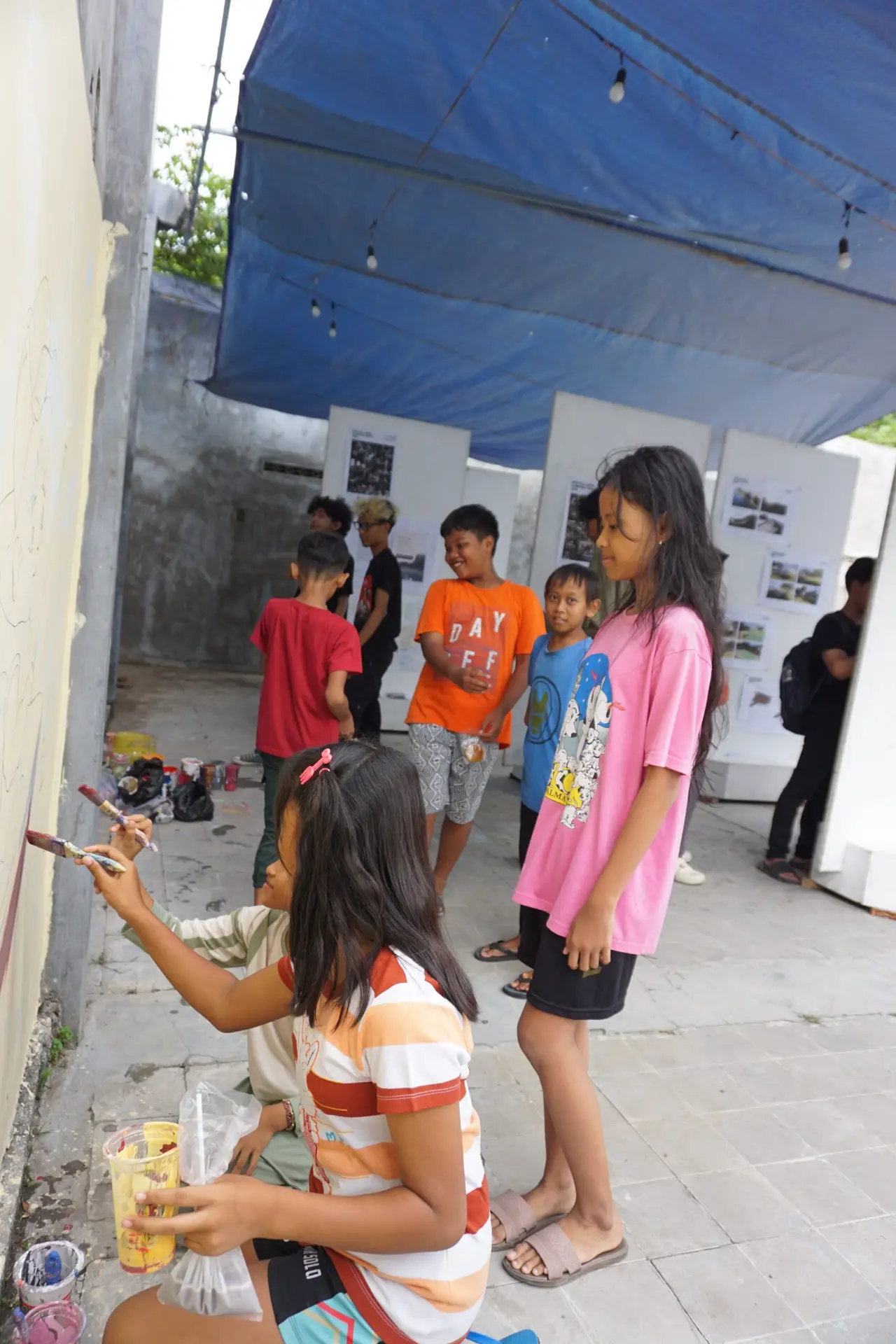
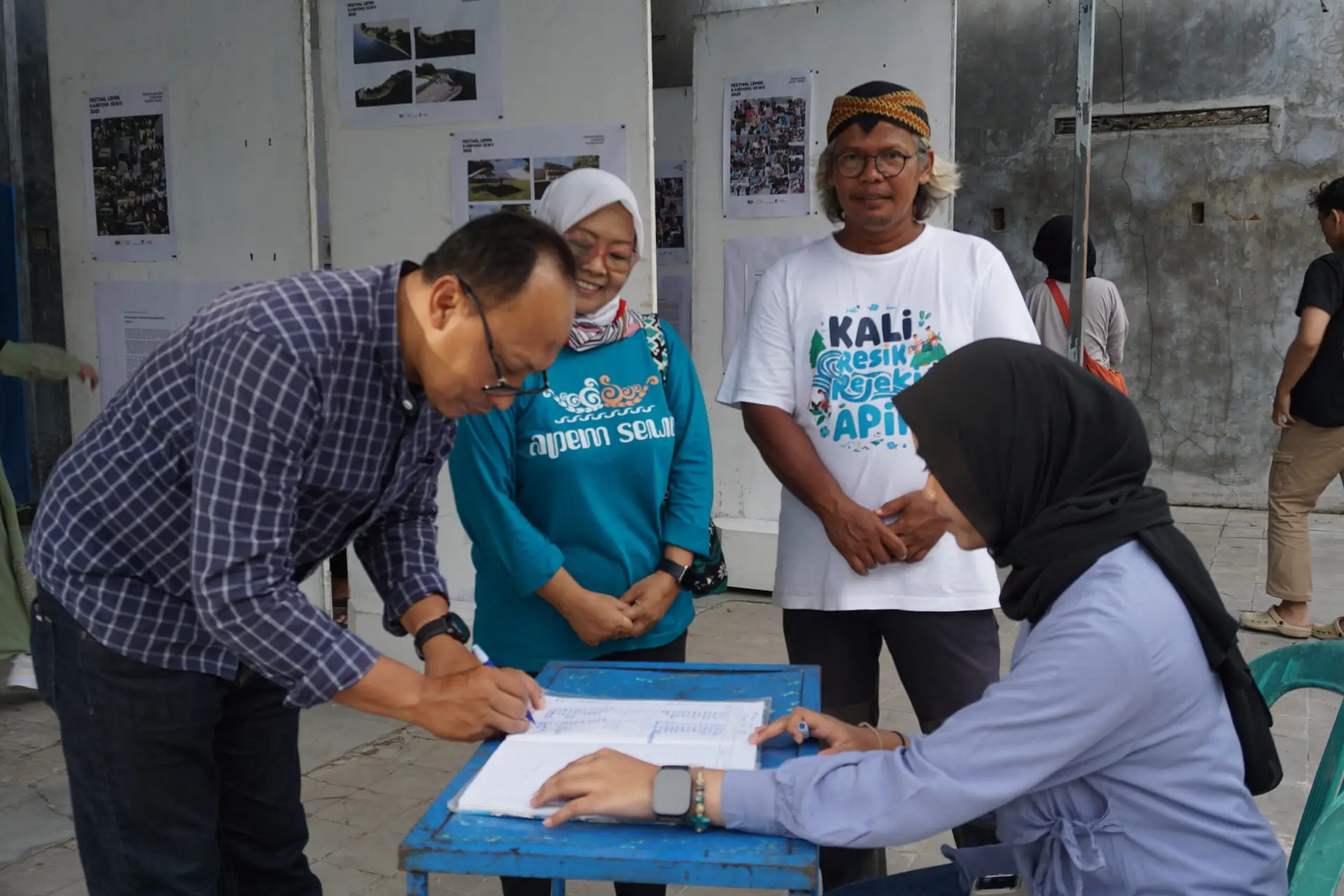
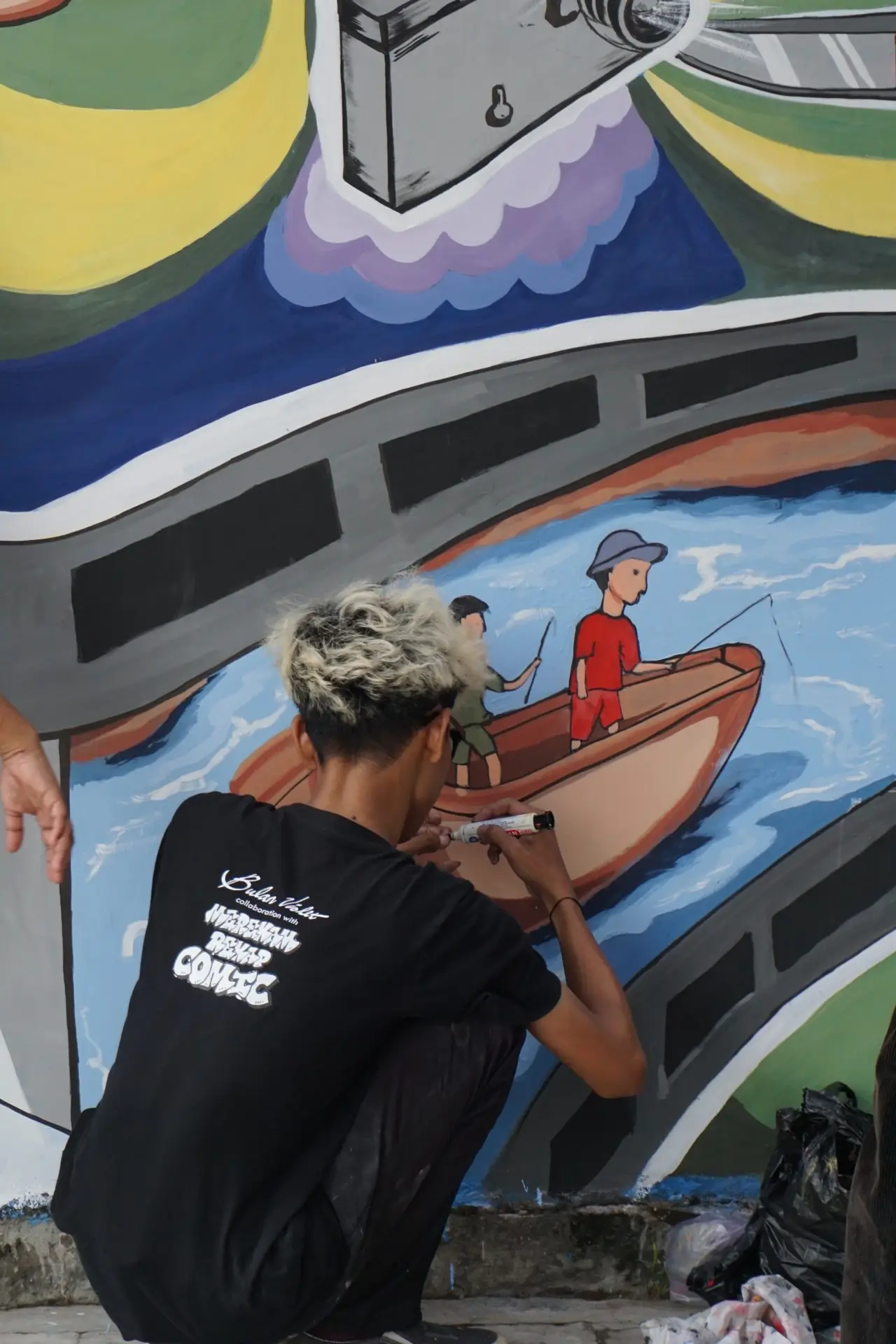
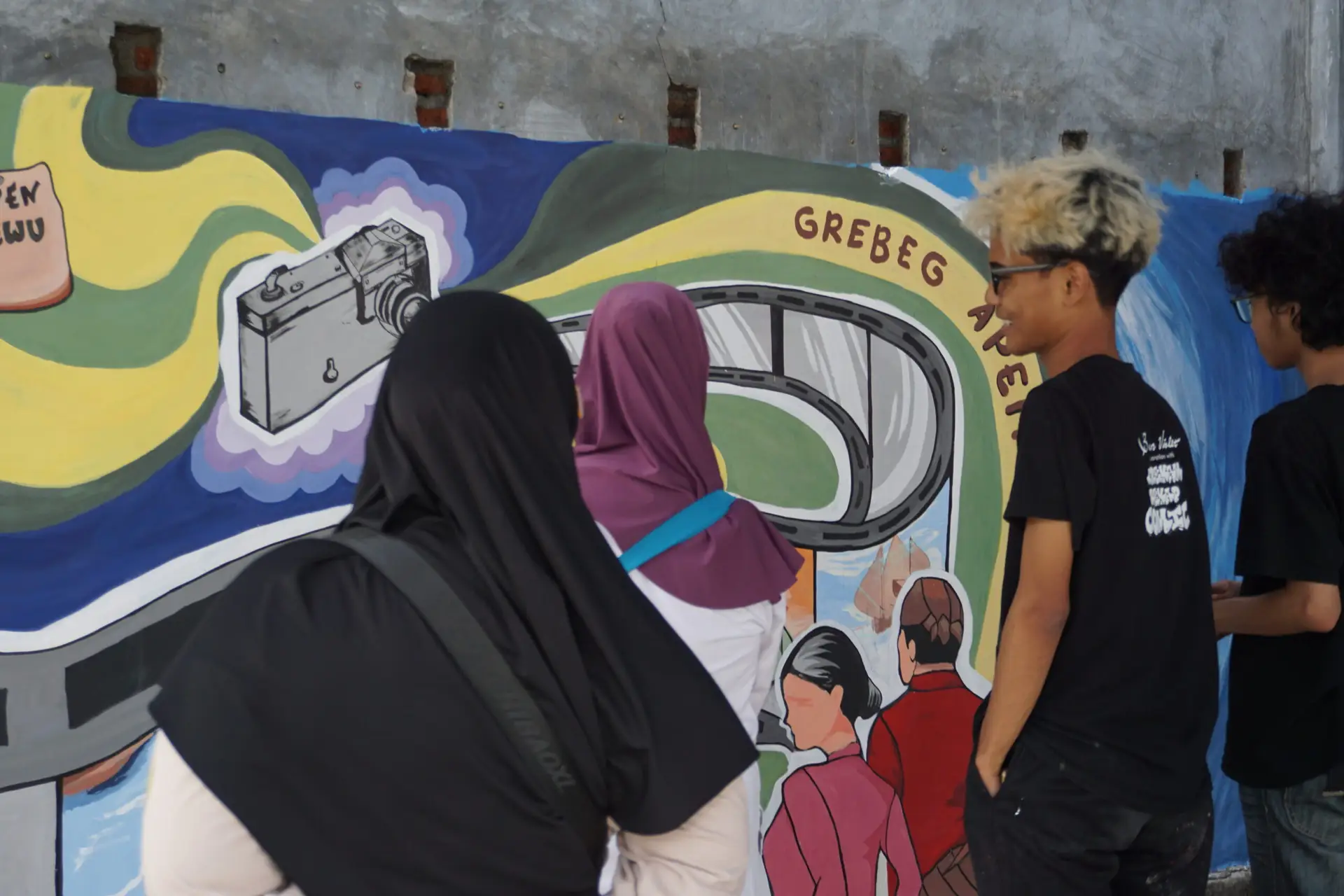
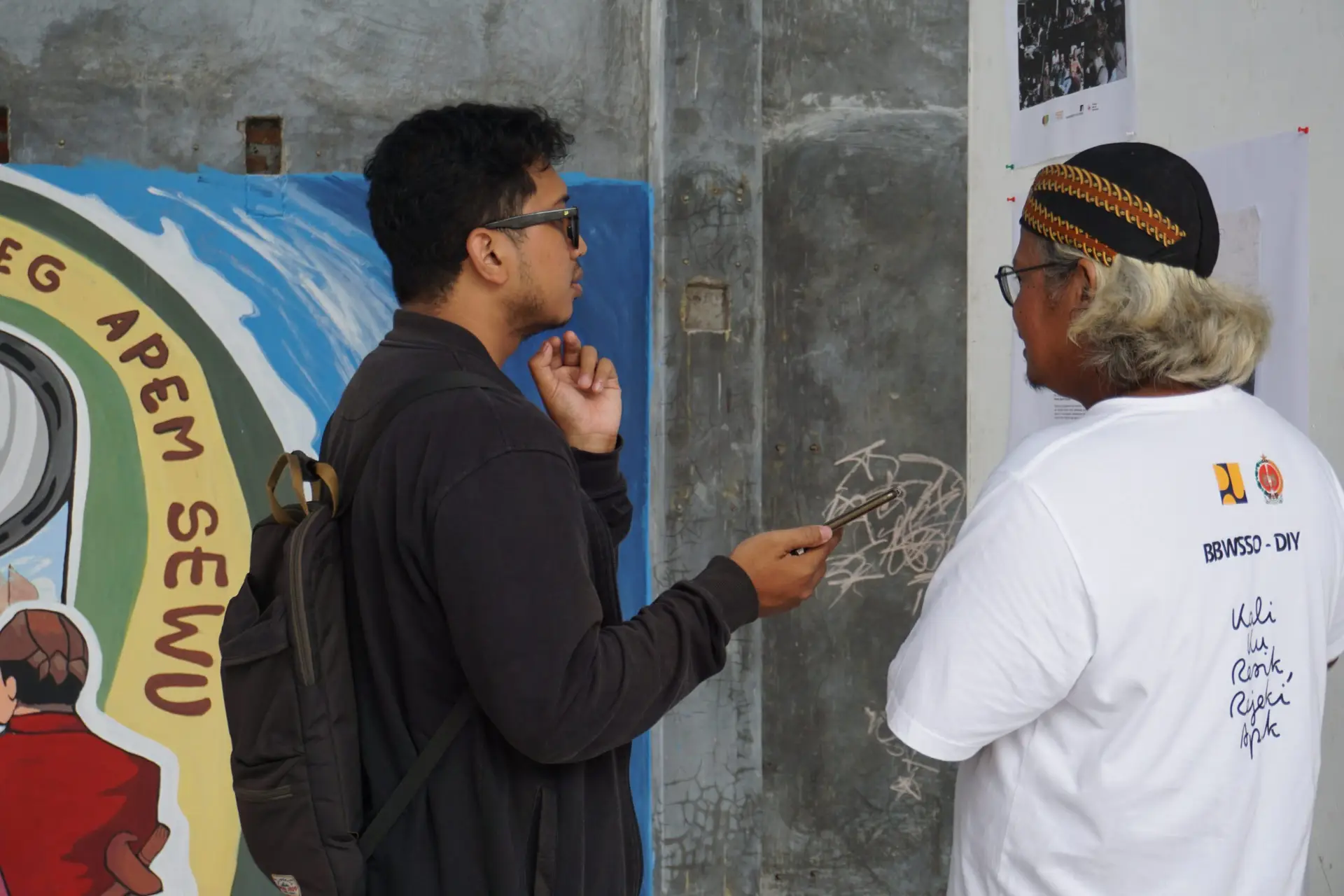
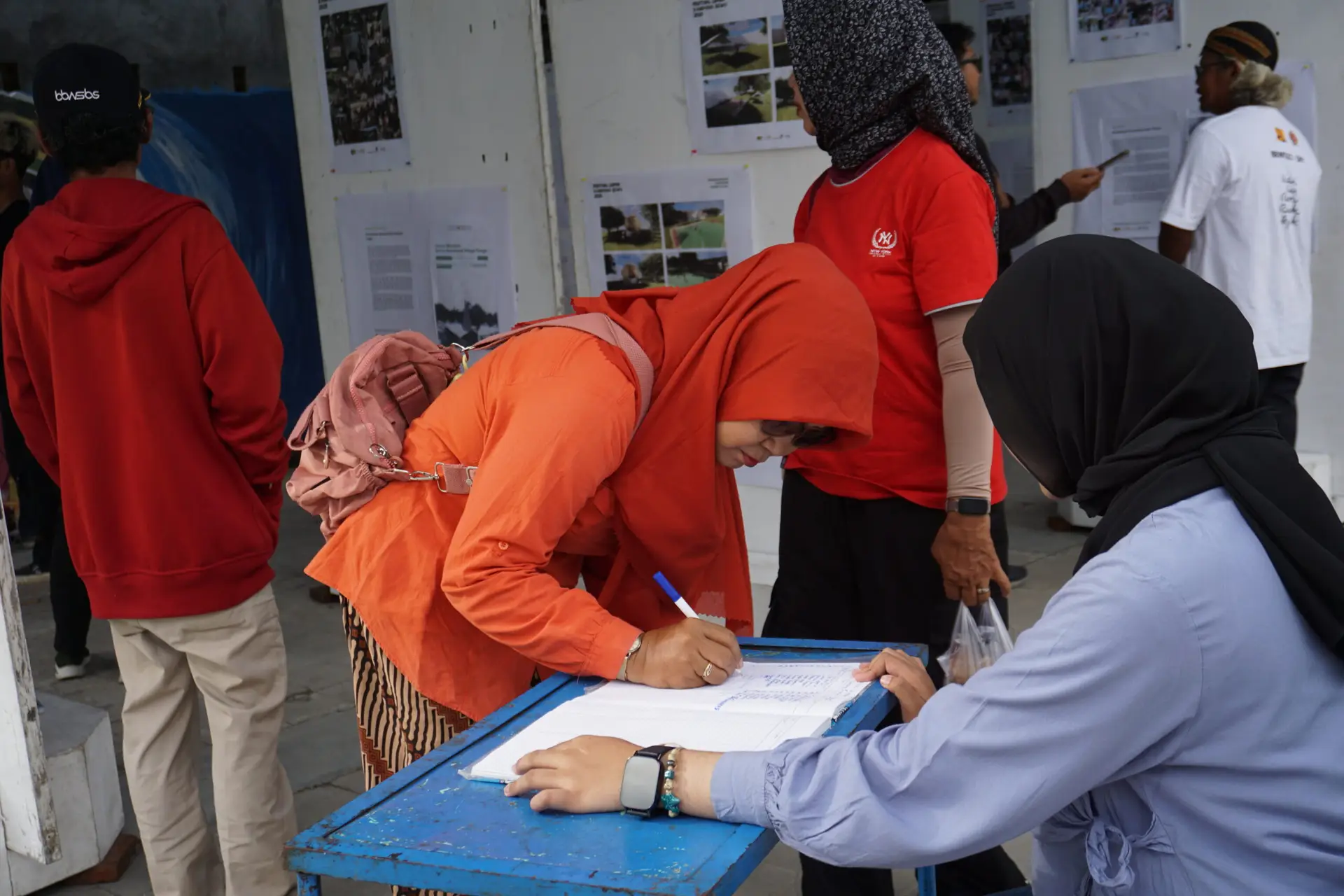
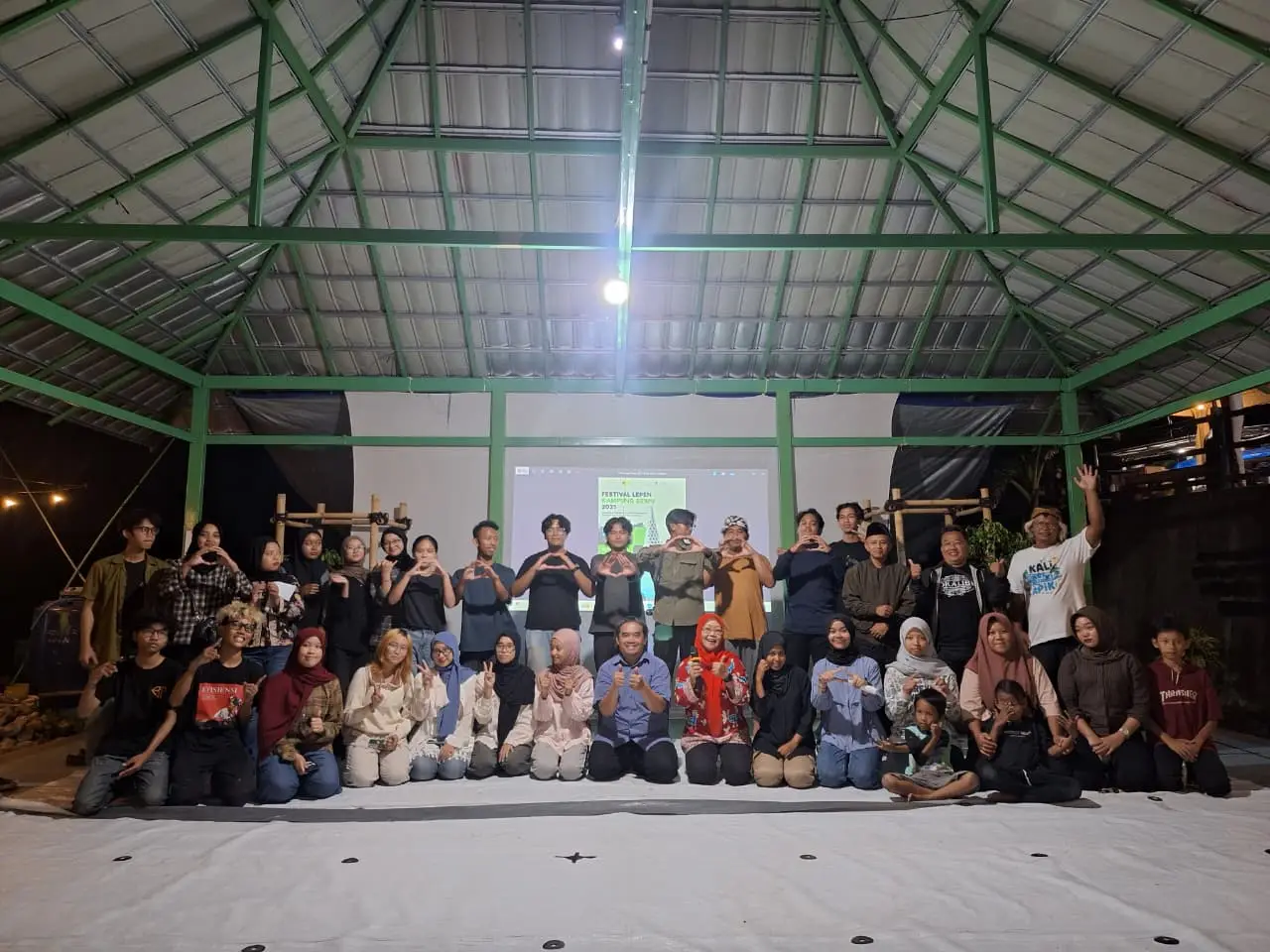
Festival Lepen Kampung Sewu 2025 marked the culmination of the project as both a community celebration and a public sharing of the activities developed throughout the programme. Held on 26 October 2025 at the community pendapa, the festival was organised collaboratively with residents, who were actively involved in planning the programme and managing the event. The festival featured exhibitions of project outputs such as comics, illustrated books, and animated visualisations, a screening of the Apem Sewu documentary, presentations by residents and students, children’s performances, community-run food stalls, and a live mural created together with local children. The event attracted residents, local government representatives, and university partners, creating a lively space where research outputs, cultural expression, and community engagement came together to celebrate Kampung Sewu’s connection to the river.