Our Resep Keadilan Bencana exhibition presents curated community- and artist-led works that focus on the theme of disaster justice. They explore how we can achieve equity in how people can prepare for, survive and sustainably recover from disasters. At the centre are co-created ‘Recipes for Disaster Justice’ – inclusive, community-led visions for intersectional disaster resilience and risk reduction.
We launched our public exhibitions on the 21st of January 2026 in East Lombok, where it ran until the 7th February at the National Library. Pop-up exhibitions were then held in Central Lombok between the 9th – 19th February and in West Lombok between the 7th – 17th March. All our pop-up exhibitions have invited members of the public, local activists and civil society, emergency responders and government agencies to engage with the artworks through a programme of guided tours, panel events, dialogues and side events.
Artworks, creative writing and counter-maps were co-created and commissioned as part of GENERATE’s Resep Keadilan Bencana project, a six-month community- and arts-based initiative locally led by Lalu Faris Naufal Makhroja and Maulani Furi Fajarini.
In collaboration with over 18 civil society organisations and drawing together 158 participants, our two-day creative workshops across North, Central, West and East Lombok drew together local communities and artists in cycles of discussion, reflection and creative expression to collectively explore and creatively document lived experiences of injustice and disasters across the island of Lombok. Our research collaborators included women, people with diffabilities, farmers and fishers, former migrant workers, teachers, child marriage and gender-based violence survivors, sexual and gender diverse people, older people, and informal workers.
At the centre of the exhibitions are a series of four counter-maps, co-created across East, Central, West and North Lombok. These document multiple forms of environmental, social, health and economic hazards and disasters, demonstrating there is no such thing as a ‘natural’ disaster.
Featured local arts include wayang puppets, recycled paper masks, batik, hand embroidery, collage, paintings, sculptures, pottery and lelakaq (creative writing). The works explore the lived experiences, innovations, and injustices shared by diverse communities across the island, while celebrating community leadership, creativity and innovations. They position local communities at the centre of disaster risk reduction, foregrounding their agency and leadership, and call for a justice-oriented approach to disaster management.
Participants’ quotes that are included on the artworks:
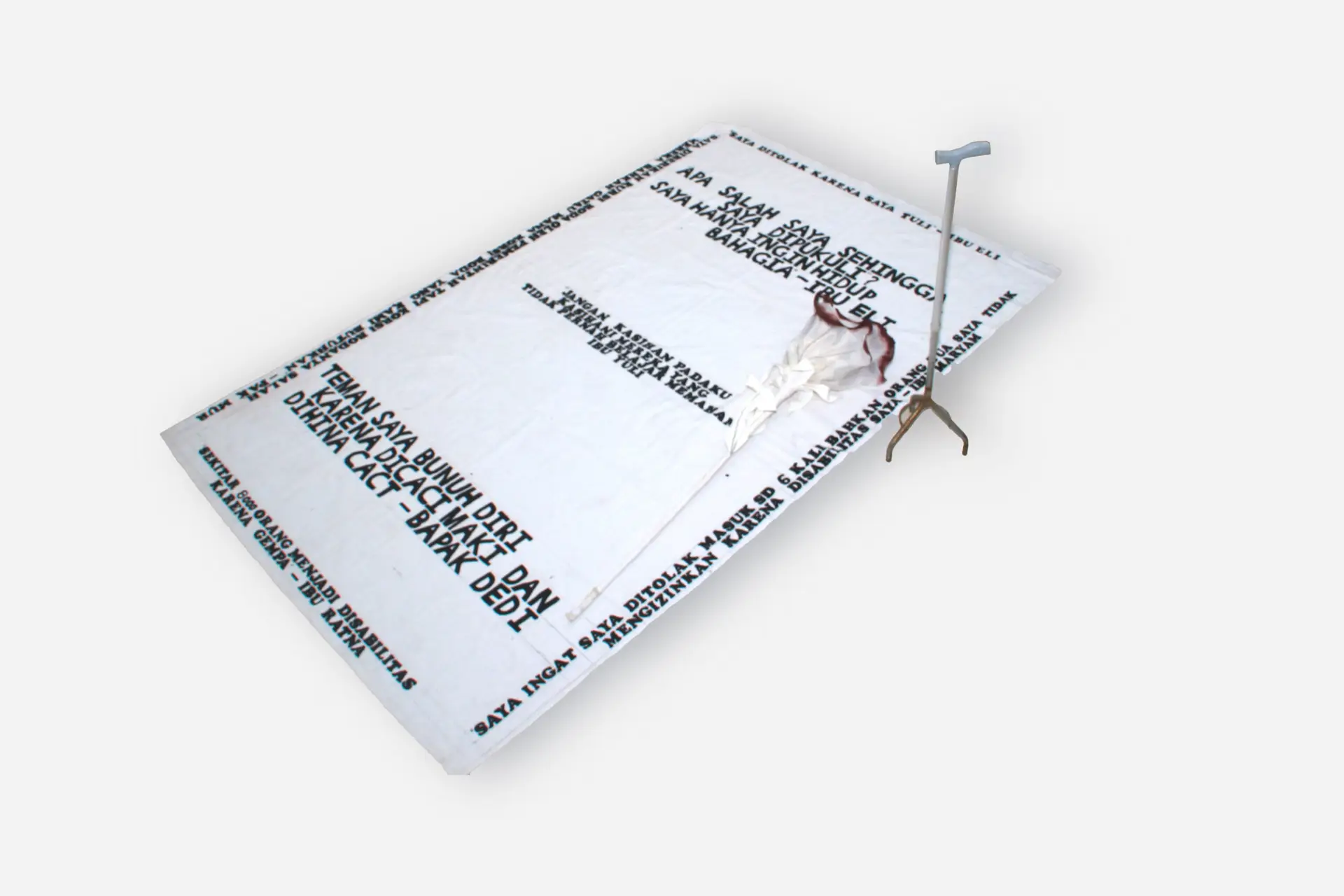
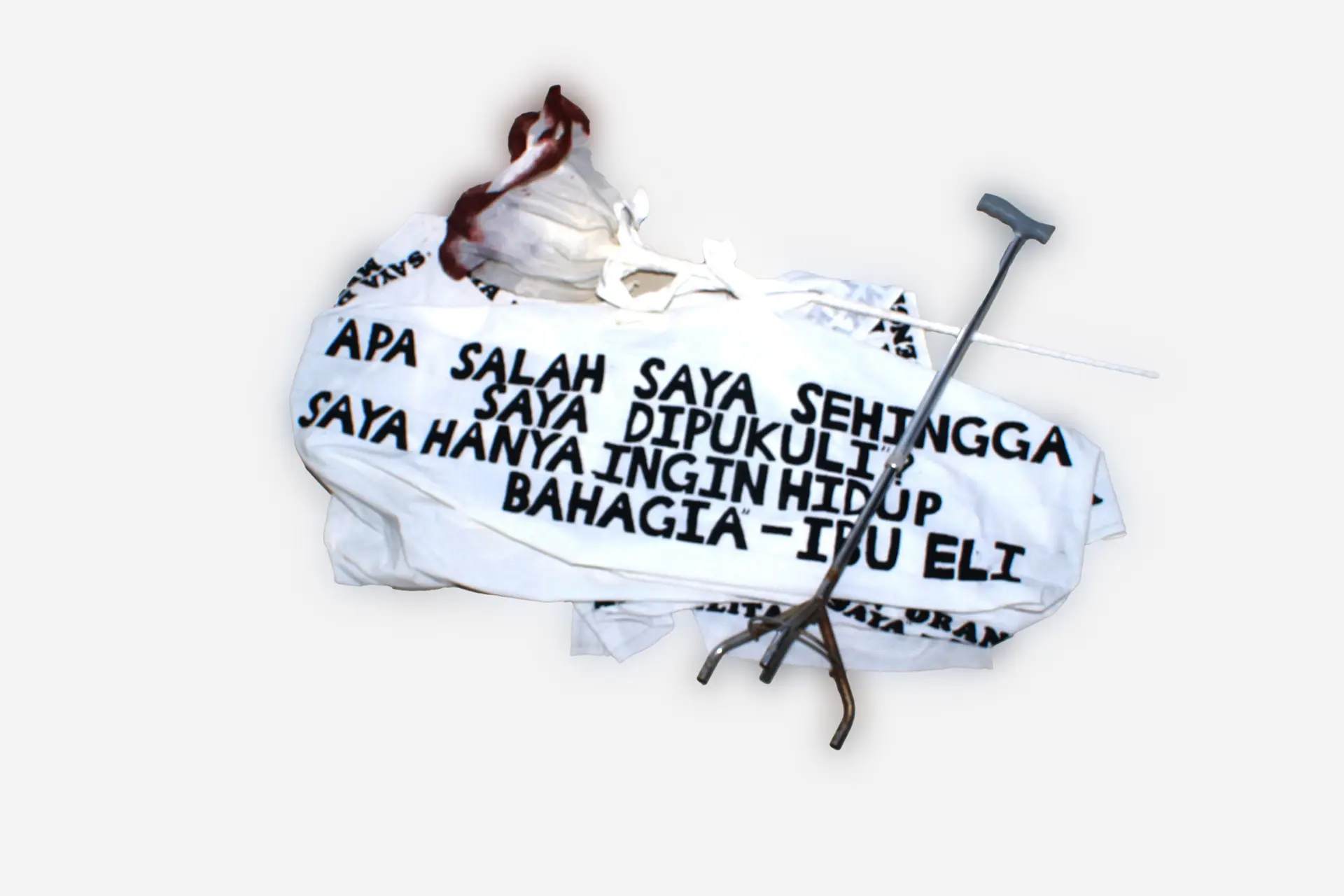
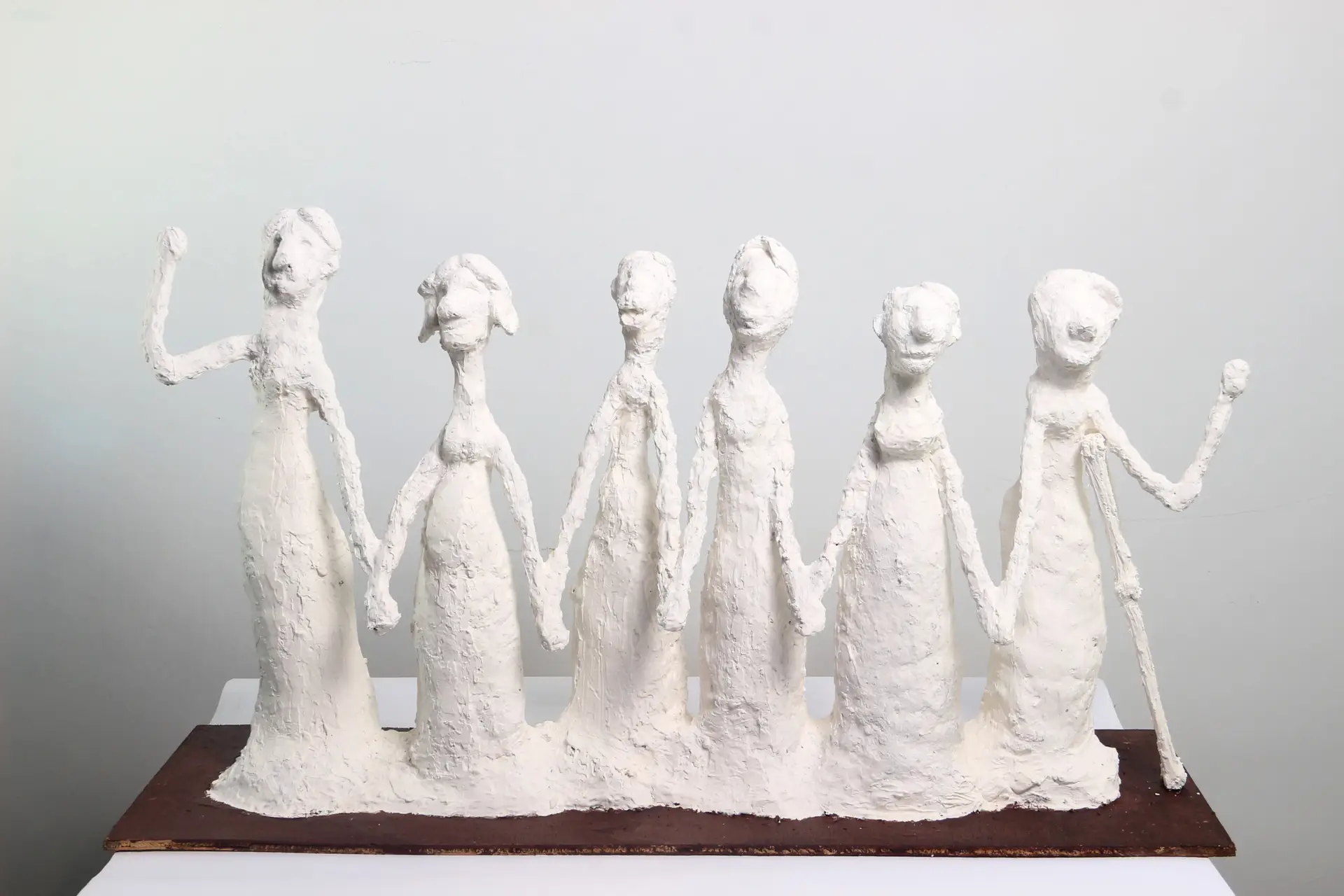
A collaboration between artists and artisans: Dwi Andirani, Hadiatun Sulastri, Sopiatul Azizah, and Siti Latifah Kamardikaningsih. This mixed media artwork retells the lived experiences of the project participants with disabilities’ experiencing ableism and injustices in their day-to-day lives. At the end of the day, it is the system that is disabling people, leaving us withered.
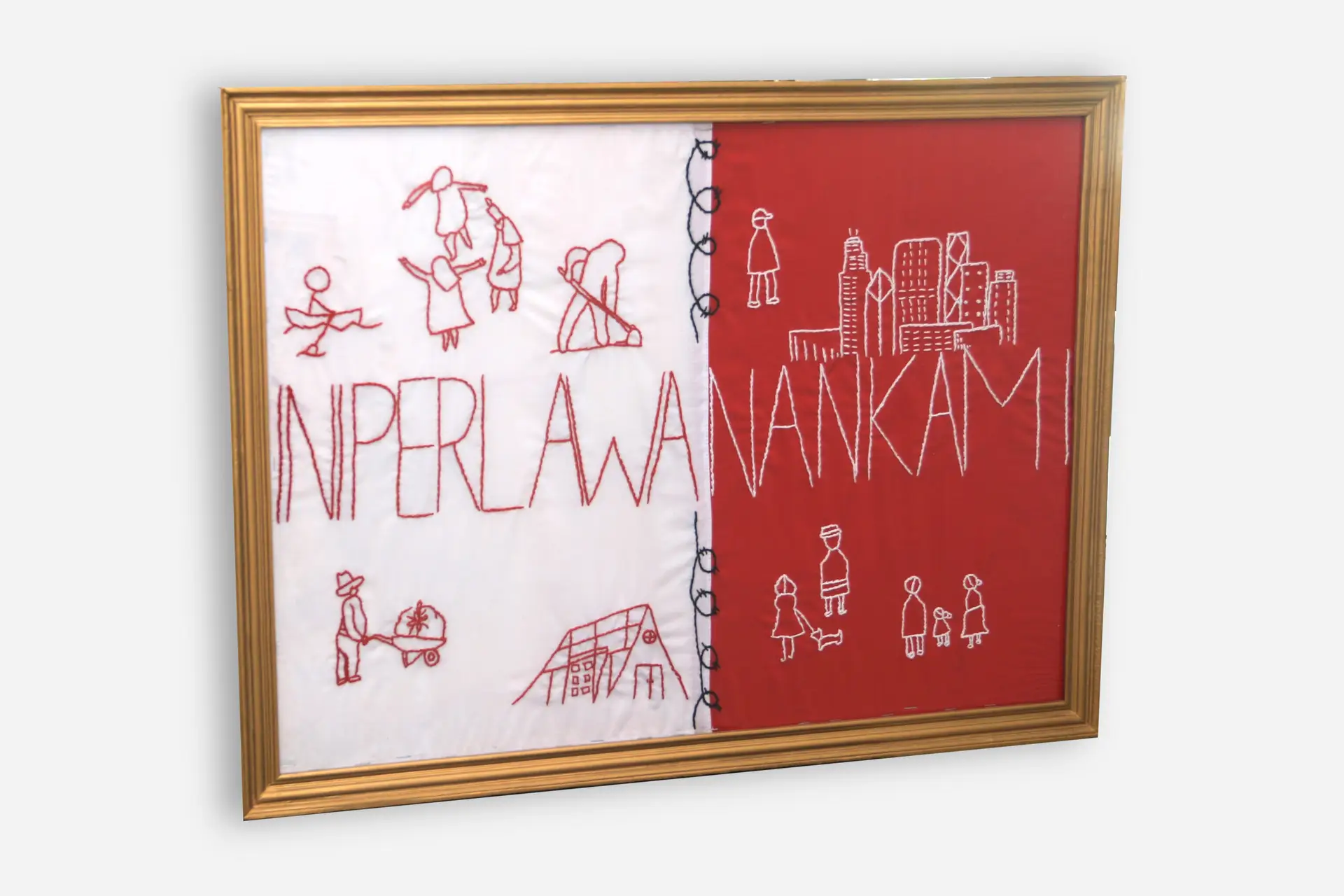
Inspired by participants’ experiences of moving to urban areas for better livelihoods during climate crises, oftentimes people’s social class becomes a major barrier during their mobility, even when they have relocated to urban areas. Economic injustices feel like barbed wires that separate each class. They, however, believe that to live is a form of resistance.
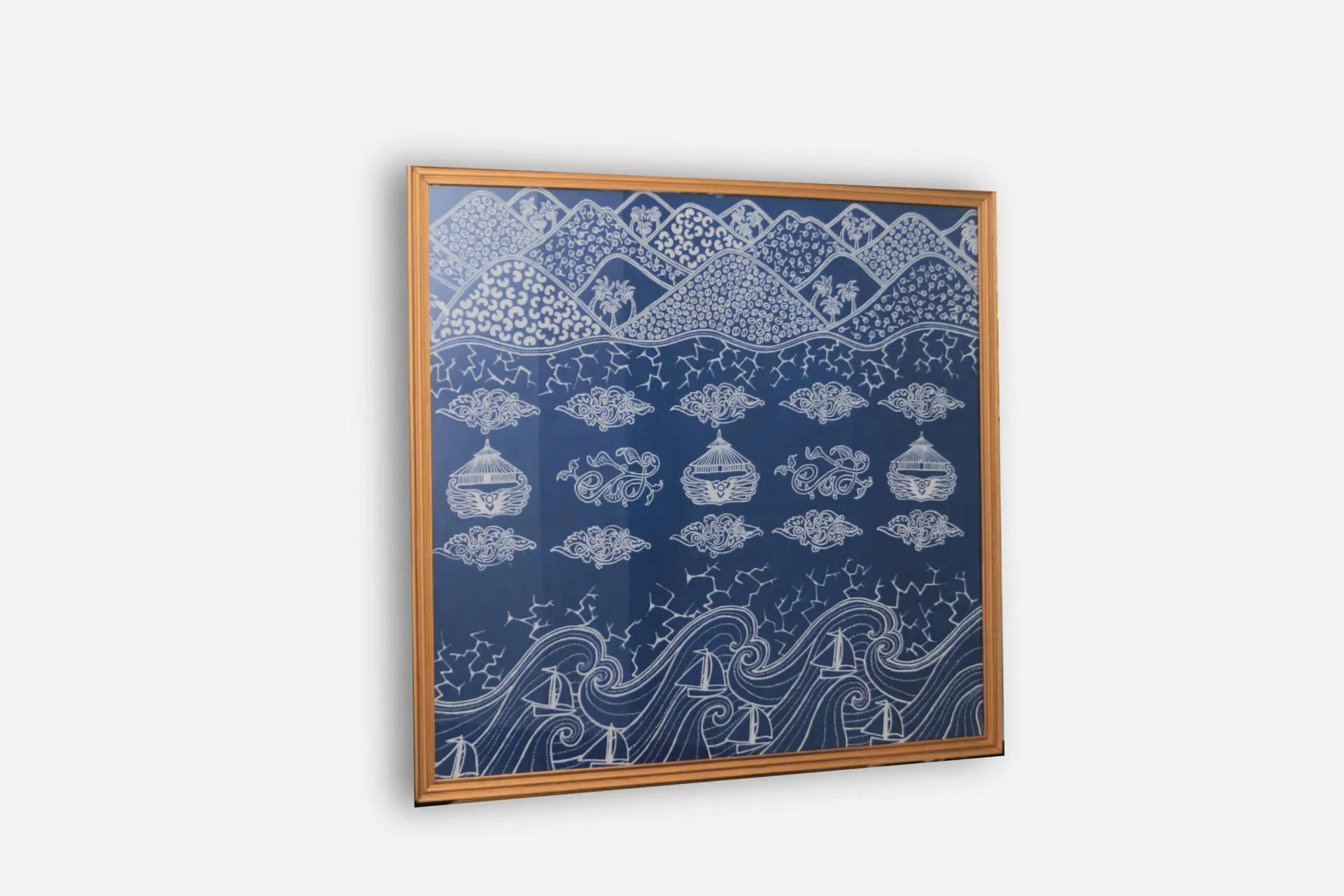
Hand-drawn batik with natural dyesInspired by a participant’s quote, “This island is our source of life, from Mount Rinjani and the seas, but it is also our source of disasters.” With additional patterns of Masjid Bayan which symbolize berugaq, pelecing kangkung, and kemetuan (three life starts): from sprout, from egg, and from birth.
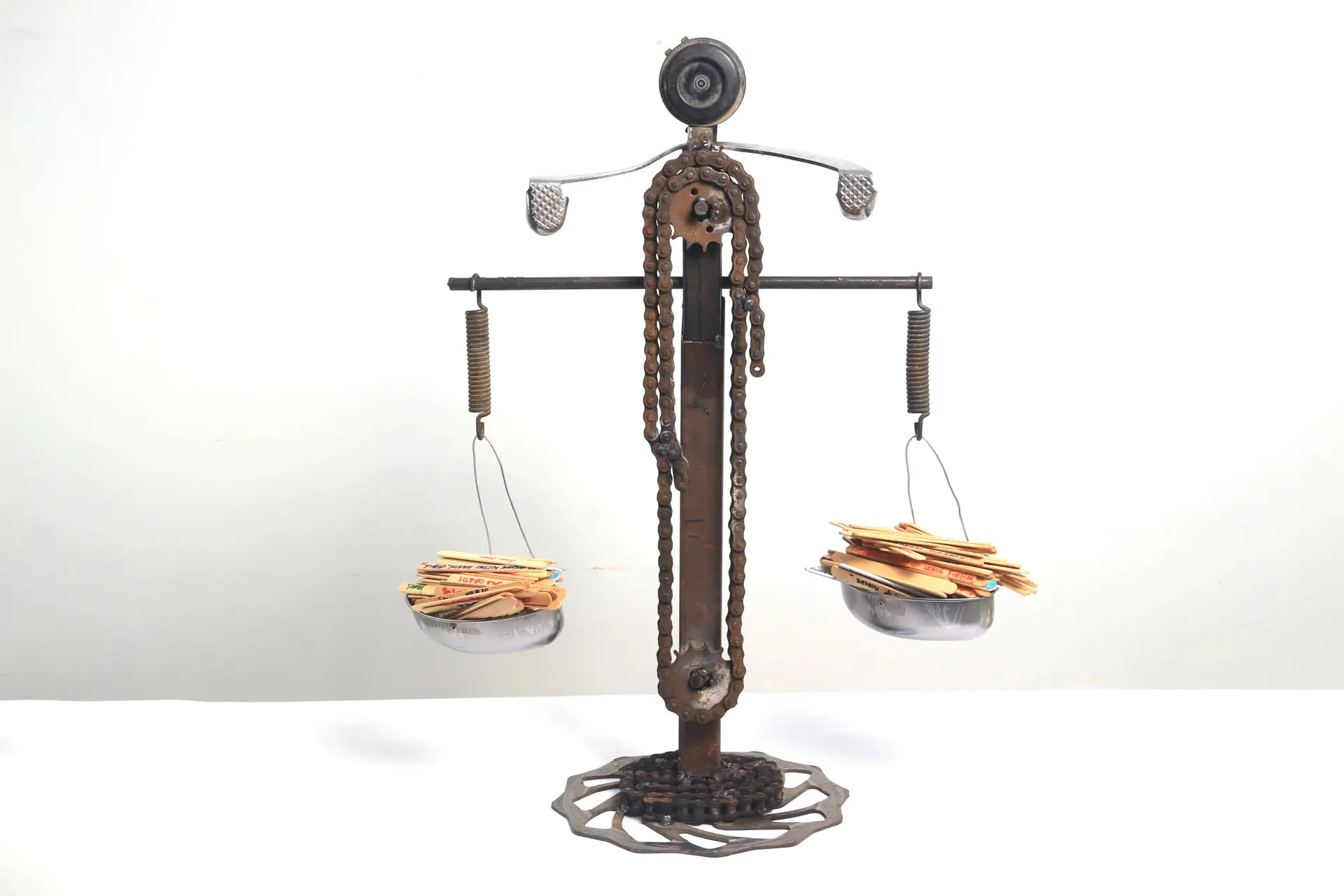
Fashioned out of metal scraps, this scale holds both community initiatives and solutions, and the injustices that they experience. Each element holds meaning. Starting from the top, the car horn is to voice injustice, clutches on both sides to balance policies and programs, chain and cog to symbolize the circle of life and the justice system, and the immovable tyre disc at the bottom represents justice, which typically comes late, but will eventually come.
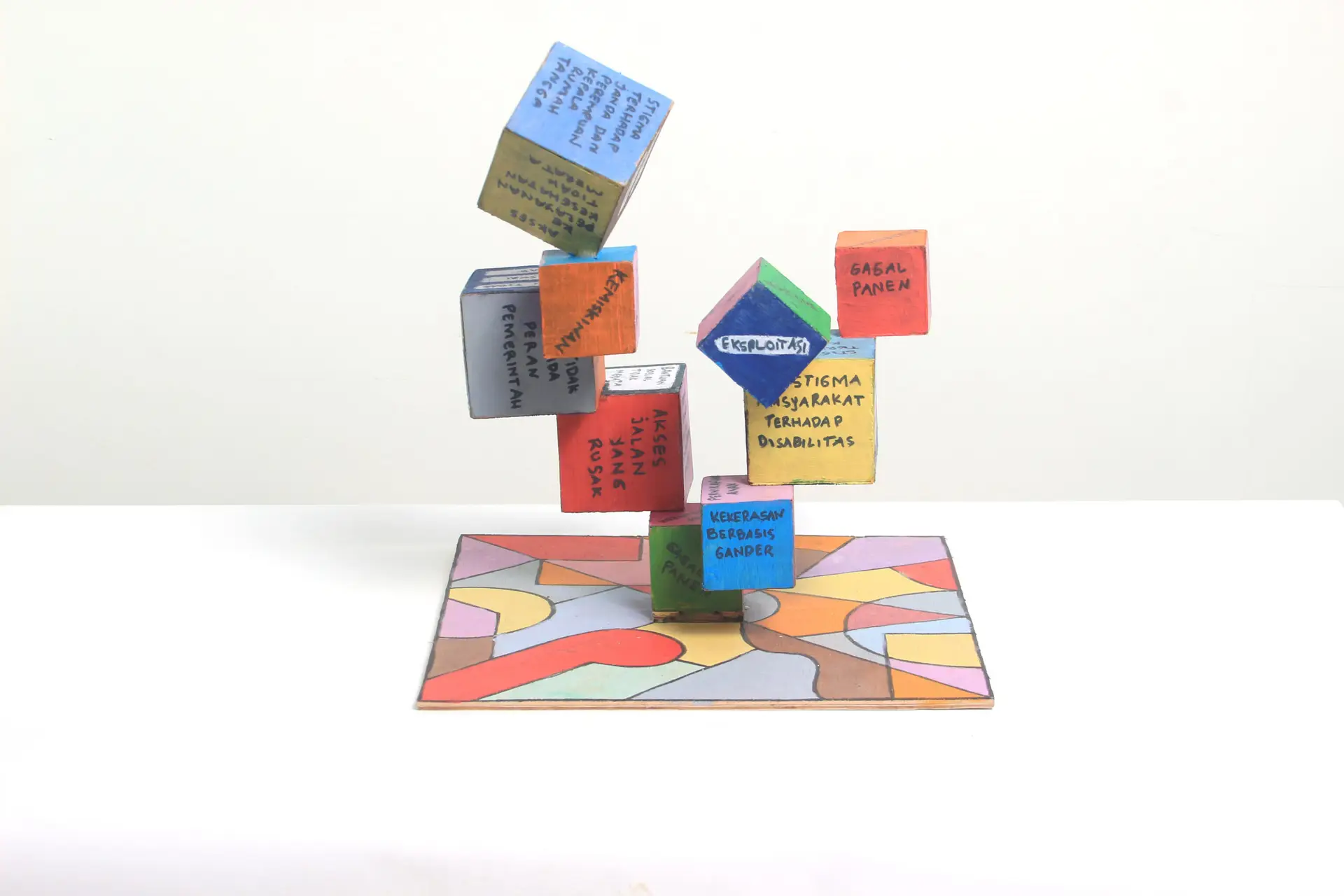
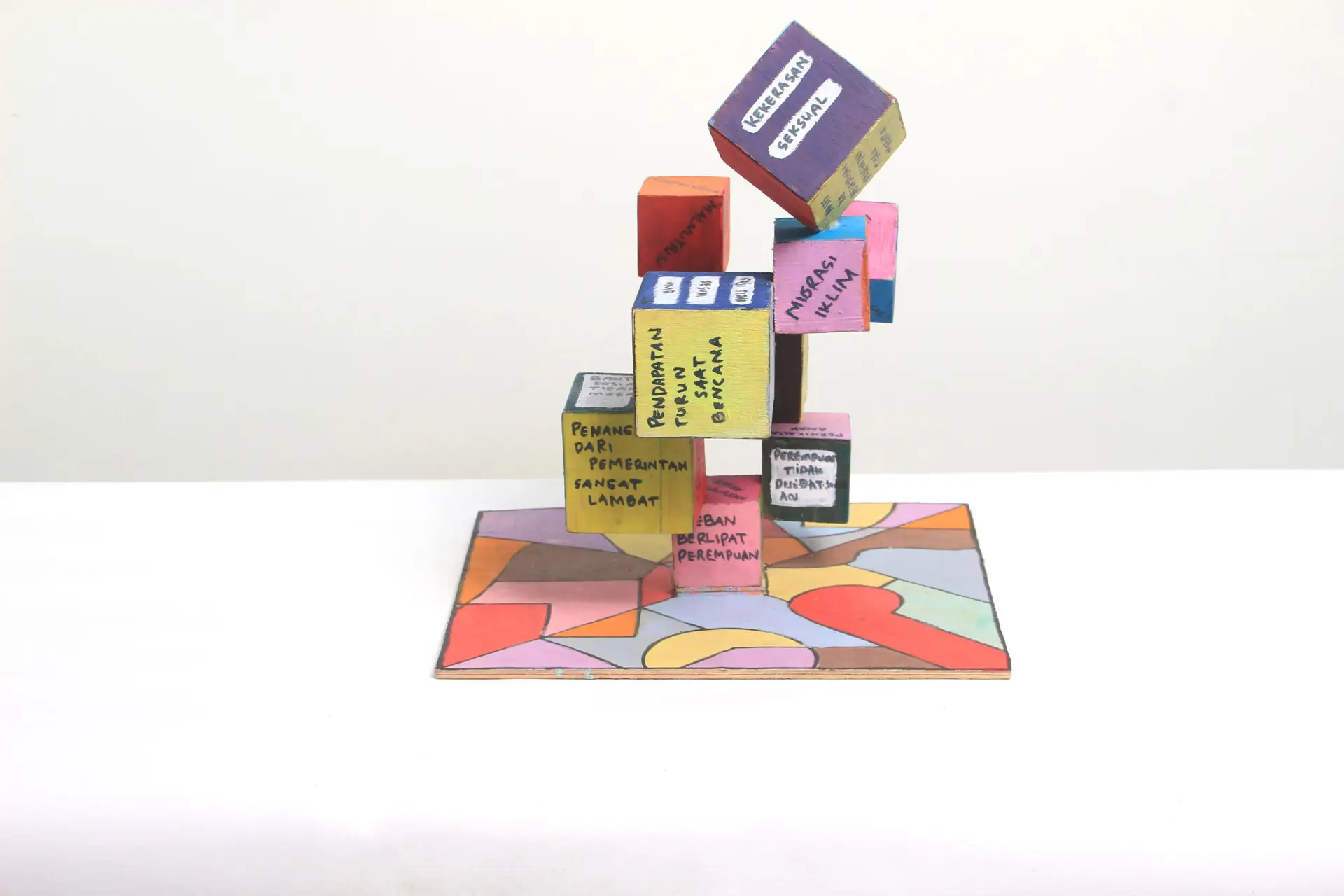
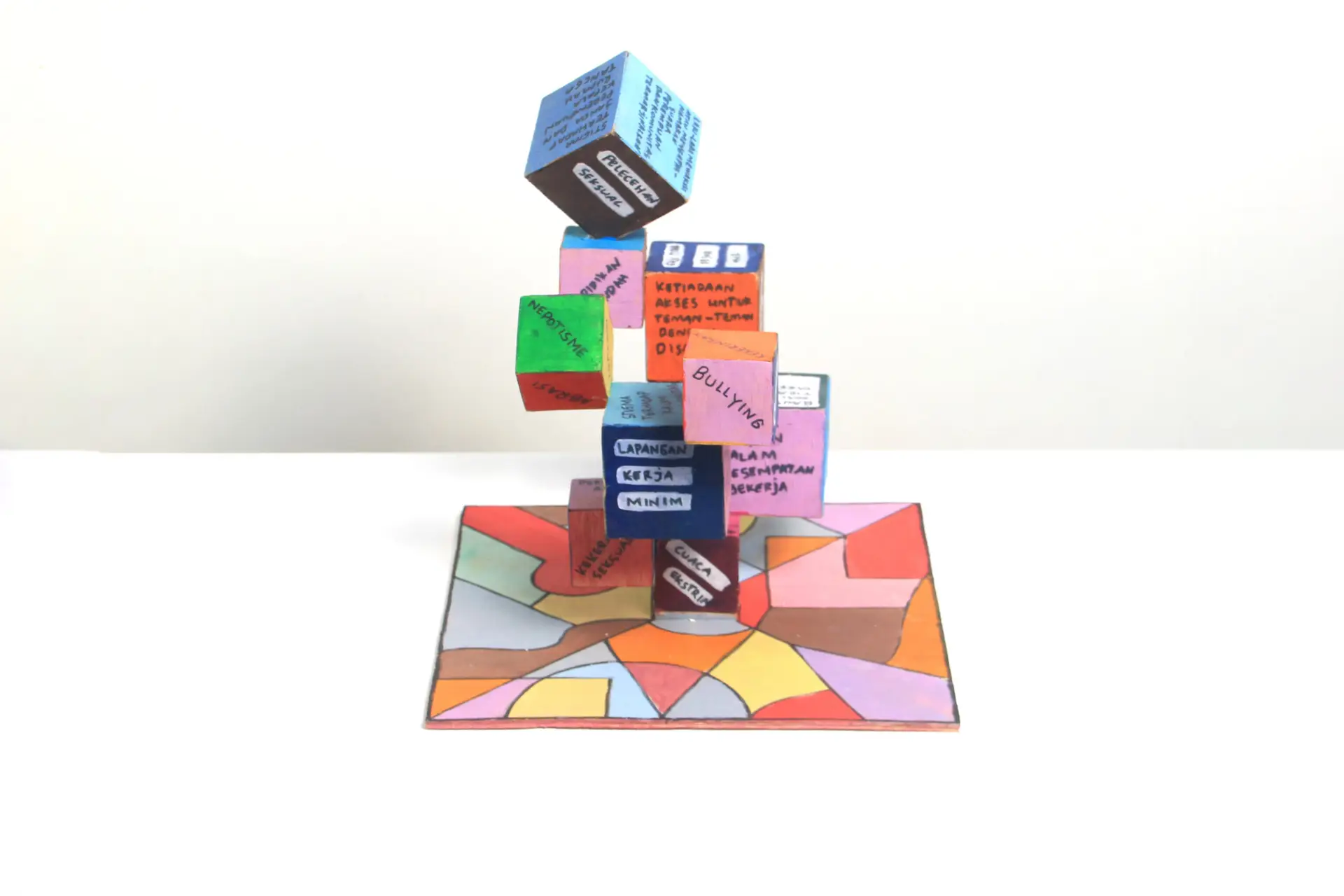
Geometric sculpture with participants’ experiences with injustices and problems, which often are not considered “disasters”. It illustrates how injustice issues and pathways to justice are often pictured as a complex problem when they are not.

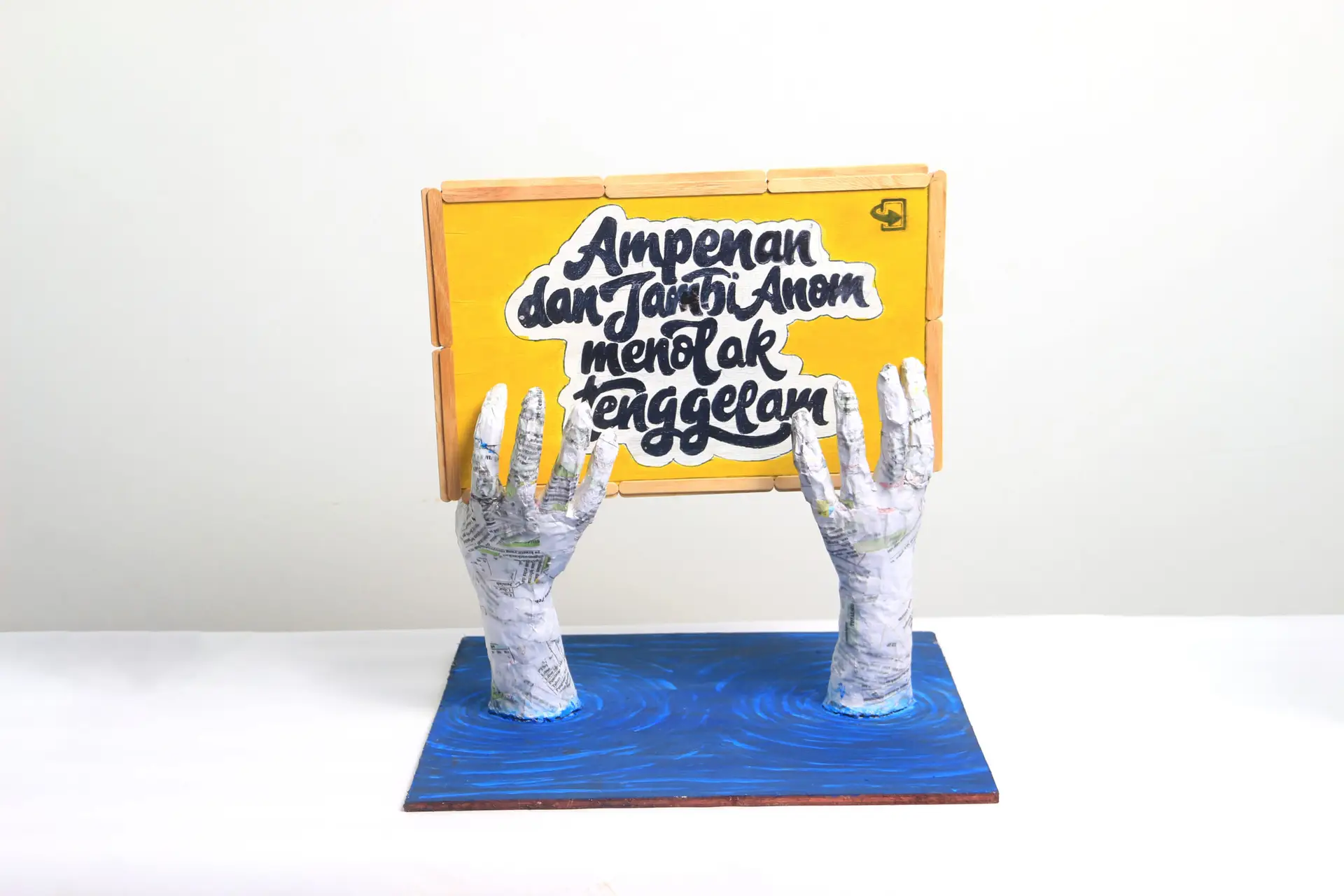
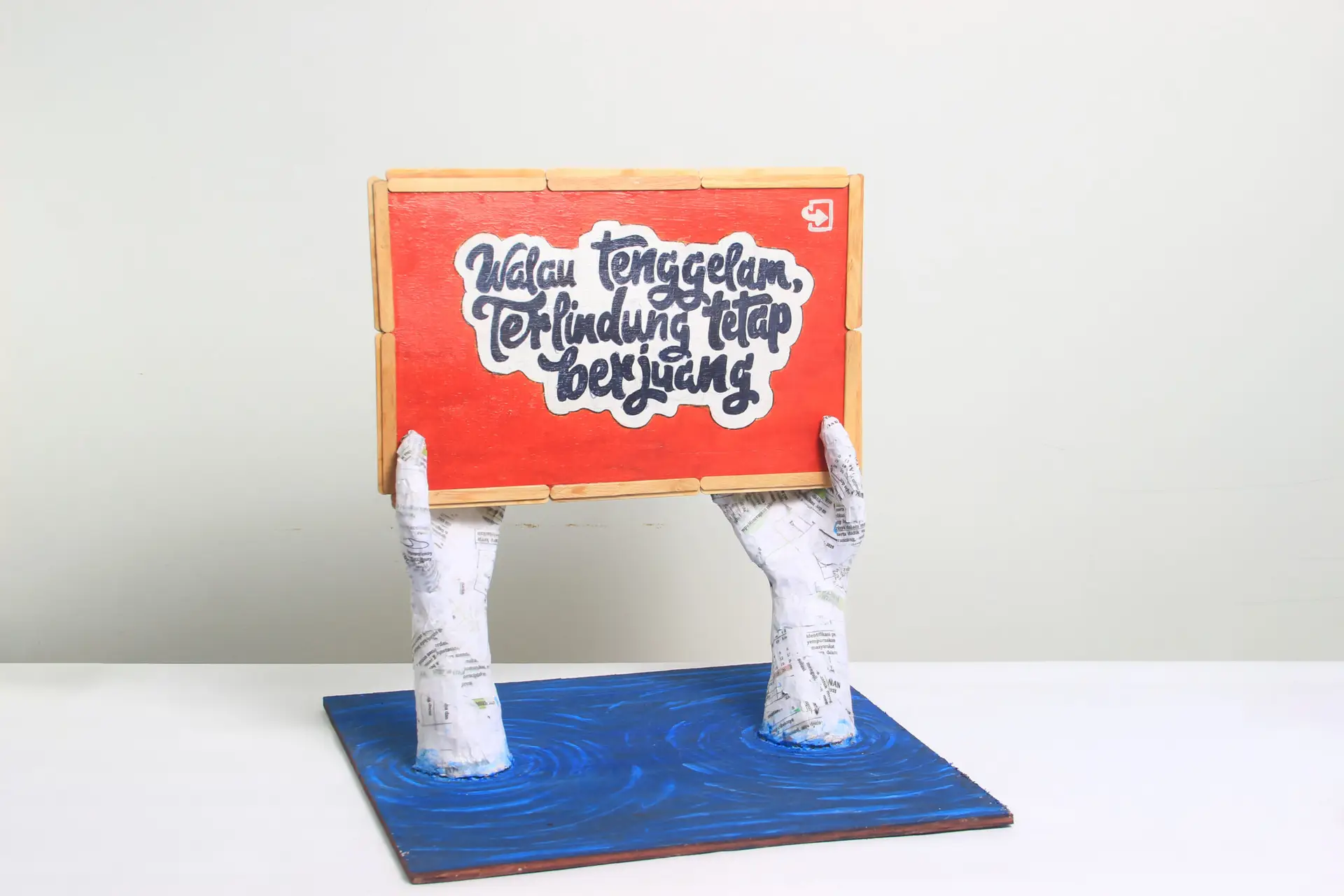
This work draws inspiration from our conversations with the people of Ampenan, Telindung—whose village was submerged in 2003—and Jambi Anom in North Lombok. Their resilience in recounting their histories and survival, alongside how their social movements and initiatives thrive, continues to shine despite the persistent threats of tidal flooding and rising seas.
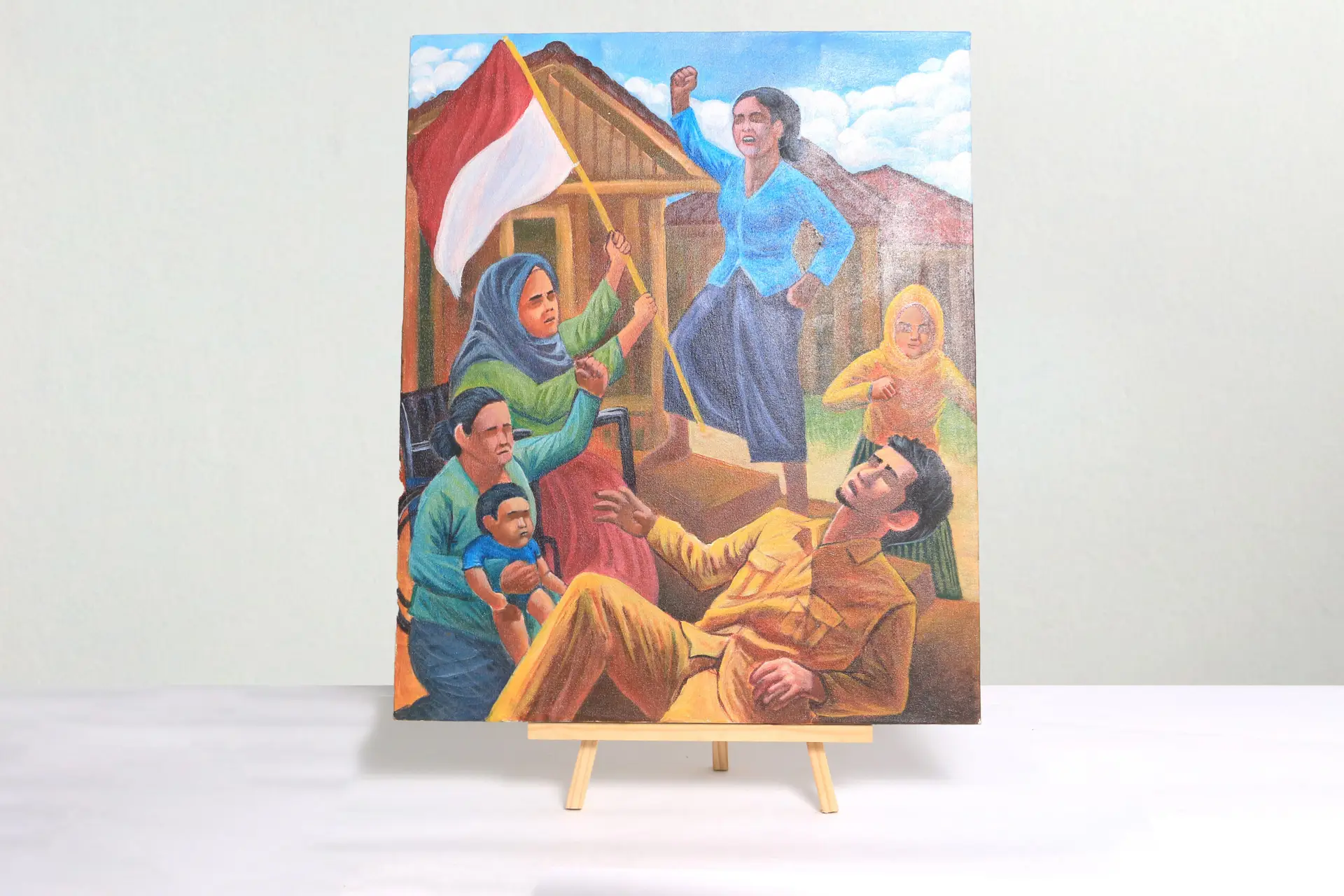
Inspired by real events shared during our workshop in West Lombok. When a women-led movement for a trauma-informed disaster response was obstructed by a village head, a group of women staged a protest and ousted him.
Women have been silenced, ignored, and excluded from decision making-processes, even told to sit on the floor when men sit on berugaq, where everyone is supposedly welcomed. Now it is our turn!

In Lombok, women farmers are compelled to work the land more frequently and shoulder heavier tasks than men, yet they receive significantly lower wages. Despite owning the lands, they are denied the right to determine planting schedules or even when to fertilize their crops.
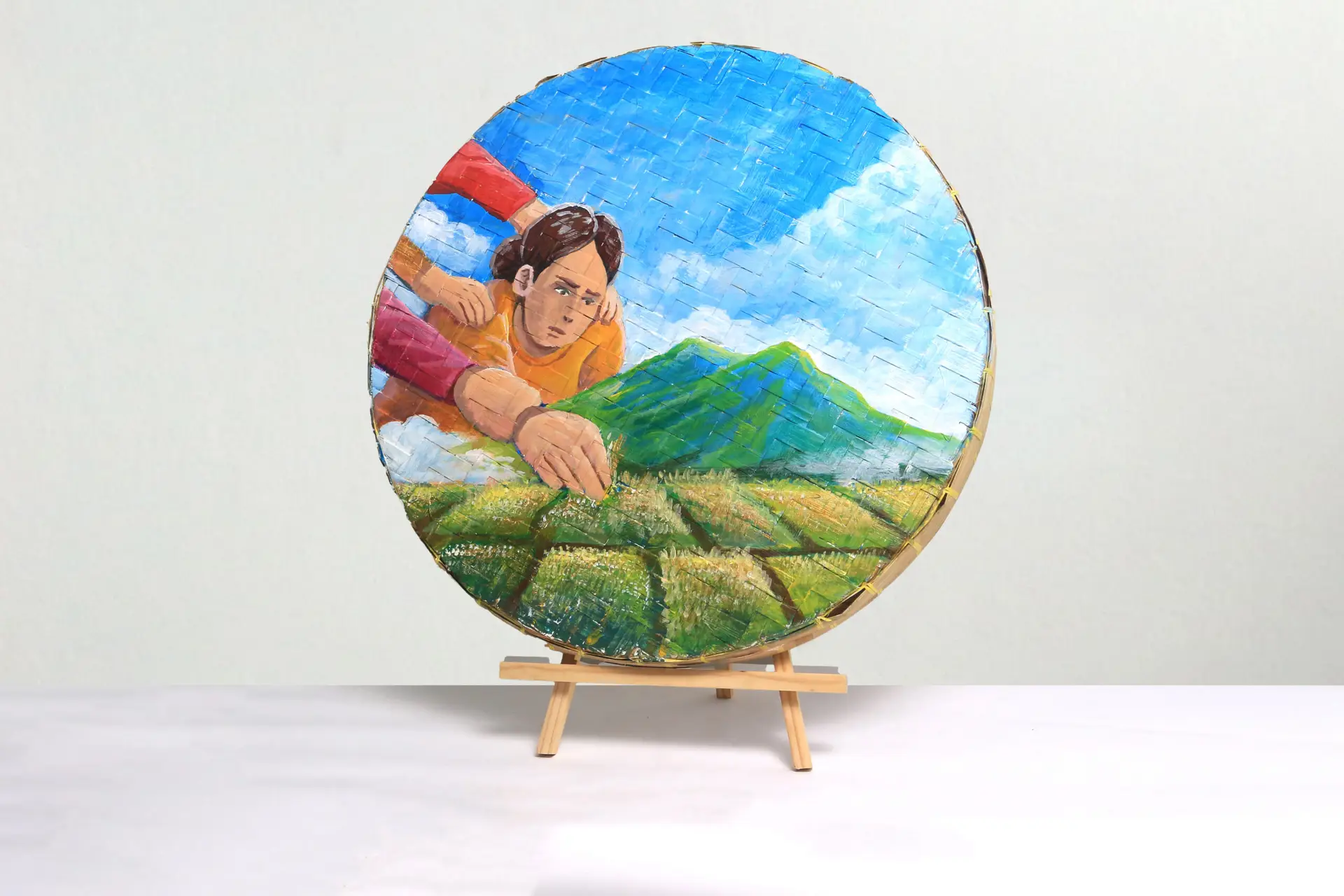
Inspired by a quote shared by a woman: “I was not even allowed to choose when and whom I would marry. Now, my daughter is experiencing the same thing.” — Ibu Ela (pseudonym)

“I remember I was declined from six different elementary schools because of my disability, even my own parents did not allow me to” — Ibu Nunik (pseudonym)Inspired by the stories of research collaborators with disabilities, and by what I believe are the experiences of thousands, even millions, of other persons with disabilities who were denied admission and not permitted to attend school, even by their own parents, I created this painting.

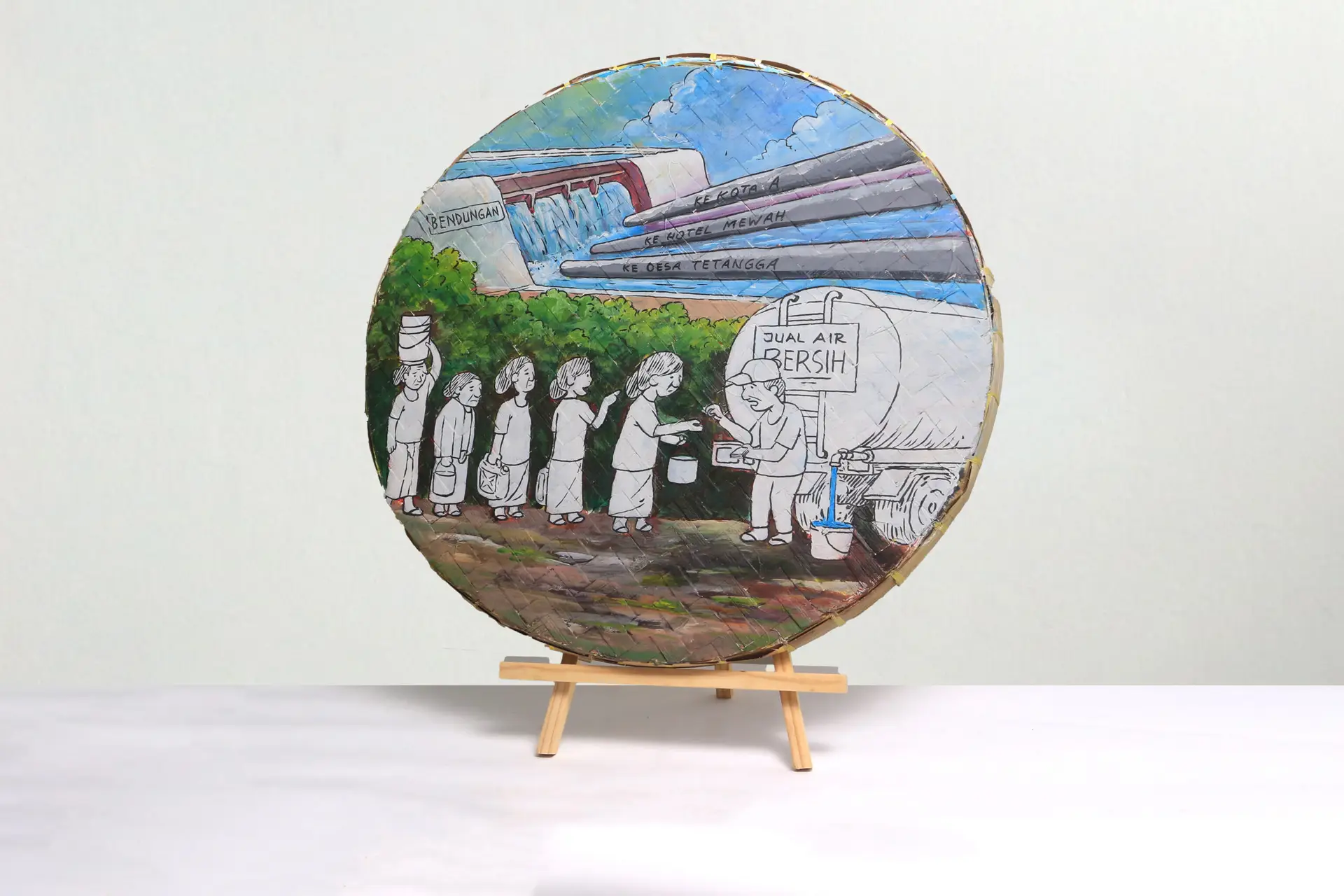
In North Lombok, older women are considered useless and a burden; yet when drought occurs, they are the first to be expected and asked to fetch water from distant wells and to queue for water for hours. In Central Lombok, mothers and their daughters must wake up every night to wait for the municipal water supply (PDAM) to flow, never knowing exactly when it will come.
When they ask their sons or husbands to do the same, the response is blunt: “That is women’s work!” In the same district, water pipelines are designed to channel water to tourism hubs, luxury hotels, and toward the western areas, while even residents around Batu Jai struggle to access clean water.In East Lombok and West Lombok, farmers and community members spend around 1.5 million rupiah per month (more than half of the Mataram minimum wage) to purchase water.
Originating from a series of dialogues we conducted with various communities across Lombok Island, each pillar represents their aspirations and visions for disaster justice. The writings on the boards depict some of the injustices that communities frequently face, ranging from ableism (discrimination against persons with disabilities) to patriarchy.
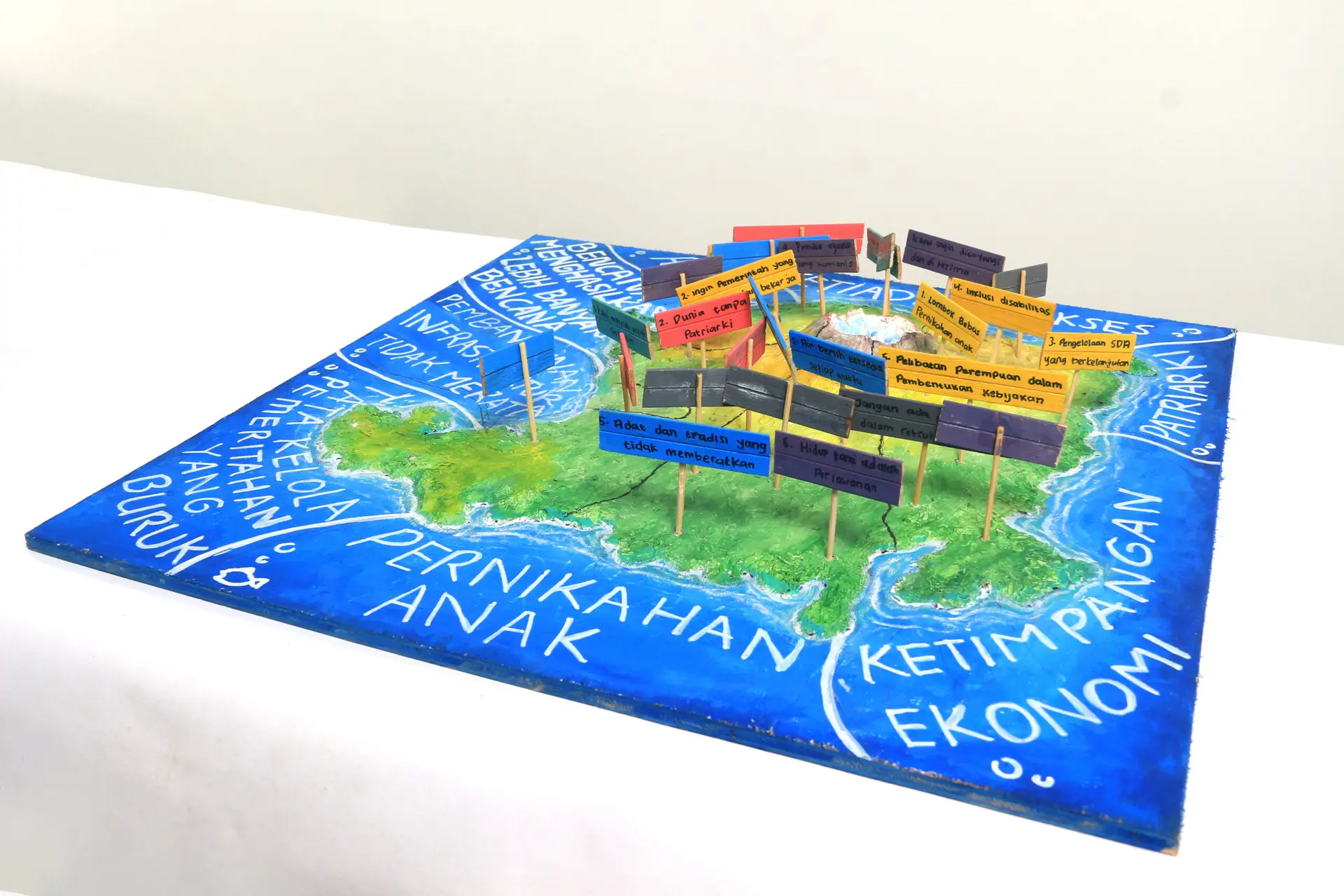
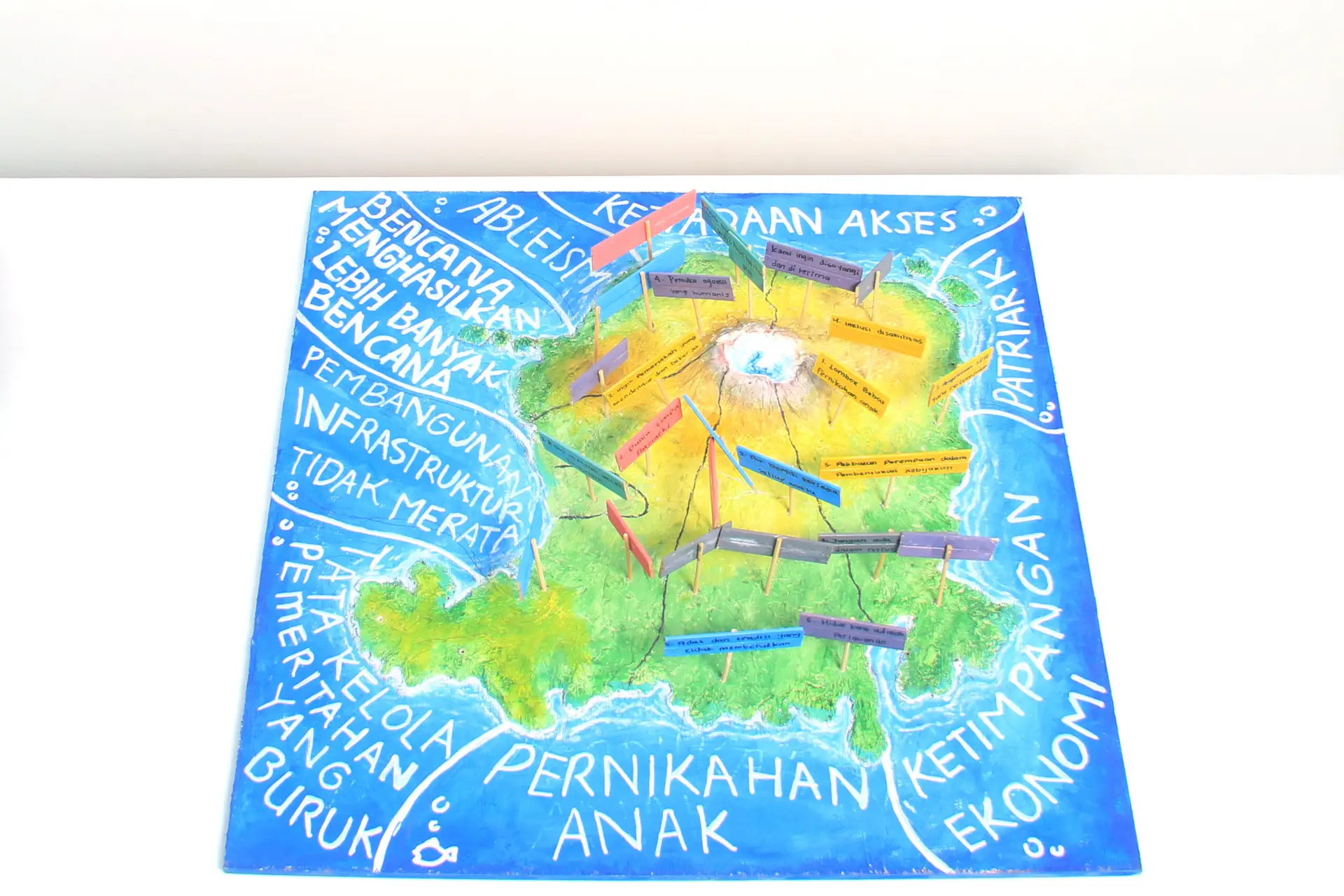
In every Resep Keadilan Bencana workshop, there is always one word that emerges as both the solution and the vision for disaster justice shared by all communities: solidarity. Solidarity – even when the struggles and initiatives being carried out are different and highly diverse. Many, if not all of which, we heard were pioneered by women.
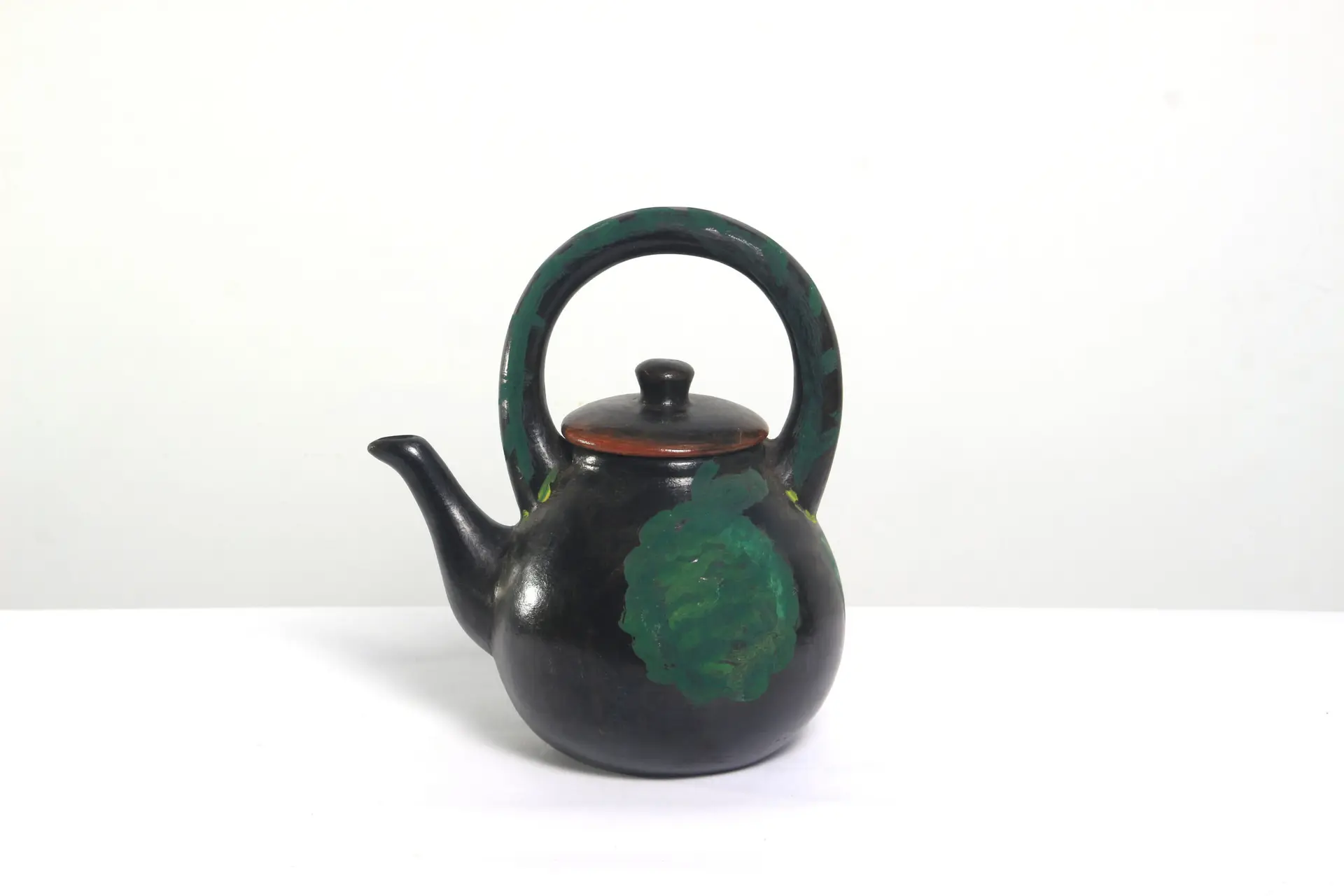
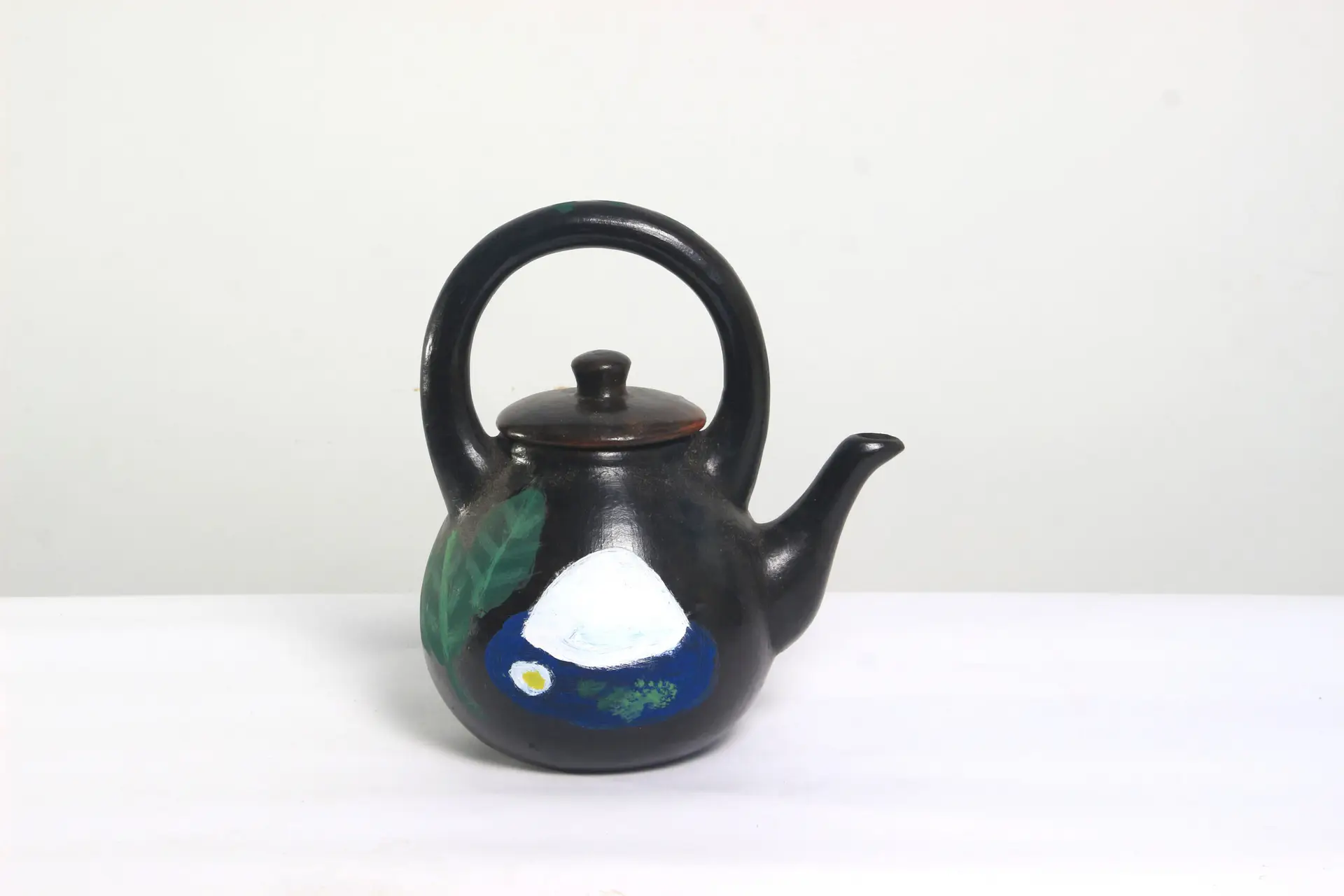
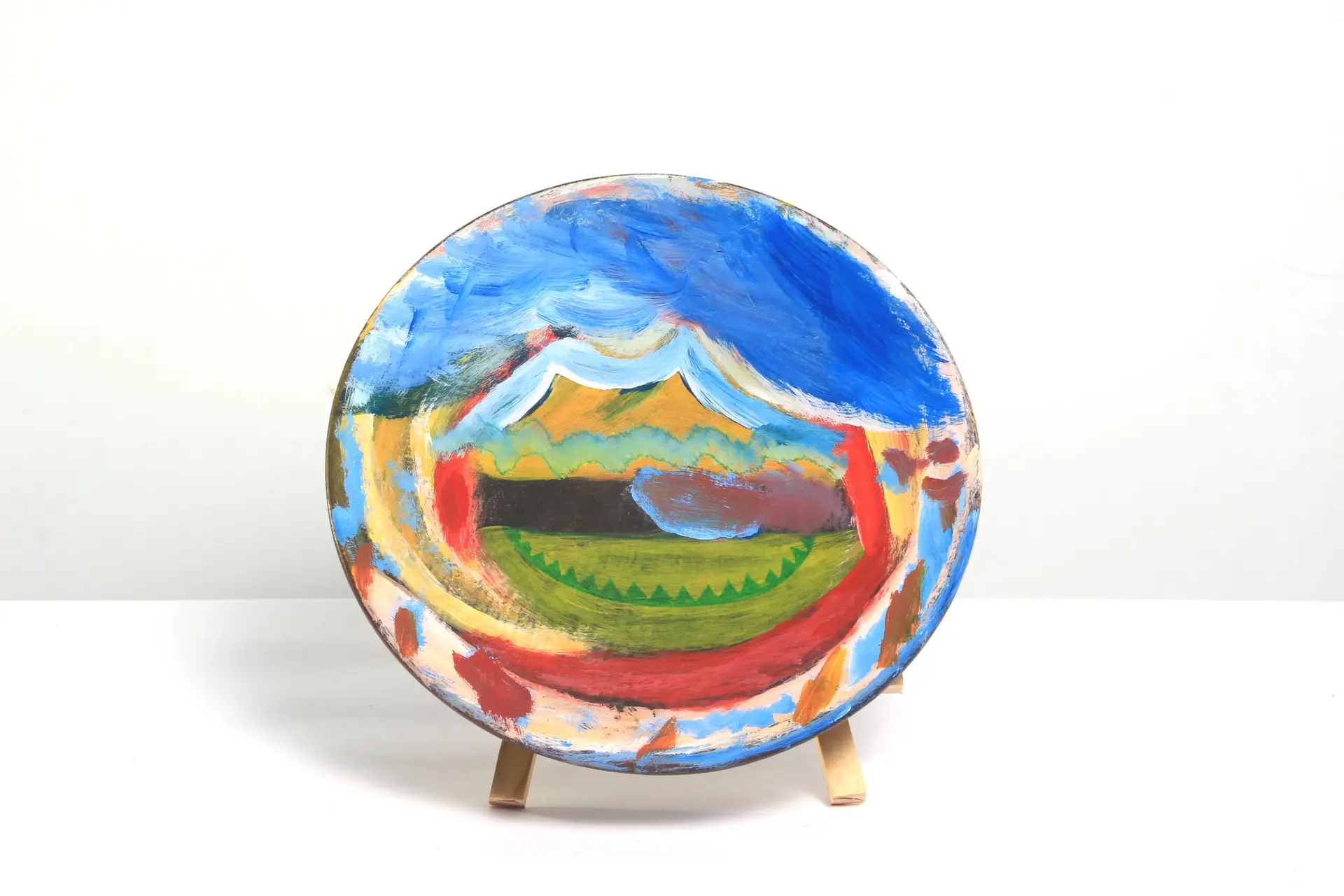
Using the metaphor of a soursop fruit, this community artwork expresses the hope that governments, both local and national, can nurture and protect communities, especially those who remain marginalised. Just as a plate holds and supports food, the government is envisioned as a space that provides room and protection for people to speak, express themselves, and have their voices heard. This includes recognising and responding to the diverse needs of people with different forms of disabilities. The green colour of the leaves symbolises peace and well-being, representing a future where vulnerable communities and persons with disabilities can live with dignity, safety, and inclusion.

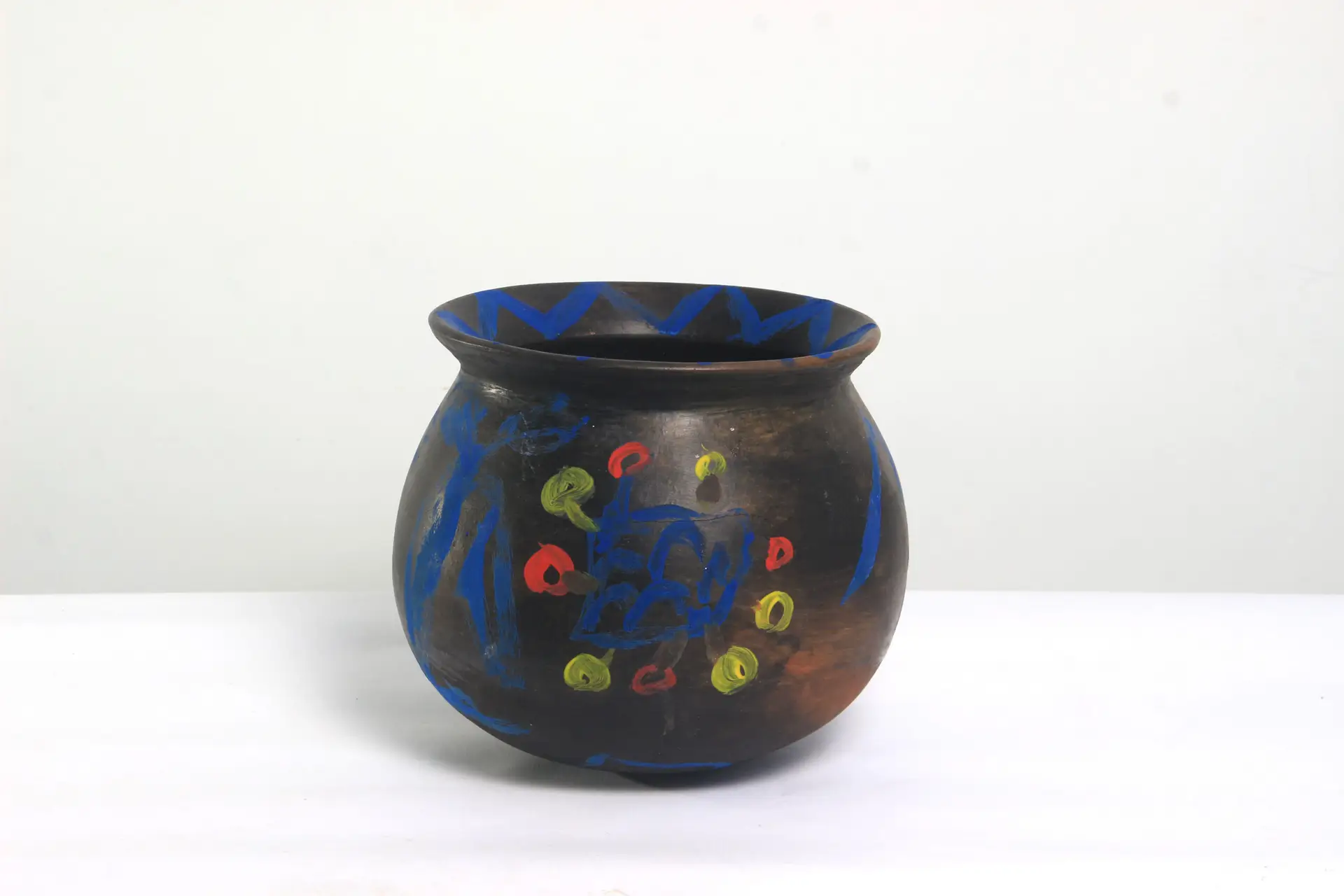
This artwork reflects on the central role of rice in everyday life. In the midst of a difficult and demanding struggle to survive, rice becomes a fundamental necessity, an essential food that sustains life. It is produced through the labour of farmers who cultivate the land, planting and caring for crops to meet society’s most basic needs. In this work, rice also symbolises protection and a place of calm amid life’s hardships. At the same time, the piece highlights the inequalities embedded in this system. While farmers are the ones who plant, nurture, and harvest the crops in the fields, they are often the ones who remain marginalised and oppressed. The work reflects on this imbalance, drawing attention to the struggles of small farmers whose labour sustains many, yet whose lives are frequently marked by injustice.

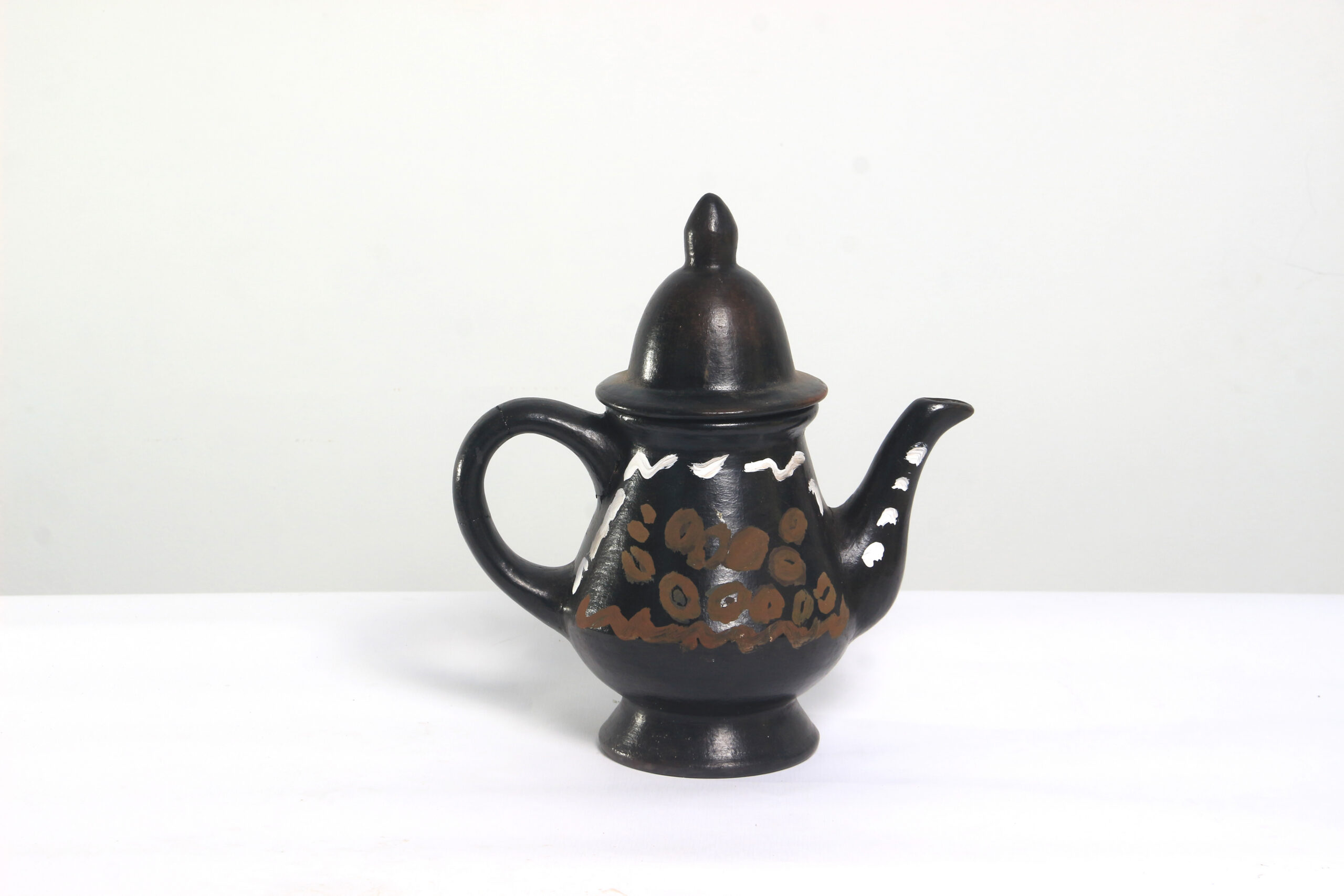
I use this pitcher to serve people a black coffee. Black coffee is bitter, much like our struggle to achieve gender justice, but it is necessary to feel energised, just like we need gender justice to achieve disaster justice in this lifetime.
In every Resep Keadilan Bencana workshop, there is always one word that emerges as both the solution and the vision for disaster justice shared by all communities: solidarity. Solidarity – even when the struggles and initiatives being carried out are different and highly diverse. Many, if not all of which, we heard were pioneered by women.
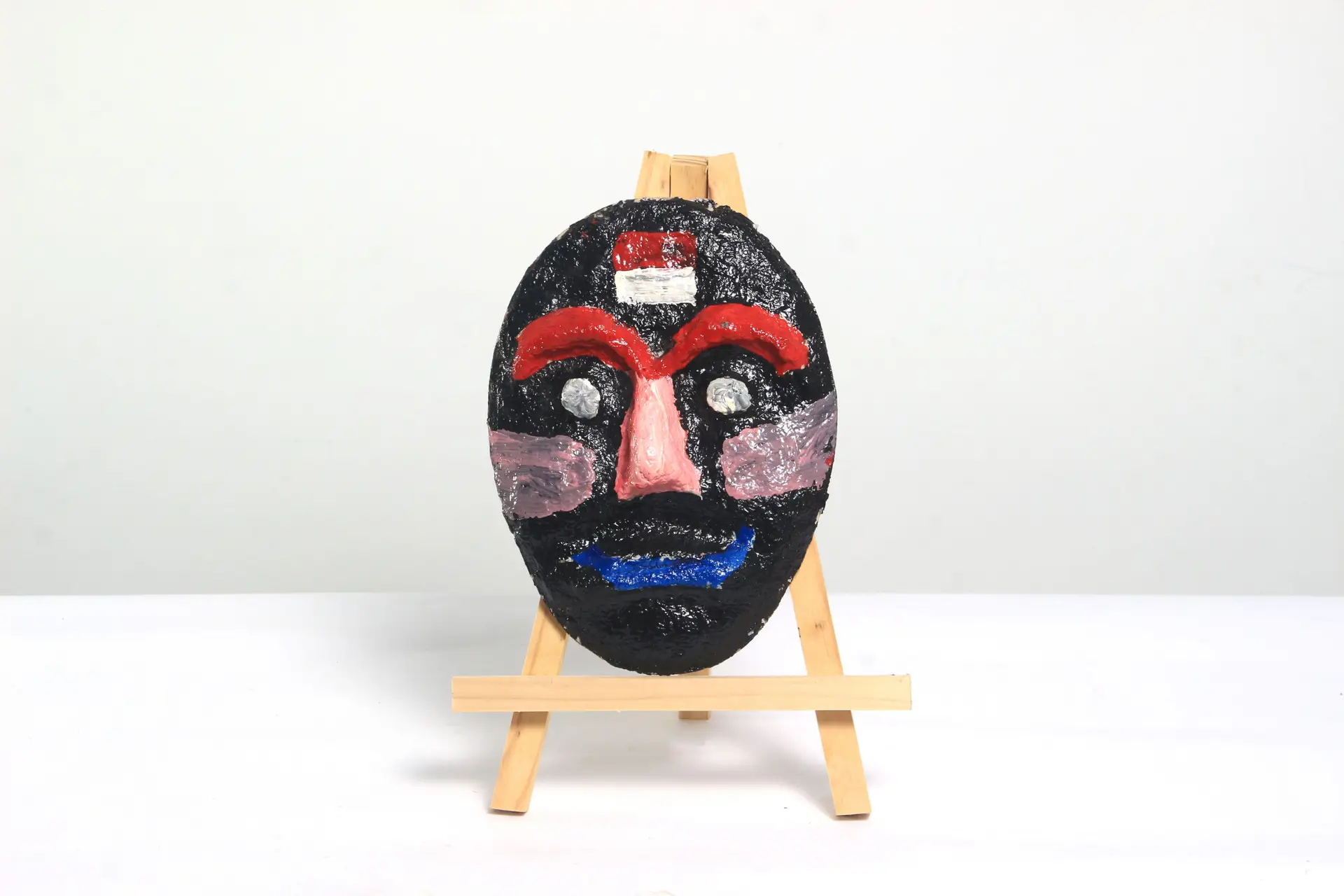
This mask tells the story of a mother waiting through the night for water from the household tap. At 2:10 a.m., accompanied only by the sound of barking dogs, she checks the faucet after two days without water from the public supply. Her hope fades as the tap releases only the hollow sound of air. No water flows. Fighting exhaustion and sleep, she continues to wait.At 3:00 a.m. water finally begins to run, and a brief moment of relief appears on her face. Yet the joy is short-lived, the flow lasts only thirty minutes before stopping again. This cycle has become a daily routine for years, reflecting a life shaped by scarcity and uncertainty.Do not waste water that others are still waiting and hoping for.

This artwork portrays the Pajo community and their anger and sorrow in response to the exploitation of their natural environment. Although the Pajo lands in Dompu are rich in visible and underground natural resources, the community has witnessed increasing environmental damage following the granting of permits for gold mining on the western side of the mountains surrounding their village.Mining activities have led to the destruction of forests and mountain landscapes, threatening fragile ecosystems and the wildlife that have long inhabited the area, such as deer, honeybees, birds, and other species. The environmental damage has also affected agricultural land at the foot of the mountain, reducing soil fertility and productivity. This contrasts with nearby mountains that remain green and protected as customary forests.The mask reflects the community’s resistance to environmental exploitation, pollution, and the degradation of their land. Through various forms of protest and collective action, they assert that protecting nature and natural wealth must be a shared responsibility. Resistance, in this context, becomes an expression of awareness, care for the environment, and respect for customary traditions.
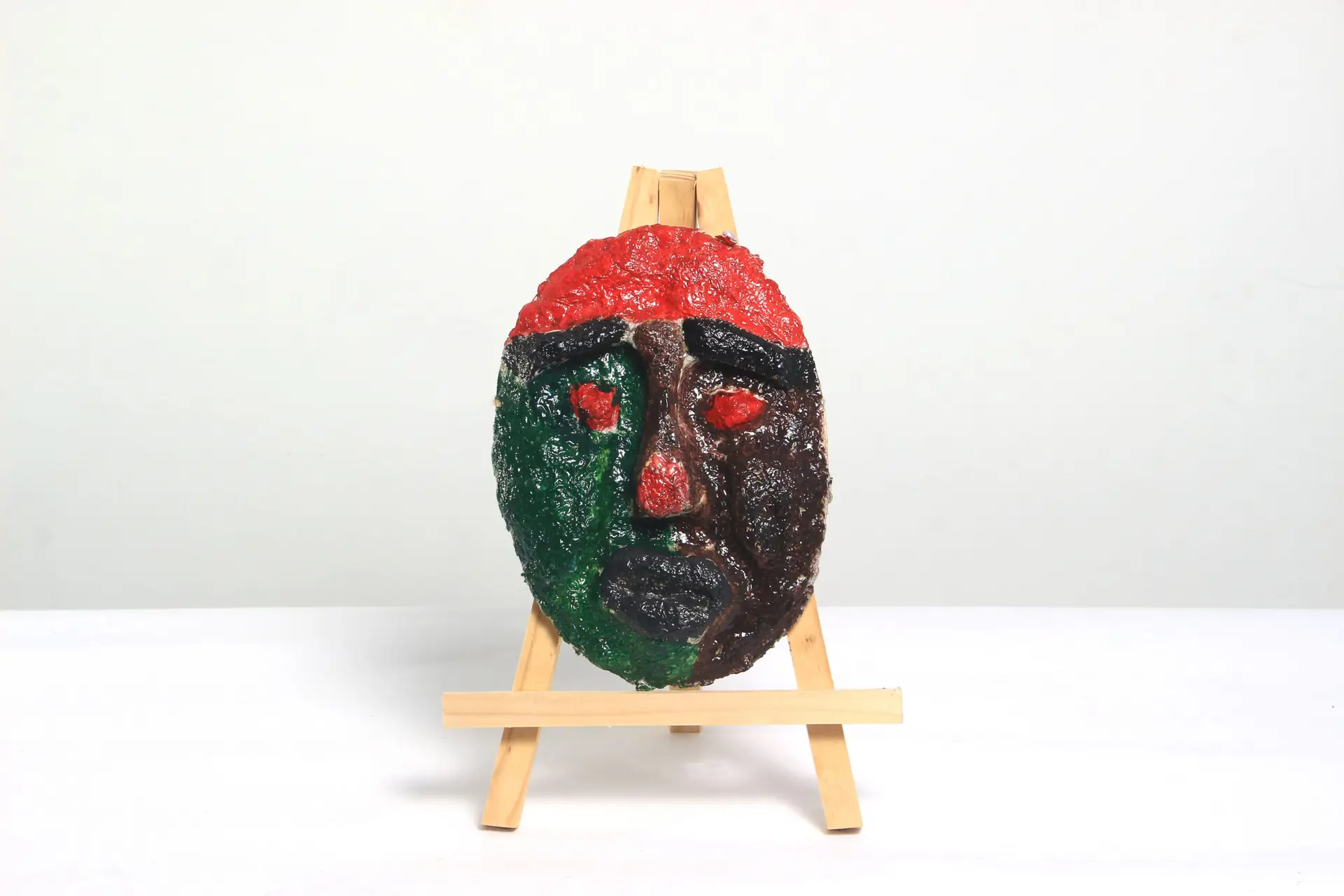
My mask is Annisa, a 53-year-old woman who has been working as a farmer since she was 15. She is my mother. She fights against scarcity, long droughts, the gender role that is assigned to her by society and my dad, the double burdens that she carries, and other trials and tribulations. I also remember how sweat flowed from her hair, dampening her forehead and then slipping between her eyebrows and eyelashes. She wiped it away with the sleeve of her shirt as a sign to pause her work, standing upright after a long time bent over, pulling weeds from between the rice plants that had grown nearly to knee height.She is my hero, yet in many superhero stories, they are portrayed as men. I wanted to write my own narrative by creating this mask because every hero in my life has always been a woman, and in real life, there are far more heroines than heroes.
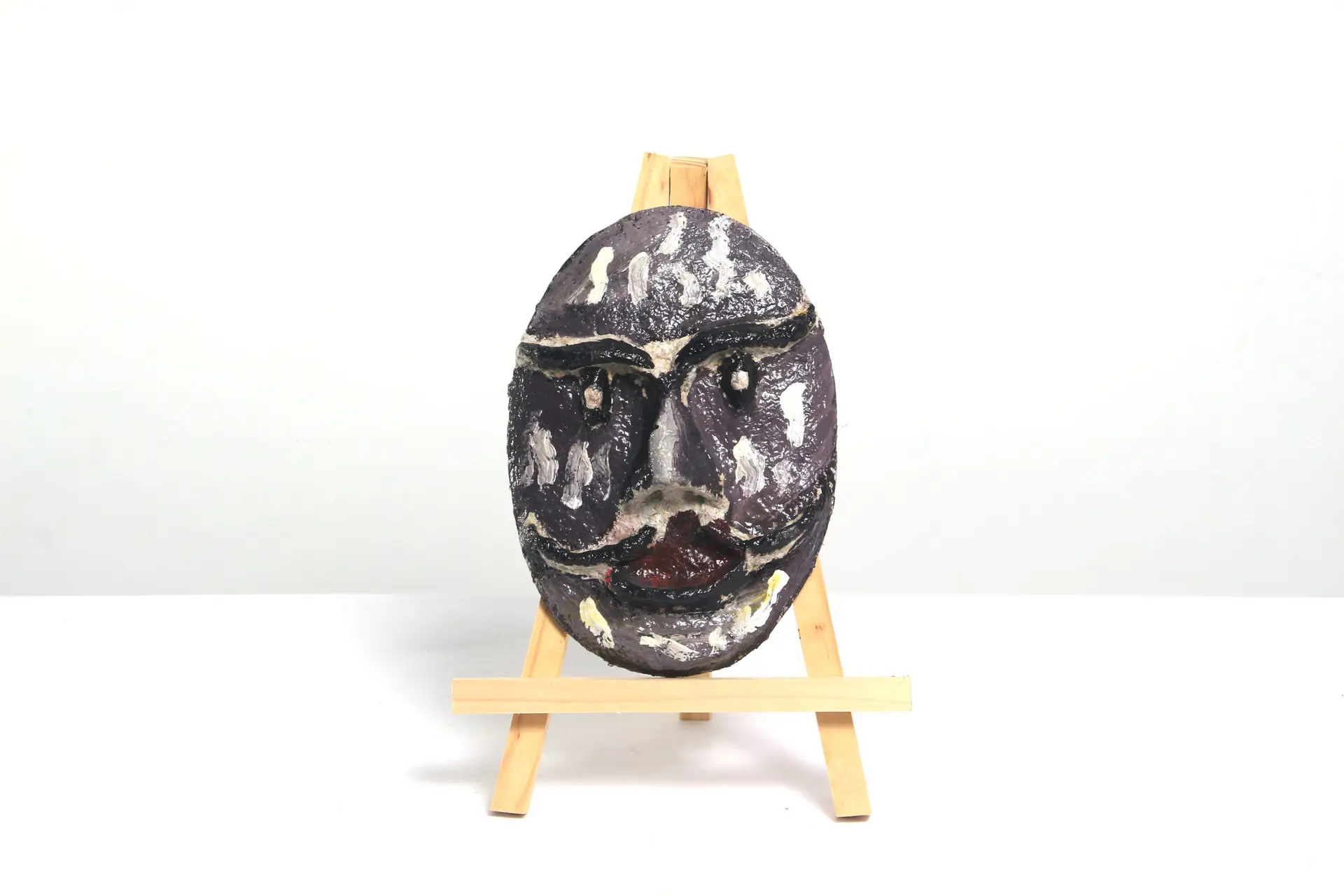
My mask is a blind person holding grudges and anger against people in power, angry at unjust leaders. He symbolises my fellow blind peers, standing strong against injustices and unjust leaders.
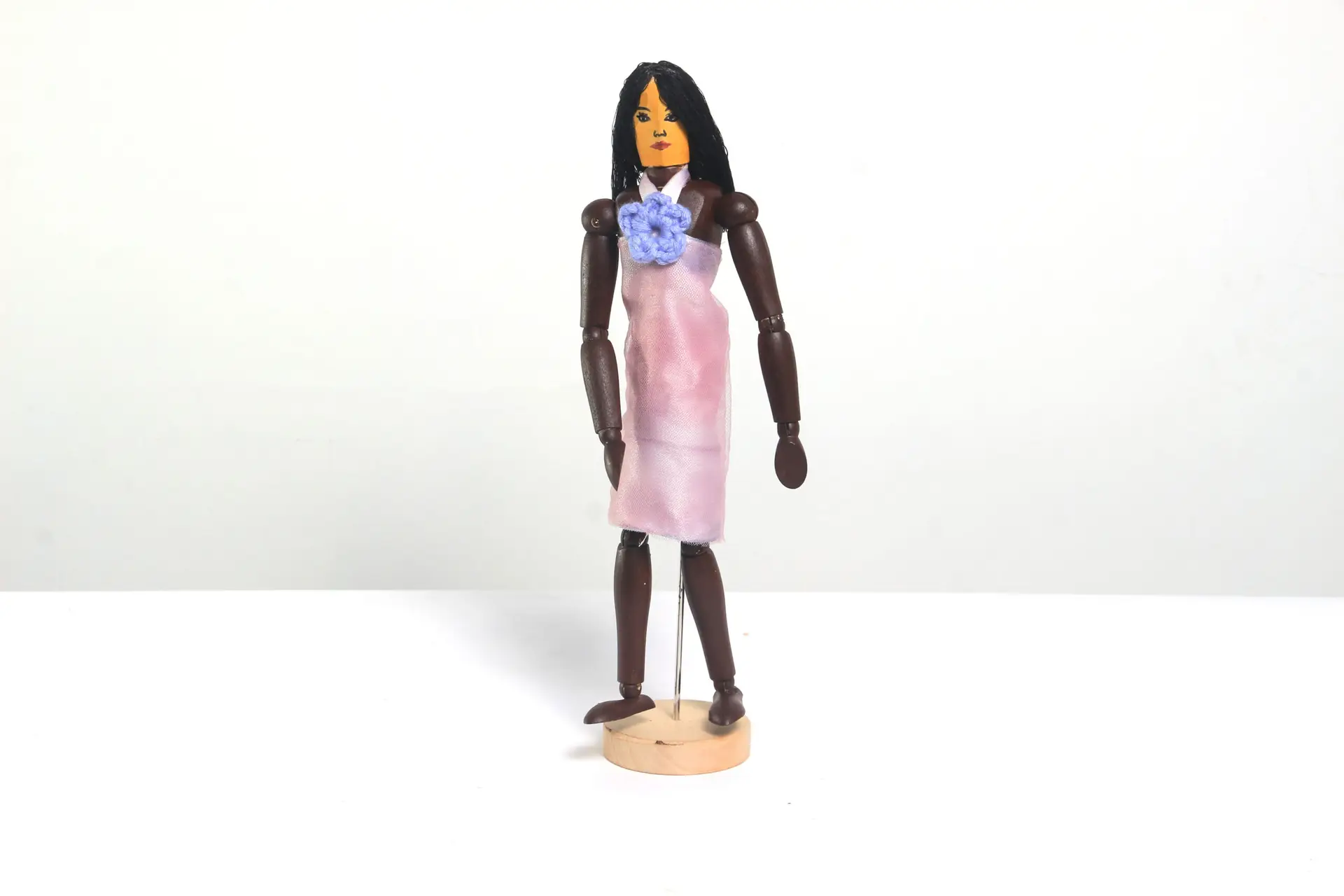
My wayang (puppet) is a trans man who was denied his right to education, yet he still persevered, earning a living while continuing his education. He is an educated man who fights for gender and social justice for all and advocates for education for marginalised communities.

This puppet represents Bude Terong, a queer feminine-presenting male figure who challenges rigid gender norms in conservative societies such as Lombok. With a yellow mask symbolising protection and survival strategies, dark skin reflecting resilience under discrimination, and a slender body that embodies quiet strength, the character carries visible signs of resistance. Thick eyebrows and red lips represent courage and a bold voice against stigma, while curly brown hair symbolizes natural identity and freedom. The purple clothing signifies wisdom, queer courage, and elegance in resistance.Bude Terong embodies the lived experiences of queer communities who continue to endure stigma, religious pressure, and discrimination. Yet the figure stands as a symbol of resilience and bravery: someone who not only survives but also moves forward, joining solidarities and advocating for the right of queer communities in Lombok to live openly and with dignity.
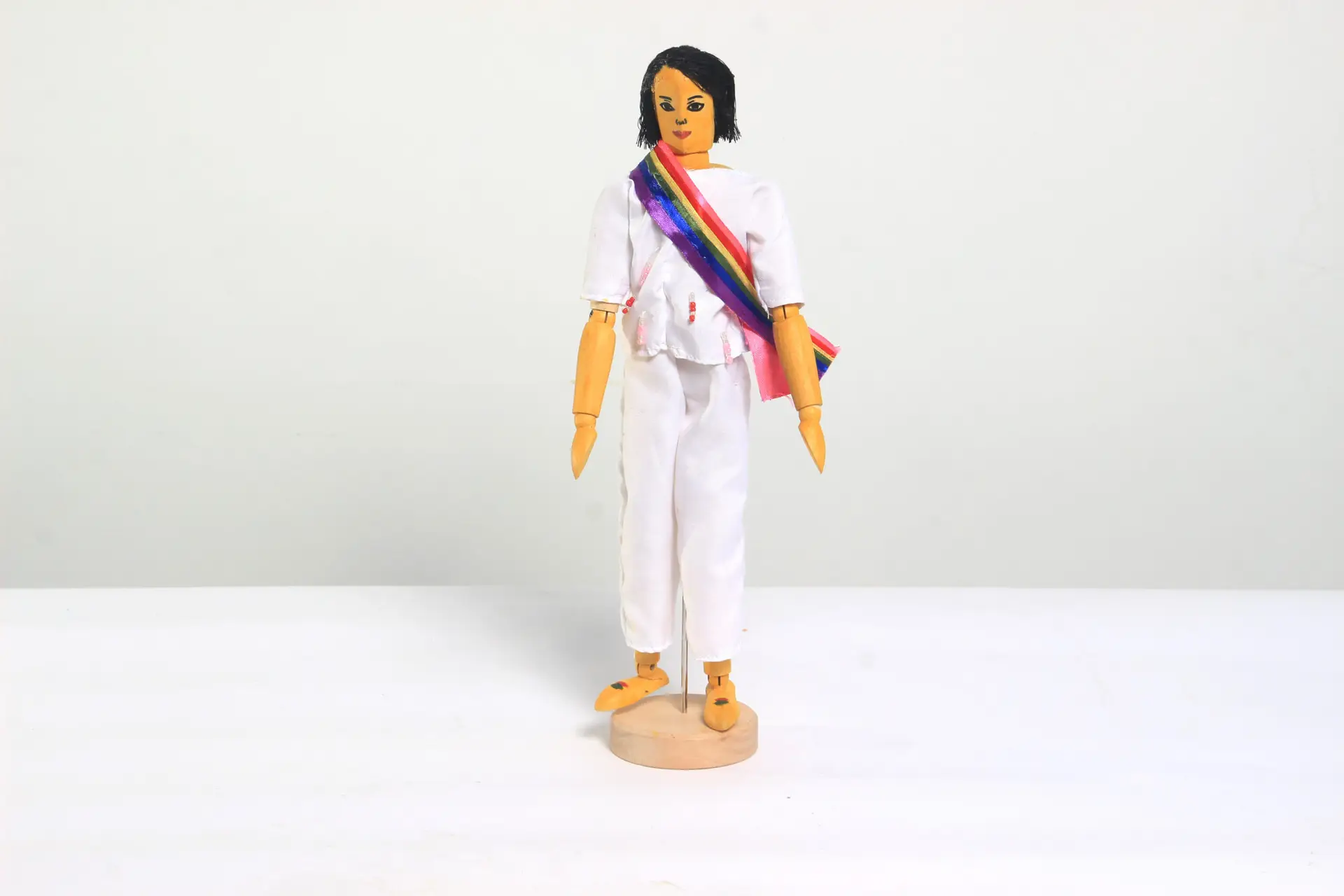
This puppet portrays a bright and spirited figure with medium-brown skin and curly hair, dressed in white clothing and wearing a rainbow sash. The sash symbolises the tools the character carries in their journey: equality, skills, solidarity, innovation, and resilience.
He represents queer and trans people, who are often viewed with prejudice, labelled as social outcasts, blamed for crises, subjected to bullying, rejected by families, or dismissed from employment. Through these experiences, he embodies the struggles of navigating identity, economic hardship, and moral judgment in the face of persistent stigma and discrimination.
Despite these challenges, my puppet also represents strength: a community rich in human potential, innovation, and resilience. With determination and collective support, they strive for a future of equality in healthcare, social life, education, and the workplace. The puppet also symbolizes protection and solidarity for more hidden queer and trans communities, those living with HIV/AIDS.
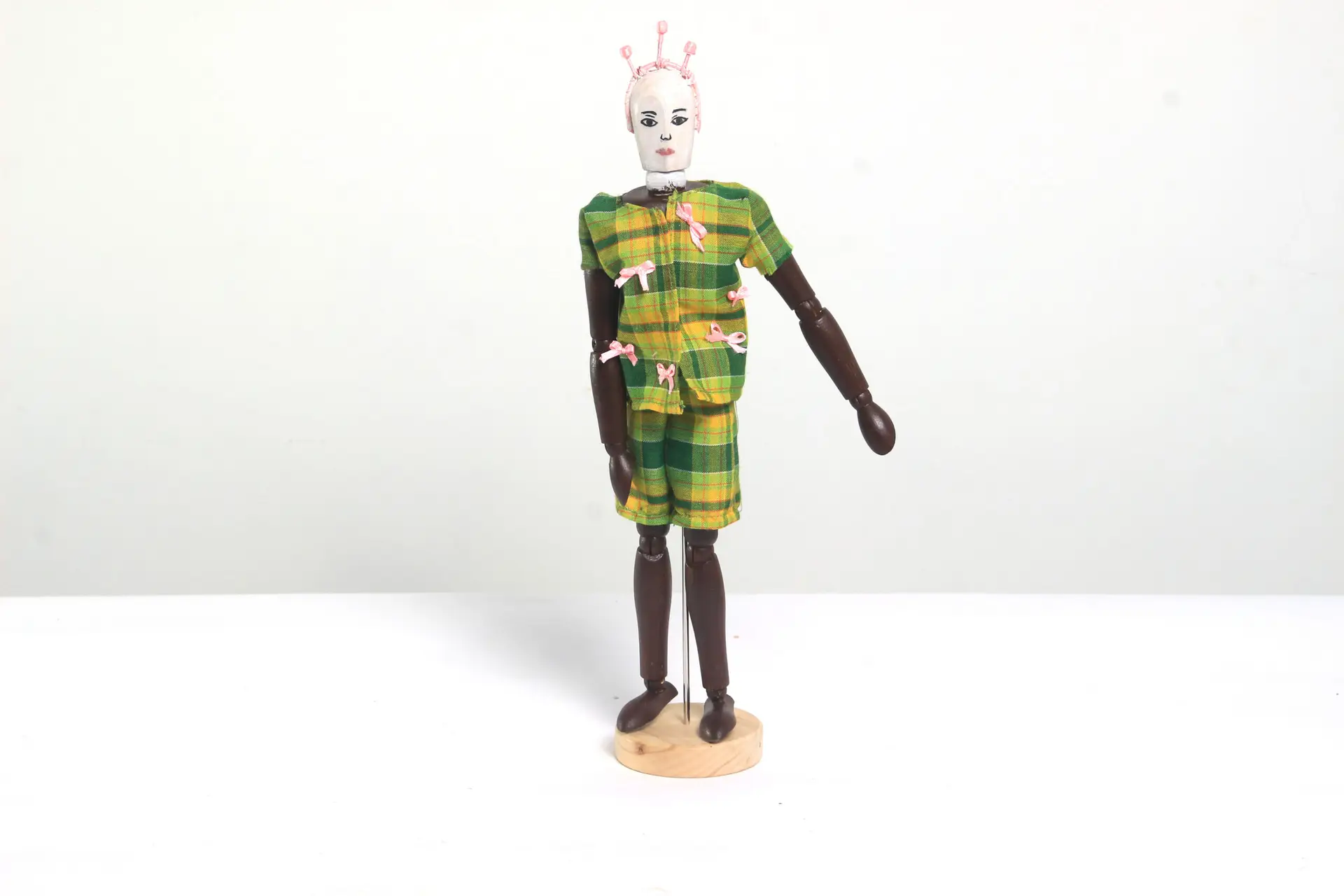
Despite years of bullying, my wayang firmly believes in everyone’s right to be who they are. He is a human rights activist, and he protects everyone equally, who does not cherry-pick who gets to live and who does not.
Tourism in Central Lombok is often presented as a promise of development and prosperity. Yet in reality, only around 1% of local people are able to access or benefit meaningfully from it. For many communities, tourism has instead brought a series of tragedies: rising living costs, loss of land, environmental damage, and the gradual erosion of traditional livelihoods. This collage reflects on the unequal realities behind tourism development, where the benefits are concentrated among a small few while the burdens are carried by local communities. It invites viewers to question whose progress is being prioritised and who is left to bear the consequences.
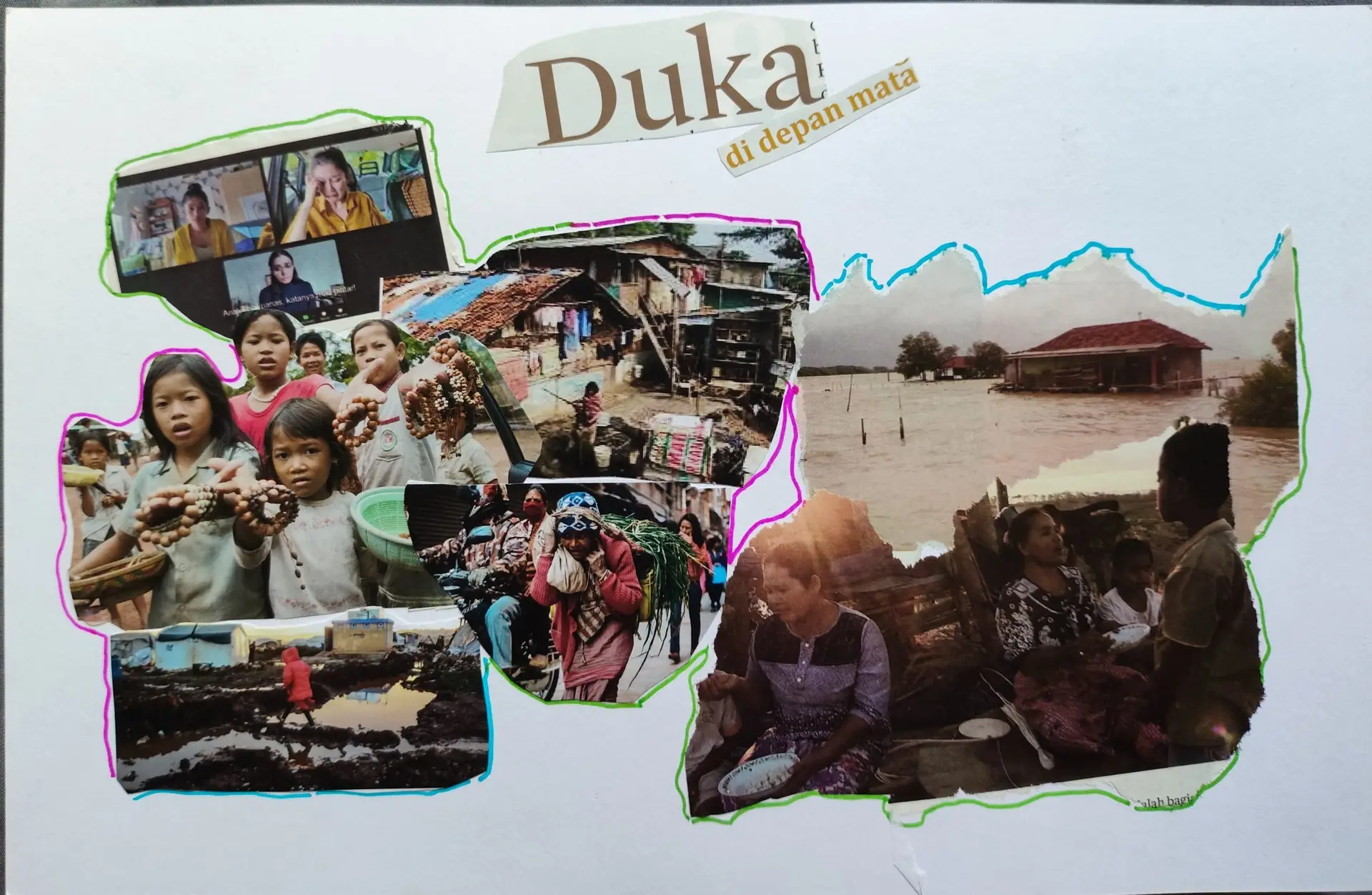
My collage calls for justice in the tourism sector, urging that the voices of local communities be heard at the centre of decision-making. It highlights the need to protect nature from limitless exploitation and to ensure that tourism development does not come at the expense of the environment.At the same time, it emphasizes the importance of safeguarding and empowering communities living around tourism areas so they can claim their rights, participate meaningfully, and benefit fairly from the industry. I, like many other people, want tourism that is more just, sustainable, and inclusive.
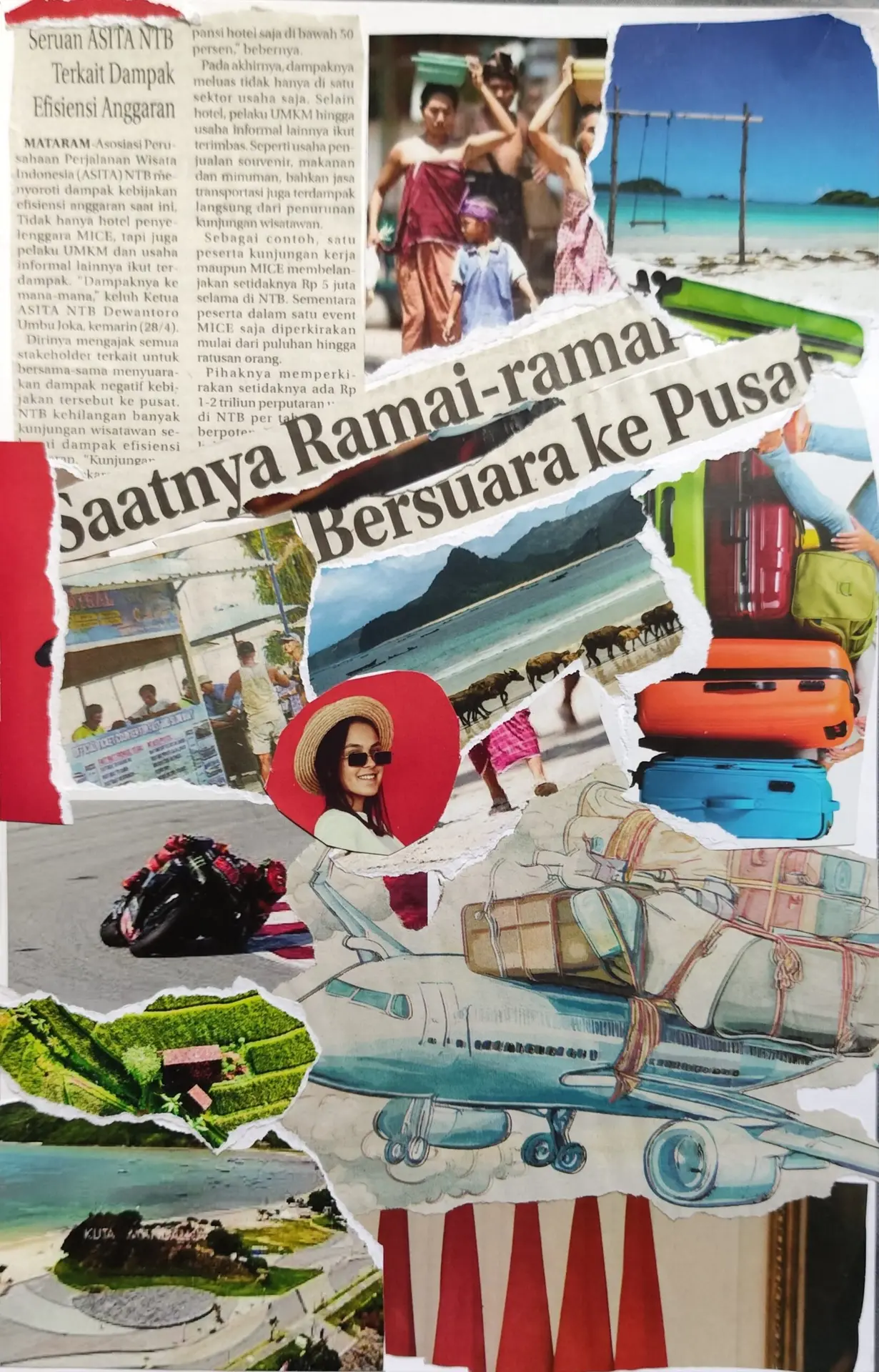
It reflects on the consequences of mining expansion for local and Indigenous communities. The opening of mining operations often leads to the loss of customary land rights, forcing communities to leave the ancestral lands they have inhabited for generations. While mining promises development and prosperity, in reality, the benefits are often enjoyed by only a small group of powerful actors. Meanwhile, many local people face displacement, environmental damage, and the erosion of their livelihoods. I wanted to highlight this growing divide between communities and powerful economic interests and question the true cost of extractive development.
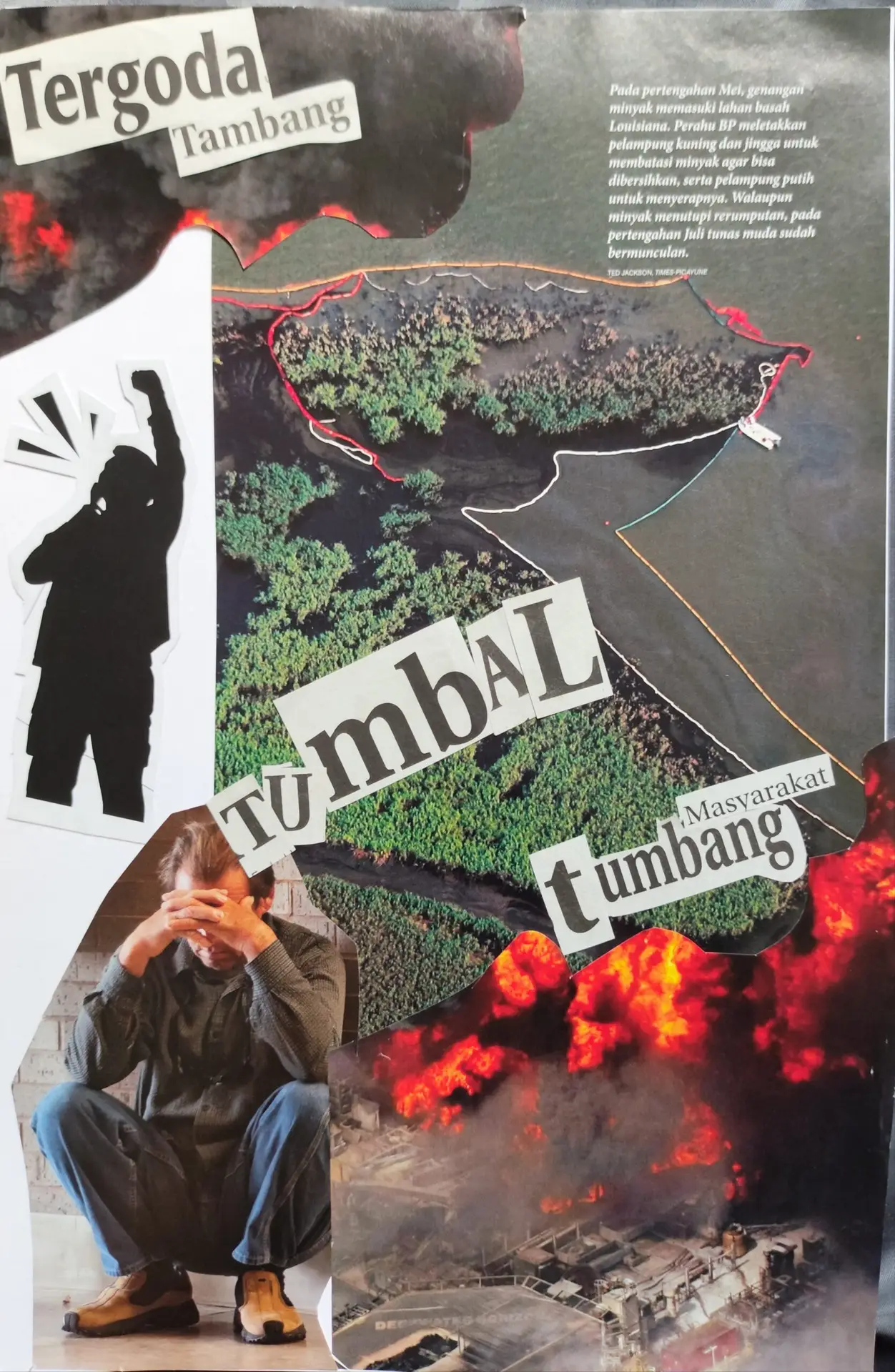
I wanted to reflect the voices of local communities whose lives have been transformed by large-scale development. In the past, the land was vast and fertile. People farmed, harvested their crops, and sold them in local markets to sustain their livelihoods.Today, many developments, such as coastal resorts, towering buildings, and luxury facilities, promise progress but are enjoyed by only a small few. For many local residents, the space to live and move has become increasingly limited. Instead of prosperity, we are left with waste, pollution, and flooding.Please do not take away our right to live. Let us breathe clean air. Stop unchecked, massive development.

My collage tells the stories of rapid development and spatial planning challenges in Gumi Sasak (Lombok Island). While construction and tourism continue to grow across many sectors, environmental governance, particularly the protection of green spaces and water absorption areas- often lags.Expanding housing and tourism infrastructure risks diminishing the island’s natural balance if not guided by sustainable principles. It calls for tourism and development that respect the environment, protect natural beauty, and ensure that green spaces remain part of the landscape.
Through this piece, I want to remind us that the future of Gumi Sasak depends on balancing development with the preservation of nature, culture, and customary traditions, so that the skies of Sasak will no longer feel crowded or burdened by unchecked growth.
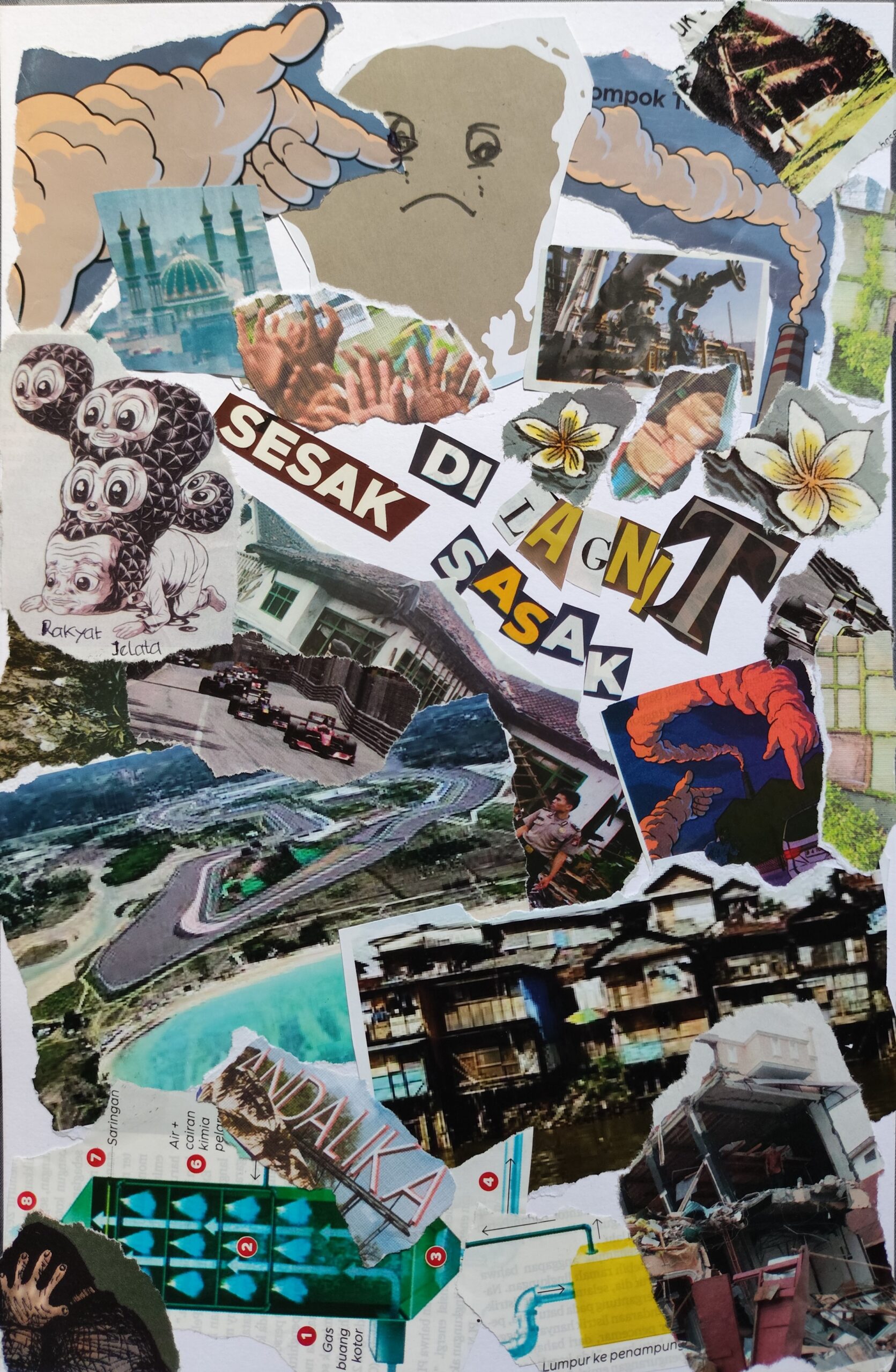
This collage represents the many unresolved challenges faced by communities in Lombok. It highlights a range of social issues, including crime, poverty, waste management problems, labour migration, and government corruption.The imagery in the foreground represents the social crises experienced by everyday, working-class people: struggles related to education, economic hardship, and persistent poverty. These conditions are often shaped by policies and decisions that ultimately disadvantage the communities most affected by them.Through layered visuals and symbols, I wanted to invite people to reflect on how systemic inequalities and governance failures continue to shape everyday life for many people on the island.

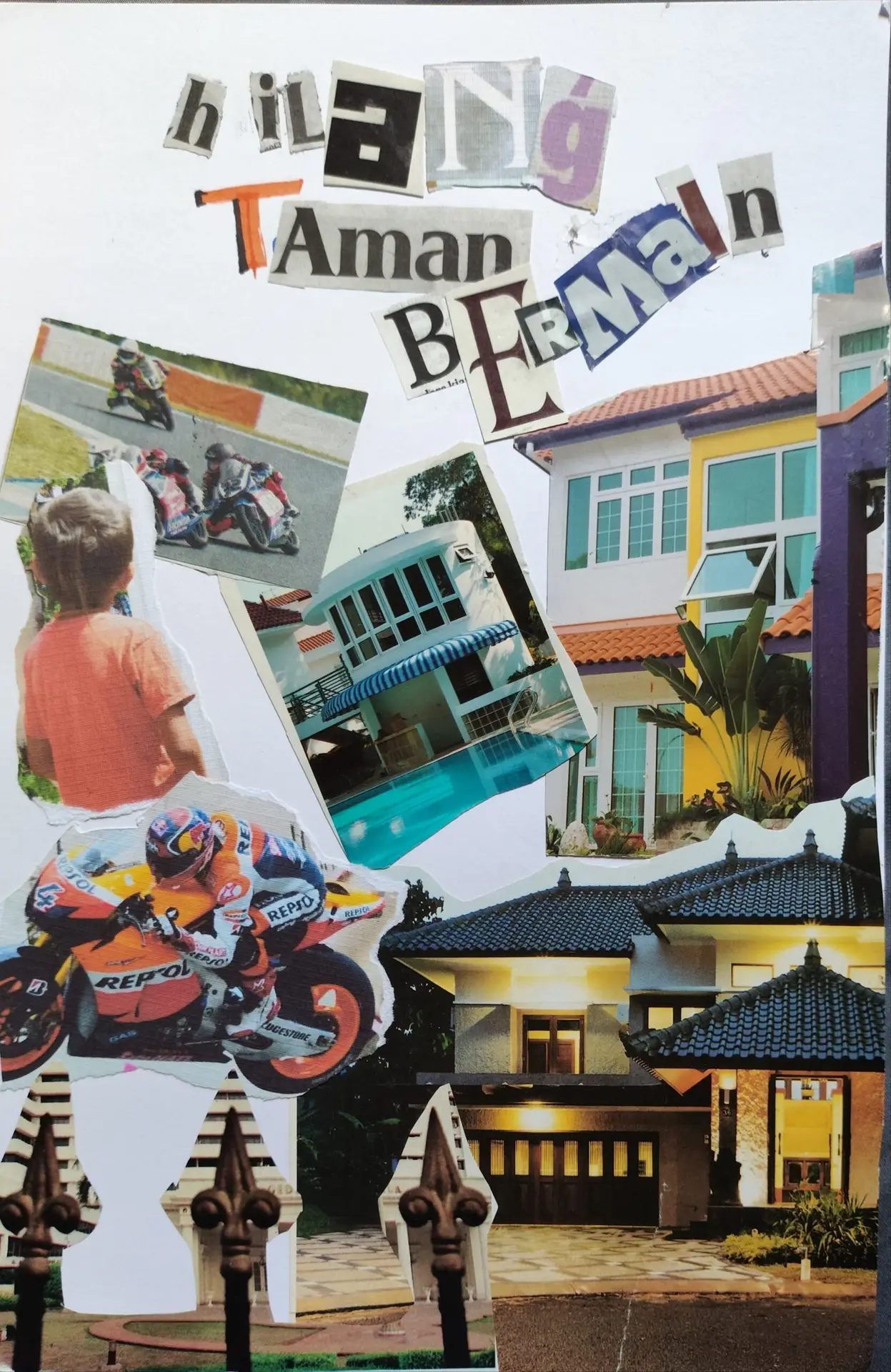
I wanted to tell the story of the disappearance of public spaces that once served as open gathering places for everyone. In the past, these spaces allowed people to come together regardless of gender, social class, income, occupation, or religion.Today, many of these lands have been privatised and transformed into spaces accessible only to certain groups. What was once shared by the community has become the territory of a privileged few. There is this growing sense of alienation of becoming strangers on our own land, within spaces now dominated by the wealthy and elites.